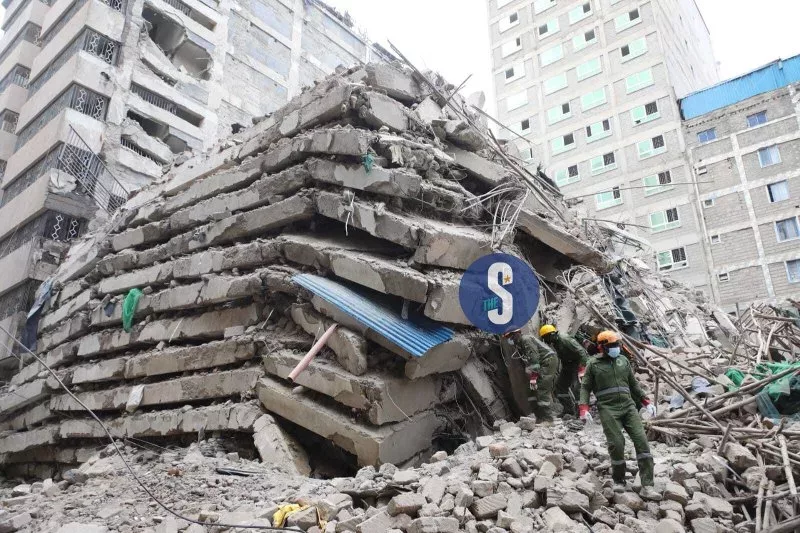
Nairobi Governor Johnson Sakaja has called on Kamukunji Police Station to explain the reported release of suspects arrested over alleged planning violations linked to a building in Eastleigh that later collapsed.
Sakaja questioned reports that some suspects were released on a cash bail of Sh50,000 without being presented in court, calling for clarification on the circumstances surrounding their release.
The Governor said Nairobi City County had taken enforcement action after determining that although a change of user had been approved for the property, the architectural plans required to authorise construction had not been approved.
“We enforced the law and arrested those involved. However, because we do not have prosecutorial powers, the suspects were handed over to Kamukunji Police Station. They were reportedly released on a cash bail of Sh50,000 without being taken to court,” Sakaja said.
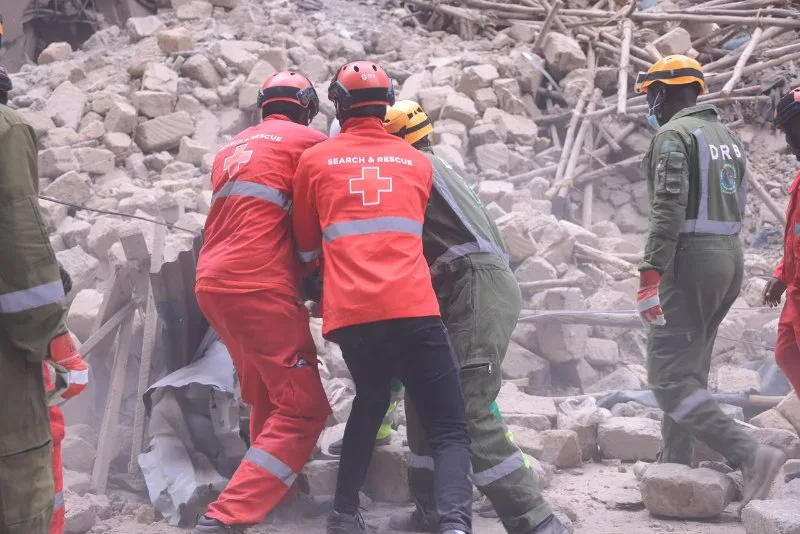
He urged police to clarify the circumstances surrounding the reported release and explain what happened after the suspects were handed over to the station.
Records cited in the Governor’s statement indicate that 14 suspects were booked into custody on June 17, 2026, over alleged offences relating to contravention of city planning laws.
A separate police record indicates that 10 suspects were subsequently released on cash bail of Sh50,000. The entry states that the release was made on the instructions of the Officer Commanding Station.
However, the records provided do not independently establish the specific charges, the legal basis for the bail arrangement or whether the suspects were subsequently presented in court. The status of the other four people recorded as having been booked into custody also requires clarification.
The matter has also drawn attention to a June 2025 county enforcement notice concerning alleged construction works undertaken without the required development permission.
The notice cited the Physical and Land Use Planning Act, 2019, and county by-laws, directing the recipient to stop the works and remove the development described in the notice as illegal.
The document alone does not establish whether the notice concerned the building that later collapsed or whether its directives were enforced.
Sakaja maintained that approval for a change of user did not amount to approval of architectural plans authorising construction.
He also criticised the circulation of documents purportedly presented as evidence of full construction approval, urging political leaders to allow investigations to establish the facts.
“It is wrong for politicians to circulate misleading or purportedly fake documents to deceive Kenyans on such a serious matter as the Eastleigh building collapse. Human lives are at stake, and this is not an issue to be exploited for political gain,” he said.
The Governor renewed his call for county governments to regain prosecutorial powers for offences arising from their regulatory functions.
He said he had written to the Director of Public Prosecutions outlining his proposal and was awaiting a response.
Sakaja also urged professional bodies representing architects, engineers, quantity surveyors and builders to investigate alleged breaches of professional standards and take appropriate action where violations are established.
The circumstances surrounding the reported release, the status of the building approvals and the enforcement of the earlier notice remain matters requiring clarification from the relevant authorities.