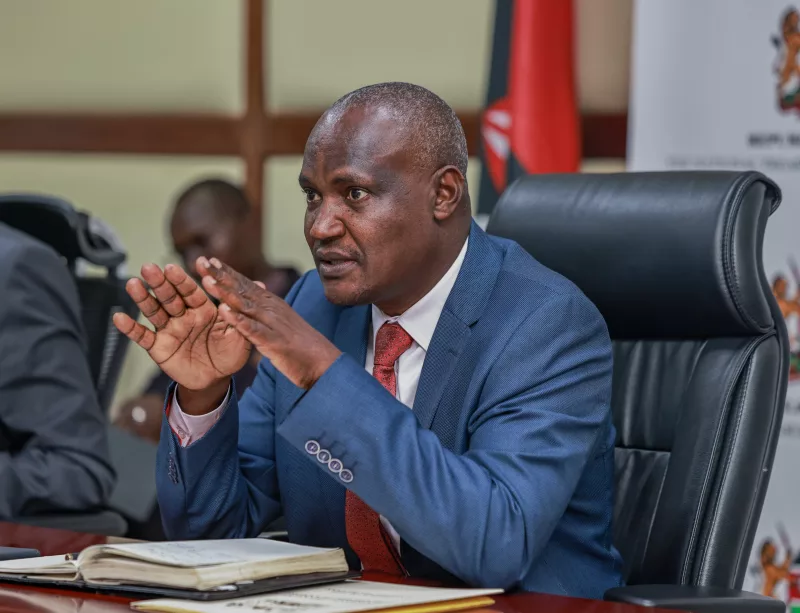
National Treasury Cabinet Secretary John Mbadi has revealed that 362,846 additional Kenyans in formal employment will be exempted from Pay As You Earn (PAYE) tax under a proposed government plan to raise the income tax exemption threshold to Sh32,333 per month.
Mbadi said the proposal, announced following a directive by President William Ruto, would increase the number of salaried Kenyans exempted from PAYE from 1.329 million to approximately 1.692 million.
The move would leave about 1.778 million formally employed Kenyans continuing to pay PAYE, out of a total of 3.468 million workers in formal employment.
“This is something that we have considered very carefully, and what has informed it is the fact that the economy was in bad shape in 2022 and measures were taken to steady it,” Mbadi said.
He said the government believed the economy had begun showing signs of recovery and that some of the gains should now benefit Kenyans who had borne the burden of taxation.
“Now, salaried people, the 3.5 million Kenyans who are in formal employment, those who have borne the burden of this taxation, the economy has shown signs of recovery, so we have decided that part of it should go back to Kenyans,” he said.
Under the proposed changes, workers earning up to Sh32,333 per month would no longer pay PAYE, compared with the current exemption threshold of Sh24,000.
Mbadi said workers earning between Sh24,000 and Sh32,333 currently face a 25 per cent tax rate, describing them as low-income earners who would benefit significantly from the proposed relief.
“So we now have those earning up to Sh32,333 not being taxed. They will not pay tax,” he said.
The Treasury CS said an employee earning within the affected income bracket would gain an additional Sh2,083 in net monthly salary once the proposal takes effect.
“It will be a relief to them. For someone who earns more, they may not see a huge difference, but for these people, there will be Sh2,083 added to their net salary, and it will alleviate some of the pressures this group faces at the moment,” Mbadi said.
He said the proposal was still being prepared as a legislative measure and would require approval through the relevant legal and parliamentary processes before implementation.
“It is a legislative proposal that we are working on, and chances are that we will be ready by next week as guided by the President,” he said.
Mbadi said the Treasury was working round the clock to prepare the proposal for submission to the Attorney-General before it is taken to Parliament for consideration.
Mbadi expressed optimism that Parliament would approve the proposed changes before proceeding on recess, allowing the new tax arrangement to take effect in January.
“I am very optimistic that this will be passed before Parliament goes to recess. By January, the legislation will have taken effect,” he said.
The proposed exemption is expected to provide relief to lower-income salaried workers as the government seeks to balance revenue collection with the cost-of-living pressures facing households.
The plan would mark a change in the tax burden on formal-sector employees, with workers earning above the new threshold continuing to contribute through PAYE under the applicable tax bands.
However, the changes will not take effect immediately, as the government must first finalise the legislative proposal and secure Parliament’s approval.