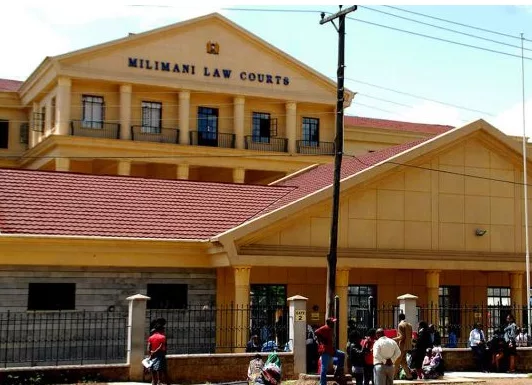
The High Court has dismissed an attempt by Nairobi City County to overturn a Sh311,429,979 decree, ruling judicial review decisions final.
Justice William Musyoka held that judicial review proceedings are governed exclusively by the Law Reform Act and Order 53 of the Civil Procedure Rules and that section 80 of the Civil Procedure Act, which permits review, does not apply to them.
The underlying dispute stems from a commercial contract entered into in March 2020 between Technobrain (Kenya) Limited and the county administration for an information and communications technology project.
The parties subsequently reached a settlement agreement in March 2023 for the sum of Sh311,429,979, structured to be paid across five years, though a subsequent legal disagreement led Technobrain to pursue enforcement through the courts.
After a final judgment was delivered in favour of the company on July 24, the county government sought to intervene through an application filed on August 20.
Technobrain argued through its legal representation that the High Court lacked any legal authority to alter its own finalised decisions and therefore had no jurisdiction to entertain the county's application.
Citing established case law, they told the court that where a forum lacks jurisdiction, it must "down its tools".
The county sought to pause judgment enforcement, dismiss the claims against the first respondent [the Chief Officer, Mobility and ICT Infrastructure, Nairobi City County] and modify the ruling to reflect prior tax and financial payments.
The government stated it had paid a total of Sh142,913,793.15 to date, which included Sh7,086,206.90 remitted as tax to the Kenya Revenue Authority.
It further argued that the July 24, 2026 judgment failed to account for this tax payment made on behalf of the applicant, constituting an error apparent on the face of the record.
The county sought to strike out the suit against the first respondent because it contended that the office named in the proceedings does not exist, saying there was,”no office or entity of that name within the second respondent and the proper office is that of the Chief Officer, Information Communication and Technology and E-Government".
Additionally, it asked the court to set aside or vary the final decree and grant permission to submit a defense response.
Delivering his ruling, Justice Musyoka agreed with the petitioner that public law remedies operate under an independent legal framework that excludes general civil review mechanisms.
He held: "The application herein is wholly misconceived. I do not have jurisdiction to grant the orders sought."
On the claim of the KRA tax payment, the court found the issue was never raised by the county in any response to the substantive motion, therefore cannot have erred on a matter never placed before it.
The judge also found the county had simply failed to defend—papers were served in January and April 2026, counsel came on record on April 13 and attended court four times, yet no response, grounds of opposition or submissions were filed.
"Surely, the second respondent slept on its rights, and has no one to blame," he stated.
On the missing office, he said: "That matter is now water under the bridge. The court is functus officio [has completed the duties assigned and no longer has the authority, power, or jurisdiction to reopen, alter, or re-examine the matter]. The second respondent is better off raising those issues at the Court of Appeal."
He dismissed the application, with costs to Technobrain.