As efforts to rehabilitated degraded landscapes gains momentum, the local communities this year earned Sh22.6 million from selling tree seedlings.
World Wide Fund for Nature-Kenya says the income generated gave the local community a direct incentive to lead restoration and adopt climate-resilient land management practices.
“The interventions increased tree cover, improved watershed protection and strengthened household resilience through agroforestry,” WWF-Kenya CEO Jackson Kiplagat said.
Kiplagat said countless communities across the country have become stewards of the landscapes and ecosystems on which we all depend.
“They are proving every day that conservation is not simply about protecting nature. It is about securing water, food, livelihoods, resilience, dignity, and opportunity for present and future generations. This evolution reflects a fundamental truth: the future of nature, the future of our economy, and the wellbeing of our people are inseparably linked.”
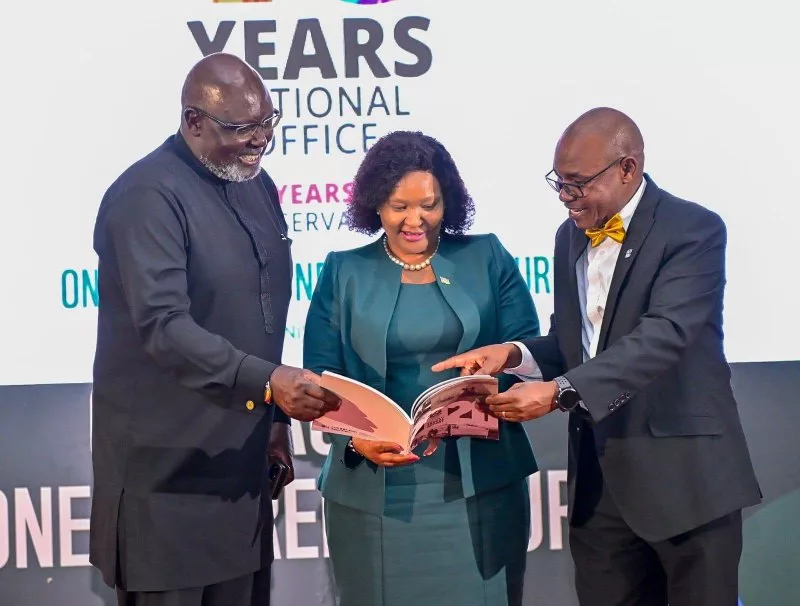
The CEO made the remarks when he unveiled WWF-Kenya annual report 2026 on Friday.
The organisation also celebrated 10 years as a National Office.
Kiplagat said they have helped bring more than 686,952 acres of critical ecosystems under effective management since 2020.
This includes 343,510 acres of rangelands, 335,624 acres of terrestrial forests and farmlands, 8,407 acres of mangrove forests, and 562 acres of wetlands and riparian areas.
Kiplagat said they have seen the recovery of Kenya’s black rhino population, which reached 1,147 individuals in 2025 after decades of protection and habitat management.
He said they have cut power use at the headquarters office by 88 per cent through solarization.
Tourism CS Rebecca Miano said Kenya’s wildlife, forests, wetlands, rangelands and marine ecosystems underpin tourism, employment, climate resilience and the many services nature provides without issuing an invoice.
“The future of Kenya’s tourism is dependent on healthy ecosystems and thriving wildlife. In turn, conservation thrives when communities living alongside wildlife enjoy tangible benefits from co-existence,” she said.
Miano said the government carries the primary mandate, through the State Departments for Wildlife and Forestry and agencies such as the Kenya Wildlife Service, the Kenya Forest Service, the Wildlife Research and Training Institute and the Water Resources Authority.
She said the government alone cannot deliver.
“We need county governments, communities, conservancies, scientists, the private sector, development partners, and organisations such as WWF-Kenya and its peers.”
Miano said the protection of the black rhino is a telling conservation success story. She pointed out that Kenya’s black rhino population has grown from a few hundred animals to more than 1,100 in recent years, because KWS, rangers, scientists, communities and partners stayed the course.
Miano said WWF-Kenya supported six of the seven Black Rhino Conservation Strategies, equipped monitoring teams and installed modern surveillance systems.
To address human-wildlife conflict, Miano said the government will continue to strengthen prevention and response, protect wildlife corridors, improve land-use planning and mobilise more sustainable financing for conservation.
Treasury PS Dr Chris Kiptoo said WWF-K has been a trusted partner to the Government of Kenya and local communities.
“I have been PS Environment and Forestry, and now National Treasury and I can attest to this,” Kiptoo said.
Kiptoo commended WWF-Kenya for its collaborative approach in working with national and county governments, communities, development partners, academia, and the private sector.
He said a notable example of the power of partnership and WWF – Kenya collaboration and partnership is in the architecture of the Kaptagat Integrated Conservation Programme.
The Programme is a flagship landscape initiative that seeks to restore ecosystems while improving livelihoods and strengthening climate resilience and where PS Kiptoo is the Patron.
“With WWF support and re-engineering, the programme provides a practical model of how environmental conservation can be integrated with community development, enterprise creation, water security, and sustainable land management,” Kiptoo said.
Kiptoo encouraged WWF-Kenya to continue championing locally led conservation solutions that empower communities and deliver lasting environmental, social, and economic benefits.
WWF-Kenya Head of Conservation Programmes Dr. Yussuf Wato said through their support, 52 institutions and house-holds adopted energy-efficient technologies, and 1,618 tonnes of waste were recycled through the plastics value chain in coastal Kenya.
WWF’s direct field footprint in Kenya was formally cemented in 1973 when the organization purchased 37,000 acres of land adjacent to Lake Nakuru and handed it over to the Government of Kenya.
This vital gift expanded Lake Nakuru National Park to its current size of 188 square kilometers, safeguarding a rich habitat for nearly 30 bird species, most notably providing the principal feeding grounds for over a million flamingos.
Building on this momentum, WWF supported the establishment of Kenya’s very first black rhino sanctuary at Lake Nakuru National Park in 1985.
This intervention came at a critical turning point: Kenya’s black rhino population had plummeted from roughly 20,000 in the 1970s to fewer than 400 individuals, rescuing the iconic species from the brink of total extinction.
Kenya’s black rhinos have come a long way.
From roughly 400 individuals in the 1980s to 1,147 today, the country is now working toward a national target of 2,000 rhinos by 2037.