THE government has invited Kenyans to propose a name for the country’s crude oil ahead of the planned December 1, start of commercial production in the South Lokichar Basin in Turkana County.
The initiative comes as Kenya prepares to transition from exploration and pilot production to commercial operations, more than 14 years after the discovery of commercially viable oil, with the first consignments expected to enter the international market shortly after production begins.
“The Government has set 1st December 2026 as the date for First Oil, when Kenya moves from exploration and pilot production into full commercial production. Shortly afterwards, Kenyan crude will be offered to international refiners and traders,” the State Department for Petroleum said in its public participation notice.
The ministry of Energy and Petroleum is since inviting members of the public, communities, institutions, professional bodies and other stakeholders to submit proposals for a name that will represent Kenya’s crude in global oil markets.
The government said the naming exercise would establish the country’s commercial identity in the petroleum industry, with the name appearing on cargo documents, international price reports and trading platforms.
“Kenya’s chosen crude name will be the country’s commercial identity in the global oil market for decades, and it will carry Kenya’s story to buyers globally,” the notice states.
Globally traded crude varieties are identified by distinct names, including Brent from the United Kingdom, Murban from the United Arab Emirates and Bonny Light from Nigeria. Uganda’s Pearl Sweet is another regional example.
The government wants Kenya’s crude to have a distinctive identity that “reflects national pride” and is easily recognised by international buyers.
Proposals will be assessed against criteria requiring the name to be distinctly Kenyan, patriotic, easy to pronounce and memorable across languages.
The name must represent the country as a whole rather than a particular county, community or company. It must also avoid political, religious or divisive associations and be available for trademark registration in Kenya and internationally.
Submissions must include the proposed name, its meaning and justification, alongside the name and contact details of the individual or organisation making the proposal.
Kenyans can submit their proposals through the ministry’s website, by email, or by delivering a sealed envelope addressed to the Principal Secretary for Petroleum at Kasneb Towers Two, 11th floor, Nairobi.
The deadline for submissions is 5pm on Thursday, October 29, 2026.
The naming exercise comes as the government intensifies preparations to commercialise oil resources discovered in March 2012, when British firm Tullow Oil and its partner Africa Oil struck crude at the Ngamia-1 well in the South Lokichar Basin.
Commercial production has remained elusive for more than a decade because of technical, financial and infrastructure challenges, including disputes over land compensation, security concerns and disagreements over how local communities should benefit.
The project gained fresh momentum following approval of its field development plan and the entry of Gulf Energy, which acquired Tullow Oil’s entire interest in the project in September 2025 for $120 million (Sh15.6 billion).
During his Mashujaa Day address, President William Ruto said Kenya expects to begin exporting crude oil from Turkana in December, raising hopes of new foreign exchange earnings and investment in the petroleum sector.
The initial production phase targets approximately 20,000 barrels per day, with plans to increase output to 50,000 barrels per day in subsequent phases.
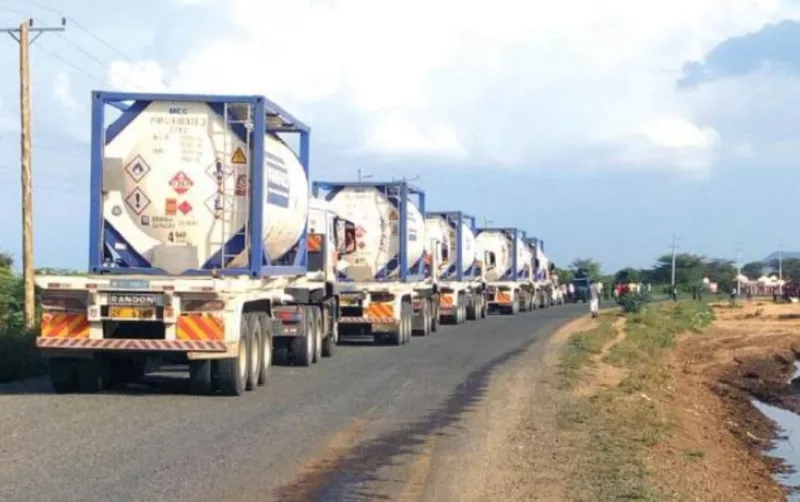
However, Kenya’s crude has a high wax content and can solidify at temperatures below 40 degrees Celsius, requiring specialised handling and heating during transportation.
The country also faces the challenge of developing infrastructure to move crude from Turkana to the coast.
Plans include a pipeline linking production to export facilities, while a proposed refinery in Lamu has been discussed as part of longer-term ambitions to expand the country’s petroleum industry.
The start of crude exports could provide a new source of foreign exchange and government revenue, but it will not necessarily lower domestic fuel prices because Kenya continues to import refined petroleum products, including petrol, diesel and kerosene.
The naming exercise marks a symbolic step towards Kenya’s entry into the global oil market, but experts say the project’s economic benefits will depend on sustained production, export infrastructure and how the resulting revenues are managed.