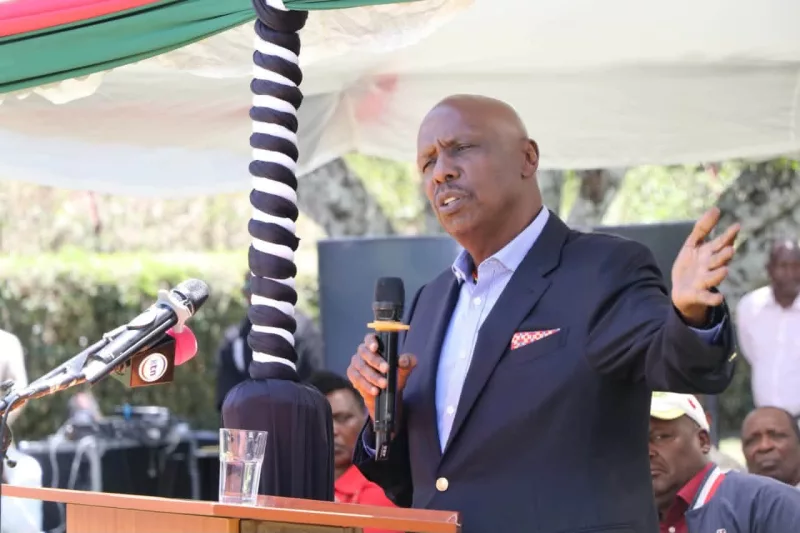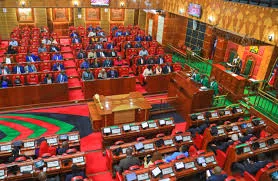
Members of the National Assembly on Thursday voted to lower the support threshold for recalling elected leaders.
The development, which follows the passage of amendments to the Elections Act, sets up a fresh debate over whether the change will empower voters or expose MPs to endless political battles.
A number of political parties are currently faced with a dilemma of how to deal with errant Members of Parliament who have shifted political loyalties.
Major parties, notably ODM and UDA, have active cases of some of their members promoting other new outfits as alliances shift ahead of the 2027 elections.
A petition requiring a recall will be required to secure the support of at least one-third of registered voters in every ward of an affected constituency for a Member of Parliament.
Those affecting a Senator would require a third of registered voters in every constituency of the respective county.
The change has divided MPs, with some arguing the threshold will give voters a realistic way to remove underperforming leaders.
Others warn that it could trigger petitions based on frivolous and protracted court battles.
The debate came as the House passed the Elections (Amendment) (No. 2) Bill, 2024, making changes that could influence how political parties select candidates, how voters exercise their rights and how election disputes are handled.
In the changes, MPs rejected the bid to increase voters per polling station to 1,000, retaining it at the current 700.
Lawmakers also voted to remove the Independent Electoral and Boundaries Commission's involvement in party primaries. They also approved the removal of the requirement for degrees for MPs and MCAs.
While the legislation removes the mandatory requirement for IEBC to live stream results, it compels the commission to upload the results digitally in an accessible public portal.
This means observers, media and other poll stakeholders can download the Forms 34A and collate the results of the presidential election.
But it is the recall clauses that drew much debate.
Saku MP Dido Raso was among those who argued that the one-third threshold was achievable, suggesting that voters could use the provision to hold their representatives accountable.
This was even as Daadab MP Farah Maalim warned that the recall provision could turn the period after an election into a continuous campaign against elected leaders.
National Assembly Majority Leader Kimani Ichung’wah backed the committee’s proposal, arguing that requiring support from half of registered voters in every ward would set an unrealistic bar.
“If you are to say 50 per cent in every ward. In any case, many of us are not elected by 50 per cent of the registered voters in each ward,” he said.
Ichung’wah argued that elected leaders should not enjoy a higher threshold for retaining their seats than the support they needed to win them.
He said the one-third requirement would still make recall difficult for anyone acting out of malice, since a campaign would have to secure the prescribed support across every ward.
“In any case, in every ward, it will still not be very easy for someone who is just doing it out of malice to convince 50 per cent plus 1 of the people voting in an election,” he said.
Ichung’wah urged MPs not to make laws out of fear of their own political circumstances, saying the rules should serve future generations rather than protect current office holders.
“We should not legislate in fear. We legislate for posterity. We don't legislate for ourselves. In whose interest are we legislating?” he asked.
But Maalim warned that the recall process could become a tool for political mobilisation immediately after elections, even before elected leaders had sufficient time to deliver on their promises.
He cited a constituency where an MP was elected with fewer than 6,000 votes despite having about 30,000 registered voters, arguing that the reality of voter participation should inform the design of the law.
“Our electoral system was different from theirs,” Maalim said, referring to countries from which Kenya borrowed elements of its constitutional framework.
He warned that petitions could be launched soon after elections, with signatures potentially collected or falsified by people seeking to force elected leaders out of office.
“Even signatures will be collected without those voters themselves signing. Somebody can go and falsify that information in one way or the other. So we will have a litigation nation, activism throughout.”
Maalim also questioned whether elected leaders should face recall only months after taking office, arguing that they needed a reasonable period to demonstrate their performance.
“Now, the way it is, you can be recalled six months after you have gone into Parliament,” he said, warning that the provision could fuel court disputes.
Suna East MP and Minority Leader Junet Mohamed defended the lower threshold, saying Parliament risked repeating an earlier legislative failure if it reinstated the 50 per cent requirement.
Junet told the House that an earlier recall law had been nullified by the courts on grounds that included inadequate public participation and an overly demanding threshold.
“I wish to inform the House that we previously enacted this legislation, but it was nullified by the court over inadequate public participation and the 50 per cent threshold, which the court found too onerous for the public to achieve,” he said.
He urged MPs to support the committee’s proposal, arguing that another attempt to impose the higher threshold could end in the same legal outcome.
“If we repeat what the court has rejected, we will be legislating in vain because the matter will return to court and the legislation will likely be rejected again for the same reasons,” Junet said.
Homa Bay Town MP Peter Kaluma also backed the proposal, warning that without a prescribed minimum number of voters supporting a recall, even a very small group could trigger the process.
He said Parliament needed to set a clear threshold while complying with the constitution and court decisions on recall.
“I believe members should not be afraid. If you have lost the support of one-third of the voters in every ward, you do not deserve to remain an MP,” Kaluma said.
Beyond the recall provision, MPs approved amendments that could shape party nominations, voter registration and election disputes in 2027.
The House backed changes clarifying the respective roles of political parties IEBC in nominations, with legislators arguing that parties should retain autonomy over their party lists and determine whom to nominate.
MPs also removed a provision that would have restricted nominees to a ward or county from which they were nominated.
The House rejected a proposal by Caroli Omondi to establish a public register of voters who transfer their registration, including their previous and new registration centres and details of the transfer.
The proposal was intended to improve transparency, but Molo MP Kimani Kuria opposed it, warning that publishing such information could expose voters to profiling in an election-sensitive environment.
The House also adopted a provision barring a person who registers as a voter while registration is suspended for a by-election from contesting in the affected electoral area.
The measure seeks to prevent someone from registering during the restricted period and immediately using that registration to seek election in the same area.
In another change, MPs adopted an amendment moved by Kaluma requiring election technology to be accessible for scrutiny by candidates, courts and other people legally entitled to examine it.
The provision is subject to the constitution, the Elections Act and the Data Protection Act, and could become significant in disputes over electronic systems during the 2027 elections.
Senate has to consider the amendments by the National Assembly for concurrence before the bill moves to the next stages of approval.