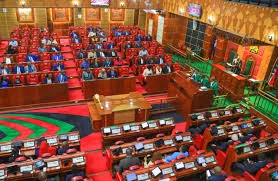
The Elections (Amendment) (No. 2) Bill, 2024, has been passed by the National Assembly with amendments, retaining the requirement for the Independent Electoral and Boundaries Commission (IEBC) to establish a mechanism for livestreaming election results.
The Bill, which was initially passed by the Senate before being referred to the National Assembly, proposes changes to voter registration, political party nominations, the recall of MPs and the handling of electoral disputes ahead of the 2027 General Election.
Its passage has, however, been accompanied by misinformation, particularly claims that the amendments will remove the legal requirement for livestreaming election results.
The National Assembly has rejected these claims, saying it retained the existing provisions governing the determination and declaration of election results after considering a recent High Court judgment.
Here is what you need to know about the Bill, the proposed changes and the next steps in its legislative journey.
What is the Elections (Amendment) Bill?
The Elections (Amendment) (No. 2) Bill, 2024, is a legislative proposal seeking to amend aspects of the Elections Act, which provides the legal framework for conducting elections in Kenya.
The Bill was first passed by the Senate with amendments and subsequently forwarded to the National Assembly for consideration.
The National Assembly referred it to the Departmental Committee on Justice and Legal Affairs, which was tasked with facilitating public participation and engaging relevant stakeholders, including the IEBC.
On Thursday, October 22, 2026, the National Assembly passed the Bill with further amendments.
However, it has not completed the legislative process.
Under Article 110(4) of the Constitution, the Bill will be returned to the Senate for consideration of the changes made by the National Assembly.
What are the main changes proposed?
The Bill seeks to introduce several changes to electoral administration and the resolution of disputes.
Inspection of the voters' register: The Bill proposes that the register of voters be available for inspection at all times, except during designated periods before an election or referendum. This would provide a framework for voters to check their registration details outside the restricted periods.
Political party primaries: It seeks to remove provisions requiring IEBC involvement in political party primaries. The proposed change would alter the commission's role in the parties' internal candidate-selection processes.
Recall of MPs: The Bill proposes revisions to the provisions governing the exercise of the right to recall a Member of Parliament, with the aim of ensuring that the process conforms to the Constitution.
Party nominations: Political parties would have greater flexibility in identifying and nominating candidates for elective positions and preparing party lists.
Voter registration during by-elections: The Bill proposes suspending voter registration during a by-election only within the affected electoral area. It also seeks to prohibit a person who registers during that suspension from contesting in the by-election in that area.
Electoral disputes: The proposed amendments seek to promote substantive justice, fairness and accountability in the hearing and determination of electoral disputes.
Together, the changes touch on voter registration, political party operations, representation and the administration of electoral justice.
Will the amendments remove livestreaming of election results?
No. According to the National Assembly, the amendments passed by the House retain the requirement for IEBC to establish a mechanism for livestreaming election results.
The House has dismissed reports suggesting that it removed this requirement, describing them as false and misleading.
The controversy centres on Section 39 of the Elections Act, which governs the determination and declaration of election results, including the announcement of results and livestreaming.
The provision has been the subject of extensive litigation, making its treatment in the Bill a significant issue as Kenya prepares for the 2027 General Election.
What did the High Court say about livestreaming?
On September 22, 2026, the High Court in Nairobi delivered a judgment in Okoiti & another v Independent Electoral and Boundaries Commission & 5 others [2026] KEHC 13916 (KLR).
Among other findings, the court upheld the constitutionality of Section 39 of the Elections Act and Regulation 83(2) of the Elections (General) Regulations. It declined to grant the petitioners' request to quash the two provisions.
The court also cautioned Parliament to consider its interpretation of Section 39 when finalising the Elections (Amendment) (No. 2) Bill, 2024, or any other legislation ahead of the 2027 General Election.
The judgment therefore became an important consideration in the National Assembly's handling of the proposed amendments affecting the declaration of election results.
Why did the National Assembly amend the Bill?
The version of the Bill received from the Senate contained Clause 22, which sought to delete Section 39 of the Elections Act and recast it in a different form.
However, the National Assembly said it took into account the High Court's judgment and the guidance provided by the court on the interpretation of the existing law.
Consequently, the House deleted Clause 22, retaining Section 39 in its current form. It also preserved the requirement for livestreaming under Section 39(1G).
The National Assembly said it made the decision after public participation and consideration of the court's judgment, resisting changes that would interfere with the established procedure for determining and declaring election results.
The decision means that the specific proposal to replace Section 39 contained in the Senate's version will not proceed in the form initially proposed.
What does this mean for the 2027 General Election?
The retention of Section 39 means that the legal provisions governing the determination and declaration of election results, including the livestreaming requirement under Section 39(1G), remain in place under the version passed by the National Assembly.
The decision is significant because the transparency of election results remains an important issue in preparations for the next General Election.
However, retaining the legal requirement should not be confused with a guarantee that every aspect of the livestreaming process will operate in a particular way. The commission will still be responsible for implementing the applicable law and establishing the required mechanism.
The other proposed changes, covering voter registration, party nominations, recall of MPs and electoral disputes, could also affect how different aspects of the electoral process are administered if the Bill completes the legislative process.
What happens next?
Following its passage by the National Assembly with amendments, the Bill will be returned to the Senate in accordance with Article 110(4) of the Constitution.
The Senate will consider the changes introduced by the National Assembly as part of the constitutional process governing legislation involving the two Houses of Parliament.
The Bill's passage by the National Assembly is therefore not the final step.
Its next stage will determine how the two Houses handle the differences between the versions they have considered.
Until the legislative process is completed, the Bill remains subject to the required constitutional procedures.
The bottom line: The National Assembly has passed the Elections (Amendment) (No. 2) Bill, 2024, with changes affecting voter registration, political party nominations, recall of MPs and electoral disputes.
Crucially, it removed the clause that sought to recast Section 39 of the Elections Act, retaining the existing legal framework, including the requirement for IEBC to establish a mechanism for livestreaming election results.
The Bill now returns to the Senate for consideration of the amendments.