Kajiado is exploring a digital supply model used in Kirinyaga to improve access to affordable, safe water in communities facing persistent shortages.
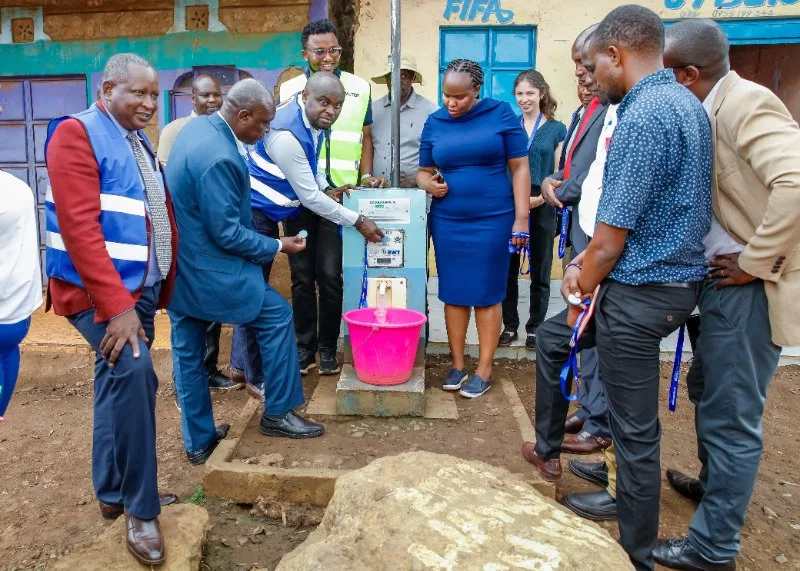
A delegation from Kajiado visited the eWATER project in Gathigiriri ward, Mwea constituency, to learn how the system uses digital technology to supply treated water, with residents paying only for what they consume.
The project serves about 17,000 people in seven villages through 124 community smart taps, 84 household connections and six institutional connections.
Kirinyaga Governor Anne Waiguru welcomed the delegation, saying counties could improve service delivery by learning from one another.
“Iron sharpens iron and so does continuous peer-to-peer learning refine our shared path forward. It is heartening to see Kajiado county draw insight from Kirinyaga’s eWATER journey,” she said.
Under the system, residents top up their eWATER tags using mobile money and pay according to the amount of water they use.
The model has helped communities that previously depended on irrigation canals and other potentially unsafe sources.
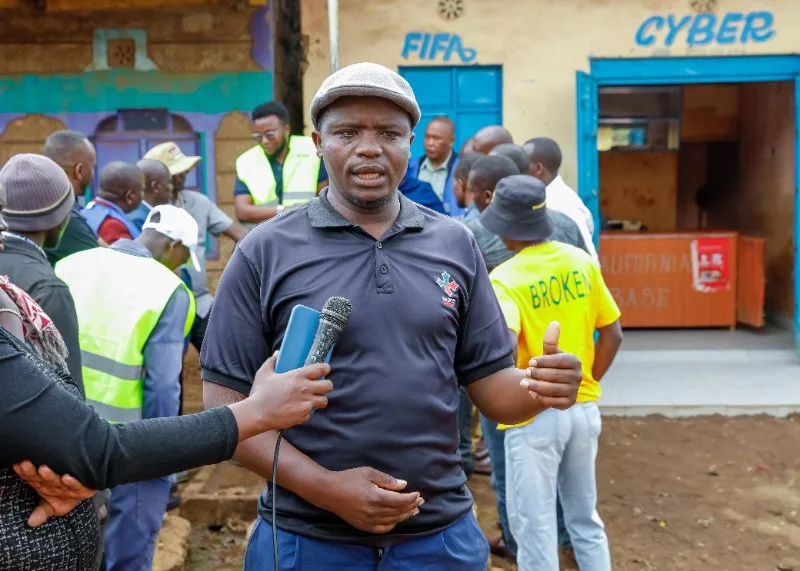
Kirinyaga environment executive Kinyua Mutugi said the project had improved access to treated water in Gathigiriri, where residents previously relied largely on water from rice irrigation canals.
Speaking in Kiriko village, Mutugi said access to safe water had helped address health challenges, particularly waterborne diseases.
Kajiado water executive Judy Peree said her delegation wanted to establish whether the model could be adapted to address shortages in her county.
“We are here to explore a partnership that might happen between eWATER and Kajiado county. It has been good to see how impactful it has been in Kirinyaga and how it has touched many lives,” she said.
Peree said the delegation would assess how the system could meet the needs of communities in Kajiado that still struggle to access clean water.
The project has also attracted international interest, with a delegation from Mozambique and the World Bank visiting Kirinyaga last month to study the initiative.
For residents of Gathigiriri, the system has brought treated water closer to their homes and reduced reliance on irrigation canals.
Douglas Munene, a resident of Kiriko village, said access to safe water had eased the financial burden on families who previously spent money seeking treatment for illnesses associated with contaminated water.
He said residents pay Sh5 for a 20-litre jerrycan, with promotional offers sometimes reducing the price to Sh2.
Resident Julius Ndung’u said the project had eased the burden of fetching water, particularly for women who previously travelled to rivers and canals.
“We thought it was a joke when it was starting. We went to public participation, but now it has come to make things easier for us, especially our women,” he said.
Ndung’u recalled that fetching water from rivers exposed women to dangerous conditions, with some falling into the water while searching for the scarce resource.
He said canal water could be seasonal and contaminated by chemicals from surrounding rice farms.
Waiguru said her administration had allocated Sh200 million in the last and current financial years for water projects, alongside additional investments through partnerships.
The county has implemented more than 200 water projects, with another 38 underway in the current financial year.
Instant analysis
Kirinyaga’s eWATER project offers a practical response to water scarcity by using digital technology to make treated water accessible and affordable. Kajiado’s interest signals the value of counties learning from successful local initiatives rather than reinventing solutions. However, replicating the model will require investment, reliable infrastructure and effective management. The real test will be whether the approach can reach underserved communities and deliver lasting improvements in access to safe water.