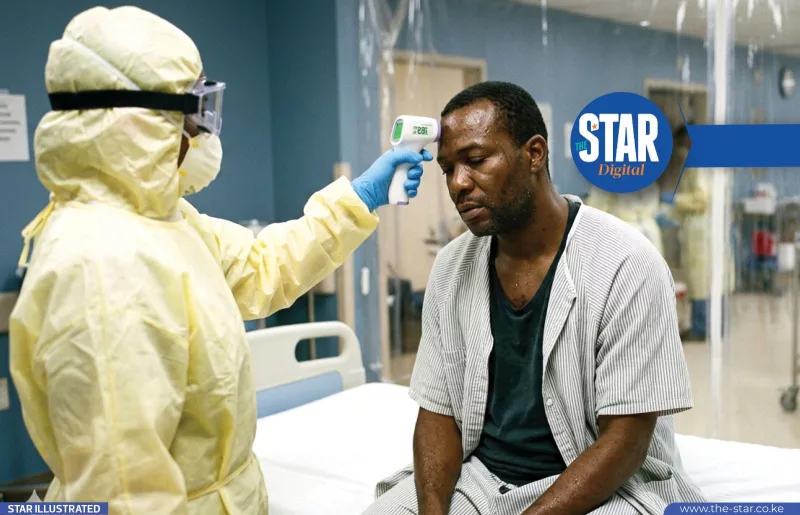
The first individuals who were placed under quarantine after Kenya confirmed its first-ever Ebola case will be discharged on Sunday, October 25, the Ministry of Health has said.
Kenya confirmed its first case on October 6, a 40-year-old Kenyan who had travelled from the Democratic Republic of Congo on October 3. He later died on October 5.
Tests confirmed he was infected with Ebola Bundibugyo virus disease. Since that initial case, Kenya has so far confirmed nine cases.
In an update on Wednesday, Health Cabinet Secretary Aden Duale said the eight patients are responding well to treatment and are stable.
The Bundibugyo strain of the Ebola virus does not have a vaccine or FDA-approved treatment.
Care relies on supportive therapy like rehydration, managing symptoms and treating secondary infections as human trials for brand-new, species-specific vaccine candidates continue.
According to the ministry, 134 of 135 contacts had by October 20 been traced and placed under quarantine.
Director General for Health for Health Dr Patrick Amoth the first individuals to be placed under quarantine are due to be discharged on Sunday after completing the mandatory 21-day period in isolation.
He said the exercise will be spearheaded by the Kenya National Public Health Institute (KNPHI).
"Our first cases who have been in quarantine will begin leaving quarantine facilities on Sunday," Amoth said, thanking the team managing the contacts.
The DG said Kenya was not yet facing an Ebola outbreak but urged the public to remain vigilant.
"We are not out of the woods but remain calm, remain vigilant. Don't panic, there's no need to panic, so far the cases are clustered around the index case (with) no case of community transmisison," he said.
Amoth spoke on Wednesday during an engagement forum with health partners involved in the management on Ebola.
He said if no new infections are confirmed since the last case, Kenya will officially be counting down the 42-day period before it's declared Ebola-free.
The World Health Organization (WHO) requires 42 consecutive days—representing twice the maximum 21-day incubation period of the Ebola virus—with no new confirmed or probable cases to declare an Ebola outbreak over.
The countdown begins the day after the last confirmed patient receives a second consecutive negative PCR test taken at least 48 hours apart,