Stakeholders in agriculture advisory services have called for the operationalization of the Kenya Agricultural Sector Extension Policy (KASEP) to address challenges facing the sector.
They say implementing the legal framework developed in 2023 could help resolve key challenges that have hindered the effective management of extension services in the country.
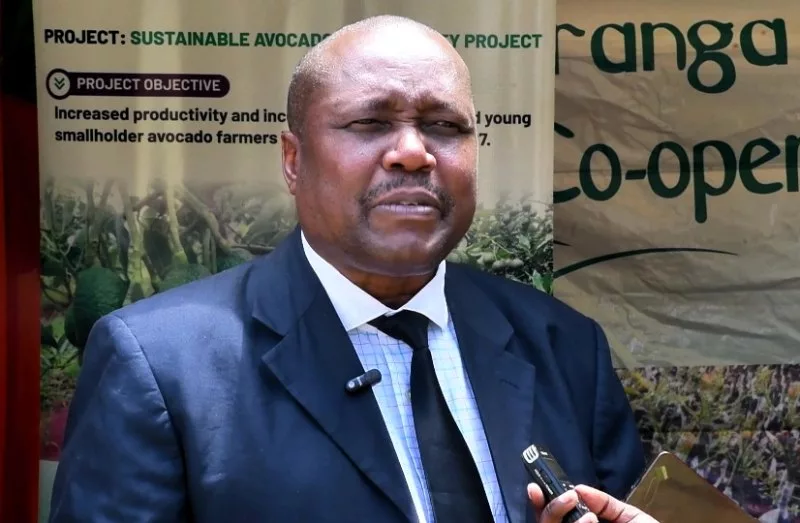
Director of Crop Resources Management in the State Department for Agriculture, Douglas Kangi, cited the main challenge which is severe understaffing in public extension services, noting that the workforce falls far below the recommended threshold, creating room for the proliferation of unqualified practitioners.
He noted that although agriculture and extension services are devolved, with recruitment guided by need, the national government has conducted only two small-scale recruitment exercises since 1997.
This comes amid a growing number of retiring staff who are not being replaced. He said implementing the policy could help address the staffing shortage and streamline recruitment in the sector.
“We have realized that there is a serious shortage of extension service providers. We are far from the recommended ratio of the staff-farmer ratio in this country, which is actually 1:600 farmers as recommended by the Agriculture Sector Transformation and Growth Strategy,” he said.
Speaking on Wednesday during the launch of the fourth National Agriculture Extension Conference in Nairobi, Kangi described the policy as a game changer in promoting digital extension services for farmers.
He noted that the ministry intends to leverage the Kenya Integrated Agriculture Management Information System (KIAMIS), a digital platform that has registered over 8.9 million farmers in the country.
He said the ministry hopes to integrate other digital platforms operated by the public sector, private players and development partners into the system, which could eventually host extension modules covering crops and livestock to ensure farmers receive information in real time.
“We will never employ, as much as we may desire to employ. Therefore, one of the key strengths of KASEP is to leverage digital extension or e-extension so that we are able to reach out to as many farmers as possible,” he said.
Additionally, Kangi noted that the policy would help regulate the sector, which has been infiltrated by unqualified practitioners, while expanding opportunities for non-governmental organizations and private sector players to provide extension services under a common set of guidelines.
His sentiments were echoed by Peter Mwangi, CEO of the Kenya Forum for Agricultural Advisory Services (KeFAAS), who called for innovative measures to address the shortage of the officers.
“Murang’a is quite high, where the ratio stands at 1:12,000 farmers while in other counties, one officer serves about 4,000 farmers because the government is not employing new extension service providers, while those already in service are retiring thus leading to the dwindling of the staff.”
He noted that operationalizing KASEP will revitalize the public and private extension service.
Additionally, he noted that they have been working with unemployed graduates from universities and colleges who have qualifications in agricultural extension, building their capacity to use various digital platforms, including artificial intelligence (AI), to reach farmers and provide advisory services.
On his part,the National Assembly Agriculture Committee Chairperson John Mutunga called on the Senate to fast-track the enactment of two bills pending before it to help streamline the agricultural extension sector.
“We do not have a law on extension. We have come up with an extension bill, a private member-sponsored bill from the Senate, which was forwarded to the National Assembly, where we made significant amendments. It is now back in the Senate. My request is that the Senate expedites its business so that we can have a law on extension,” he said.
The law maker noted that once the Agricultural Extension Services Bill is enacted, it will provide legal guidelines on extension services in the country.
“The legislation promotes the use of information and communication technology and modern technologies in delivering agricultural advisory services.”
He added that the bill also proposes the establishment of an agricultural data repository linked to research institutions, universities and extension service providers nationwide. It also provides for diagnostic centers at the county or sub-county level, where farmers’ challenges can be assessed and solutions provided through existing research and information resources.
The Tigania West MP added that the second bill, which seeks to regulate livestock professionals and technicians, has already passed through the National Assembly and is awaiting consideration by the Senate.
Once enacted, it will define the profession, establish ethical standards, provide for registration and certification, and regulate practitioners in the same way as other professions.