President William Ruto has said Kenya expects to start exporting crude oil from Turkana in December, raising hopes of new foreign earnings more than 14 years after the discovery of oil in the Lokichar Basin.
The announcement comes as Kenyans contend with rising fuel prices, with the Energy and Petroleum Regulatory Authority (Epra) attributing the latest increases partly to higher landing costs and supply disruptions linked to the Middle East conflict.
In its review on October 14, Epra raised petrol price by Sh12.93 to Sh226.96 per litre, diesel by Sh9.90 to Sh227.76 and kerosene by Sh28.49 to Sh219.87 in Nairobi.
The increases have intensified concern over the cost of transport, food and other essential items whose production relies on fuel.
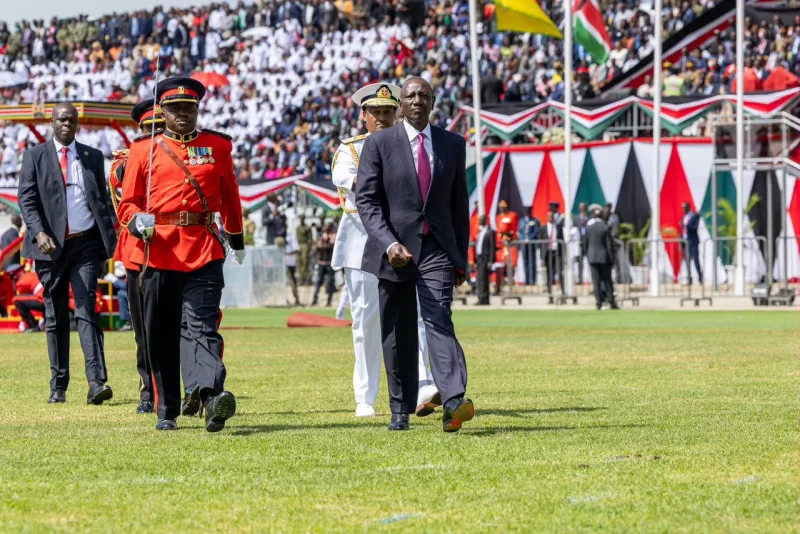
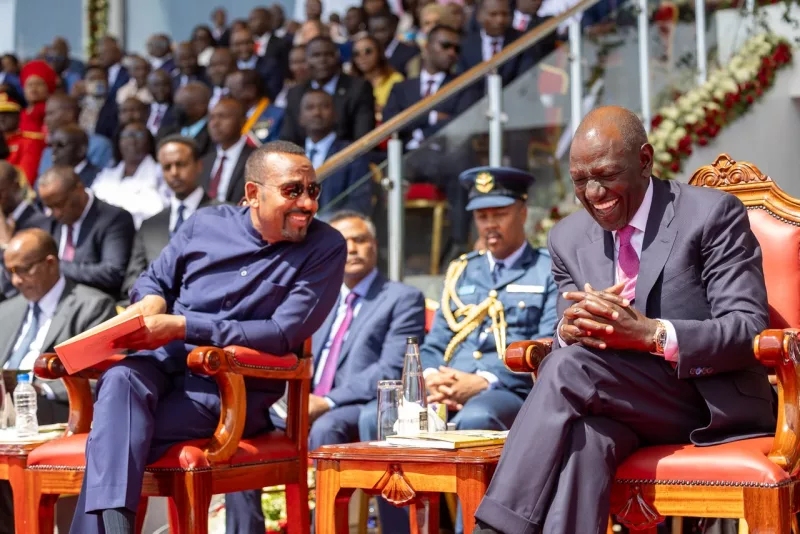
Ruto made the announcement during his Mashujaa Day address at Kipchoge Keino Stadium in Eldoret on Tuesday, as he outlined the government’s plans for the energy sector and other areas of the economy.
“Work in the Lake Turkana area is progressing rapidly, with the sale of oil to foreign countries expected to begin in December,” he said, while pointing to new investments that seek to unlock revenue in the energy sector.
This includes private investors' acquisition of a 25 per cent stake in Kenya Pipeline Company (KPC) from public entities, which Ruto said raised more revenue for strategic infrastructure development.
"Together, these developments will strengthen our energy sector, attract investment and create new opportunities for the Kenyan economy," the President said.
Kenya discovered oil in March 2012, when British firm Tullow Oil and its partner Africa Oil struck crude at the Ngamia-1 well in the South Lokichar Basin.
However, commercial production has remained elusive for more than a decade, held back by technical, financial and infrastructure challenges.
Turkana’s crude has a high wax content and can solidify at temperatures below 40°C, requiring specialised handling and heating to keep it flowing.
A long pipeline to the Coast is costly, while the Early Oil Pilot Scheme, which moved small quantities of crude by truck to Mombasa in 2019, was not a viable model for sustained large-scale exports.
Land negotiations, compensation disputes, security concerns and disagreements over how local communities would benefit also added to the delays.
However, the project gained fresh momentum following approval of its Field Development Plan and the entry of Gulf Energy, which took over assets previously held by Tullow.
The initial production phase is targeting about 20,000 barrels per day, with plans to expand output as development progresses.
The prospect of domestic crude oil production comes at a difficult time for consumers, but it does not necessarily mean an immediate reduction in pump prices.
Selling locally produced crude abroad would generate export earnings, but would not directly replace imported petrol, diesel and kerosene for domestic use.
However, government’s wider plans to cut fuel costs include the proposed Dangote East Africa Refinery in Lamu, a multibillion-dollar project designed to process up to 700,000 barrels of crude oil daily.
The refinery is expected to serve Kenya and regional markets, potentially reducing dependence on imported refined products over time. The project is, however, at an early stage.
The scale of the proposed refinery also highlights a major supply question. Turkana’s initial target of 20,000 barrels per day would be only a small fraction of the refinery’s planned daily capacity of up to 700,000 barrels.
The Lamu facility would therefore still need crude from other sources to operate optimally.
For Turkana residents, the significance of oil production extends beyond national export earnings. The project could generate employment, contracts for local businesses, county revenue and investment in infrastructure, including roads and water supply.
Those benefits are, however, not automatic. Turkana county has opened discussions with Gulf Energy on revenue-sharing and other fiscal arrangements.
Separately, stakeholders have validated draft regulations intended to operationalise the county’s Local Content Act, 2024, which is meant to clarify how employment, procurement and other opportunities are distributed.
The government has also been preparing compensation for people affected by oil-field development.
In September, the county administration reported plans for compensation awards to about 3,600 project-affected people, with Sh200 million set aside for the first phase covering affected households.
The challenge will be ensuring that commercial production translates into tangible gains for communities that have waited years for the commercial viability of the oil.