United Democratic Movement (UDM) leader Ali Ibrahim Roba has reaffirmed the party’s support for President William Ruto’s re-election bid in 2027, while insisting that its partnership with the Kenya Kwanza administration must not weaken its independent political identity.
Roba, who is the Mandera Senator, said UDM had moved from the political margins to the mainstream and must now build a strong national presence ahead of the August 2027 General Election.
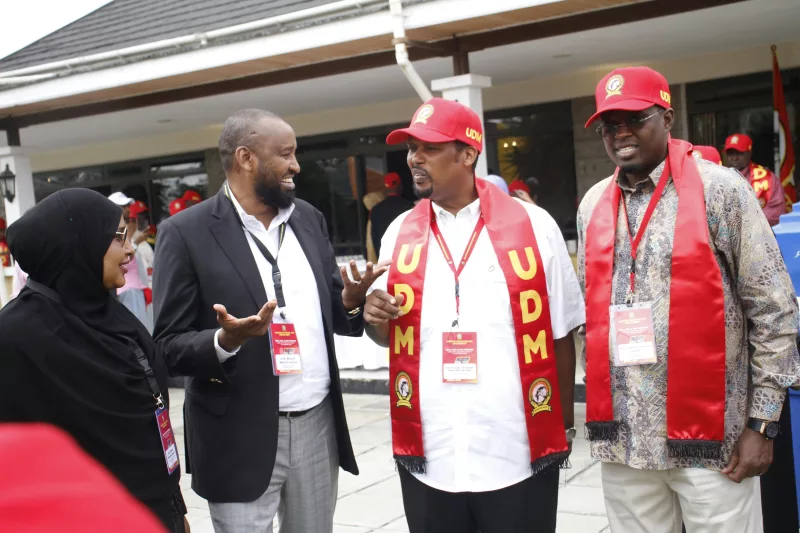
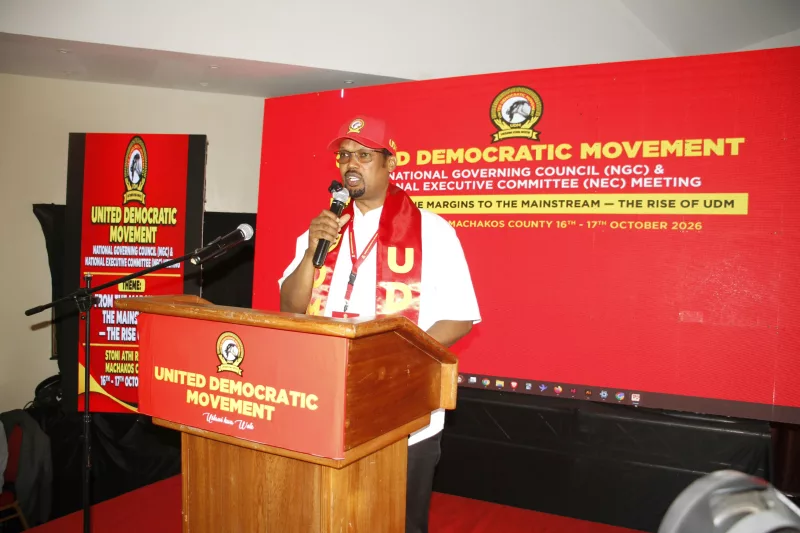
Speaking during a joint meeting of the party’s National Executive Committee (NEC) and National Governing Council (NGC) at a hotel in Machakos County on Saturday, Roba said the party’s next phase would focus on expanding its structures, strengthening internal democracy and attracting more women and young people into leadership.
The meeting was held under the theme “From the Margins to the Mainstream — The Rise of UDM”, reflecting on the party’s history and its ambitions for the future.
“Today, we gather not merely as leaders of a political party, but as custodians of an extraordinary political journey. A journey from the margins to the mainstream,” Roba said.
He traced UDM’s origins to 1999, when leaders conceived it as an alternative political platform. The party was registered in 2001 after facing political and legal challenges.
“The years that followed were not easy. UDM endured political realignments, uncertainty and formidable institutional challenges. But we survived. We reorganised. And we emerged stronger,” he said.
Roba described the party’s renewal in 2021 as a turning point, particularly for pastoralist communities that he said had historically struggled to secure an equal place in national politics.
“For decades, our communities possessed the population, the territory, the leadership and the economic potential but lacked a sufficiently strong and enduring political institution to negotiate their rightful place in national affairs. Too often, we were treated as electoral reservoirs rather than equal partners,” he said.
He argued that UDM had challenged this historical disadvantage and that its performance in the 2022 General Election demonstrated its emergence as one of the country’s significant political parties.
Roba defended UDM’s decision to work with Ruto’s administration after the election, saying the partnership was based on national stability, inclusion and shared responsibility for development.
However, he warned that cooperation with the ruling administration should not come at the expense of the party’s identity.
“Partnership is not absorption. Cooperation is not surrender. And political loyalty must never require the extinction of institutional identity. A stronger UDM strengthens the political partnership and contributes to a more inclusive Republic,” he said.
The senator said the party’s ambition extended beyond its traditional support base in pastoralist regions, with plans to establish functional structures across the country and develop credible leadership at all levels.
“Our roots are in the pastoralist regions, but our vision embraces the entire Republic. We believe in rural transformation, modern agriculture and livestock production, industrialisation, technology, quality education, accessible healthcare, and economic opportunity for all,” Roba said.
He said UDM’s agenda would be guided by its philosophy of Ustawi Kwa Wote, meaning “Prosperity for All”, and called for a country in which no community is left behind because of its geographical location.
Roba also urged party officials to strengthen internal democracy and expand national engagement as the 2027 election approaches.
“As we approach August 2027, our responsibility is to strengthen our institutions, uphold internal democracy, deepen national engagement and demonstrate the maturity of our political leadership,” he said.
He challenged party members to maintain their ambition as they work to expand UDM’s influence beyond its traditional strongholds.
“We have travelled too far to think small. We have overcome too much to surrender our ambition,” Roba said.