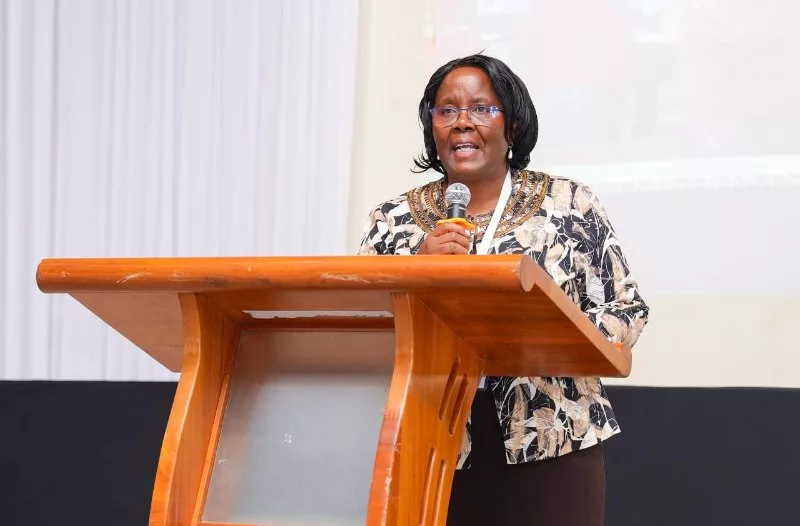
 Dr Nelly Otube, Principal Investigator of the Study during the report launch on 15 October 2026 / HANDOUT
A new study has revealed nearly half of children with disabilities in surveyed Kenyan areas are not enrolled in school.
The findings have raised concerns about the country's ability to guarantee every child access to education, regardless of disability, gender or where they live.
Conducted in March 2026 by The Action Foundation (TAF) and its partners, the study covered seven counties: Nairobi, Kajiado, Kilifi, Machakos, Murang’a, Samburu and Siaya.
Dr Nelly Otube, the study’s lead researcher, said the findings point to the need to establish why children with disabilities remain out of school before designing interventions to address the problem.
“Some of these causes are household-based. Some of them are school-based,” she said, citing infrastructure challenges, teacher capacity and attitudes among caregivers and teachers as possible barriers.
Otube said the research also revealed disparities affecting girls with disabilities, who face additional challenges accessing education.
The study found that girls with disabilities recorded a Grade 3 retention and transition rate of 91.4 per cent, compared with 94.1 per cent for boys with disabilities, 98.4 per cent for girls without disabilities and 98.9 per cent for boys without disabilities.
Otube said safety concerns emerged as one of the barriers raised during the research, adding that further investigation was needed to establish why girls with disabilities were more likely to be left behind in some counties.
The study also exposed gaps in foundational learning. In Grade 1, 50.8 per cent of learners were unable to identify letters of the alphabet, while 39 per cent of Grade Three learners remained at the beginner level in literacy.
In numeracy, 93 per cent of Grade 1 learners could not solve simple subtraction problems involving one- and two-digit numbers. Learners with disabilities recorded the lowest scores across all assessed competency levels.
Teacher preparedness was another concern. The study found that 61.6 per cent of Grade 1 to 3 teachers had not received formal training in inclusive or special needs education. More than 90 per cent of classrooms serving children with disabilities lacked assistive technologies, appropriate accommodations or adapted teaching materials.
Peter Luthron from Kenya Institute of Special Education (KISE), said the findings would help strengthen teacher training and outreach to children who have been left out of school.
He said changing attitudes towards learners with disabilities was essential, alongside working with communities to promote their acceptance in regular classrooms.
Luthron added that inclusive education could help children access learning in their local schools, particularly in areas where specialised schools were insufficient.
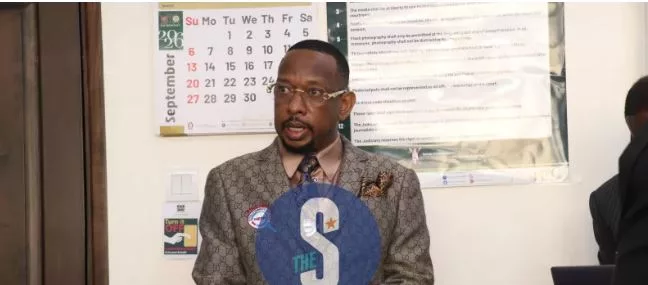
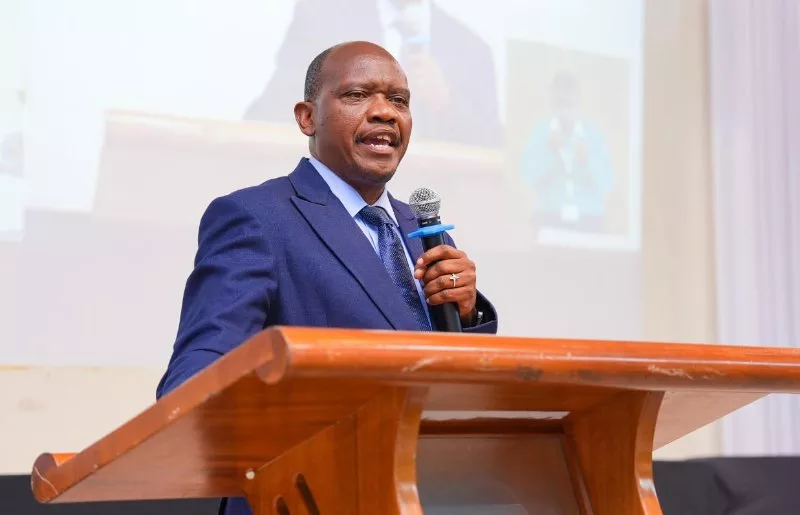 The Action Foundation board chairman Gioko Maina during the launch of the report launch on 15 October / HANDOUT
For Dr Maina Gioko, board chair of The Action Foundation, the findings reinforce the importance of involving parents and communities in ensuring children with disabilities receive an education.
Gioko said the organisation had spent years working with families to challenge stigma and demonstrate that children with disabilities can learn and thrive.
He recalled cases of children being chained under beds or locked away, describing how community engagement and showcasing success stories had helped encourage more parents to bring their children forward and celebrate their achievements.
“Having showcases, showing success stories, has now made more parents, because we have education days, bring those kids out and celebrate them because they are part of them,” he said.
Gioko urged parents to recognise that education is a shared responsibility involving families, teachers, communities and government institutions. He said early learning was particularly important because gaps developed in childhood could widen as children progressed through school.
Otube said the next step was to develop specific actions based on the barriers identified, with county-level discussions helping determine the interventions needed.
TAF and its partners have also introduced an inclusive education data dashboard to track learning outcomes by gender and disability to support decision-making.