 Raila Odinga //Facebook
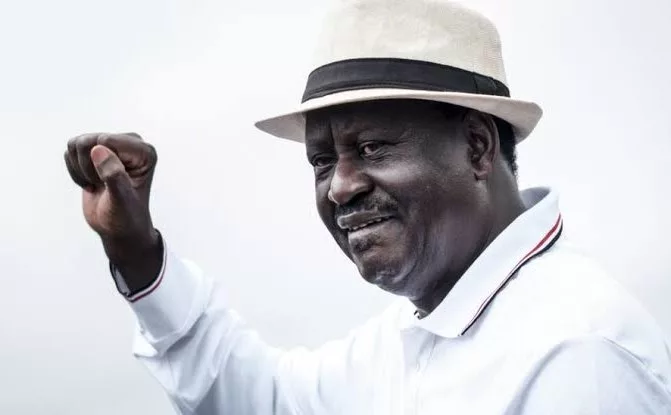
One year after former Prime Minister Raila Odinga’s death, Kenya’s political landscape faces major shifts, testing old alliances as the country heads toward the 2027 General Election.
Raila’s death left behind a political movement with deep roots across several regions, but the opposition landscape has since become increasingly fluid.
His Orange Democratic Movement (ODM) remains a major political force, particularly in Luo Nyanza, while new alliances and political formations are seeking to make inroads into areas that were once regarded as firmly under his influence.
Raila’s primary political strongholds included Nyanza, the Coast, Western Kenya, parts of Nairobi and select areas of North Eastern Kenya. His undisputed political bedrock was the Luo-dominated counties of Kisumu, Siaya, Homa Bay and Migori, while he also enjoyed considerable influence in Kisii and Nyamira.
In Luo Nyanza, ODM remains firmly anchored, with the party continuing to command a strong political presence across the region.
Despite efforts by rival formations to make inroads, ODM retains deep-rooted support among voters in its traditional strongholds, where the party’s history, structures and long-standing political networks continue to shape political loyalties.
However, beyond Luo Nyanza, the political picture is changing rapidly.
Kisii and Nyamira counties, long regarded as important areas of Raila’s influence, are increasingly emerging as a key battleground as former Interior Cabinet Secretary Fred Matiang’i seeks to establish a strong political foothold in the region.
Matiang’i, who is expected to pursue the presidency on the Jubilee Party ticket, has been stepping up efforts to consolidate support in the Gusii region, leveraging his roots and political networks.
Political analyst Daniel Orogo says Matiang’i’s growing presence is beginning to reshape the political conversation in an area that has traditionally leaned heavily towards Raila and his political formations.
“The former Interior CS is seeking to turn the region’s historical loyalty to Raila into a new political base ahead of the next General Election,” Orogo said.
His supporters argue that Matiang’i’s familiarity with the region, coupled with his record in government, gives him a platform from which to position himself as a serious presidential contender.
Orogo said the emerging contest is likely to make Kisii and Nyamira politically significant as national parties and presidential hopefuls seek to secure the Gusii vote.
“With Matiang’i increasingly presenting himself as a viable alternative, the region could witness a significant realignment as voters weigh competing political alliances and presidential ambitions,” Orogo said.
The emerging competition does not necessarily mean ODM has lost its influence in the region, but it signals that political loyalties that were once closely associated with Raila will be contested more aggressively ahead of 2027.
Another major area of political uncertainty is Western Kenya and Nairobi, where ODM historically enjoyed considerable influence.
Political analyst Joseph Mutua and commentator Caleb Burudi say the political landscape in the two regions is undergoing a significant shift, particularly following the emergence of former ODM Secretary General Edwin Sifuna as a leading figure in a new opposition realignment.
Sifuna has broken away from ODM and joined other opposition leaders, including former Deputy President Rigathi Gachagua and Wiper leader Kalonzo Musyoka, in an effort to build an alternative political coalition ahead of the 2027 elections.
Mutua argues that ODM’s influence in Western and Nairobi can no longer be taken for granted as Sifuna seeks to build an alternative political vehicle.
“ODM built a formidable political base in Western and Nairobi, but the emergence of Sifuna has changed the equation. The party can no longer assume that these regions are automatically under its control,” Mutua says.
Burudi similarly notes that Sifuna’s departure could create a new political contest in areas that have historically provided ODM with substantial support.
The emerging opposition alliance is seeking to challenge the established political networks associated with ODM, while Sifuna is expected to seek support beyond Nairobi, including in Western Kenya and the Coast.
According to Mutua, this could create a complicated situation for ODM as it attempts to retain its traditional support while maintaining its relationship with President William Ruto’s United Democratic Alliance (UDA).
“If Sifuna succeeds in establishing himself as a credible alternative, ODM could face a three-way pressure: maintaining its traditional base, accommodating its relationship with UDA and dealing with an emerging opposition force that is targeting some of the same voters,” he says.
The Coast is already emerging as one of the biggest tests of the political relationship between ODM and UDA.
ODM has been pushing for zoning arrangements intended to protect its traditional electoral positions, while UDA wants to contest various seats in the region. The disagreement is particularly pronounced in Mombasa, where the governorship is shaping up to be one of the most closely watched contests.
UDA Secretary-General Hassan Omar has expressed interest in the Mombasa governorship, while businessman Suleiman Shahbal has also maintained his gubernatorial ambitions. ODM incumbent Abdulswamad Nassir is seeking a second term.
The competing ambitions have exposed the difficulties of translating cooperation between the two parties at the national level into electoral arrangements at the county level.
Burudi says the Mombasa contest illustrates the difficulty of translating a national political agreement into local electoral cooperation.
“You can have parties working together nationally, but once you come down to the county level, politicians have their own ambitions and constituencies to protect,” he says.
The dispute over zoning, he adds, could therefore become a major test of whether ODM and UDA can maintain their cooperation while allowing their respective politicians to compete for influential seats.
The Coast has historically been an important part of Raila’s political coalition, and any significant shift in voting patterns in the region could have wider implications for the 2027 presidential contest.
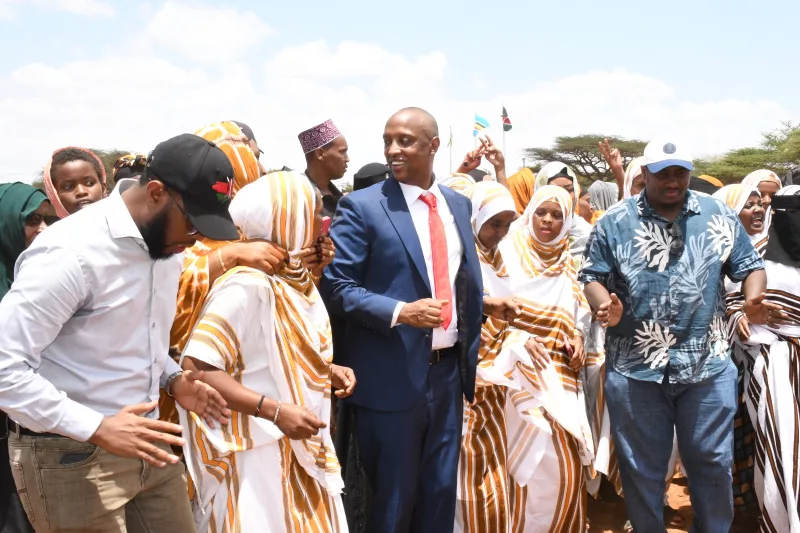
In North Eastern Kenya, ODM continues to enjoy a strong political presence, retaining significant support in a region where the party has built longstanding networks and a loyal voter base.
However, UDA has made notable inroads, seeking to expand its influence by mobilising support across the region and challenging ODM’s traditional dominance.
The growing competition has turned North Eastern into an increasingly contested political landscape, with both parties expected to intensify efforts to win over voters ahead of the next General Election.
One of the most notable features of the post-Raila political landscape has been the continuation of ODM’s working relationship with President William Ruto.
Following Raila’s death, the relationship between ODM and Ruto’s administration has largely remained intact, with the party continuing to cooperate with the Kenya Kwanza administration on key political and governance issues.
The arrangement has fuelled debate within ODM and the wider opposition, particularly as the party explores a possible pre-election agreement with Ruto’s UDA ahead of the 2027 elections.
While ODM leaders have maintained that their cooperation is aimed at advancing the country’s interests, the continued partnership has also created room for rival opposition formations to present themselves as an alternative to both Ruto and the ODM-UDA arrangement.
For political observers, the question is whether ODM can maintain its traditional opposition identity while simultaneously working with the government and negotiating a possible electoral agreement with UDA.
That question is likely to become more prominent as the 2027 campaign gathers momentum.
The changes have also been felt within ODM itself following Raila’s death.
The party has undergone a leadership restructuring, with Oburu Oginga taking over as party leader. Godfrey Osotsi was removed as deputy party leader, while Sifuna was removed as Secretary General.
The changes have altered the balance of power within the party at a time when ODM is simultaneously negotiating its future relationship with UDA and dealing with political figures who have chosen to pursue alternative paths.
For a party that for years revolved around Raila’s political leadership, the transition has raised questions about its ability to preserve the expansive coalition he built across different regions.
Yet ODM remains a formidable political organisation in Luo Nyanza and retains structures and networks in other parts of the country.
As 2027 approaches, the battle will increasingly be about who inherits, reshapes or challenges the political constituencies that Raila cultivated over decades.
From Kisii and Nyamira to Western Kenya, Nairobi, the Coast and North Eastern, the emerging contests suggest that the political map associated with Raila is no longer as predictable as it once was.