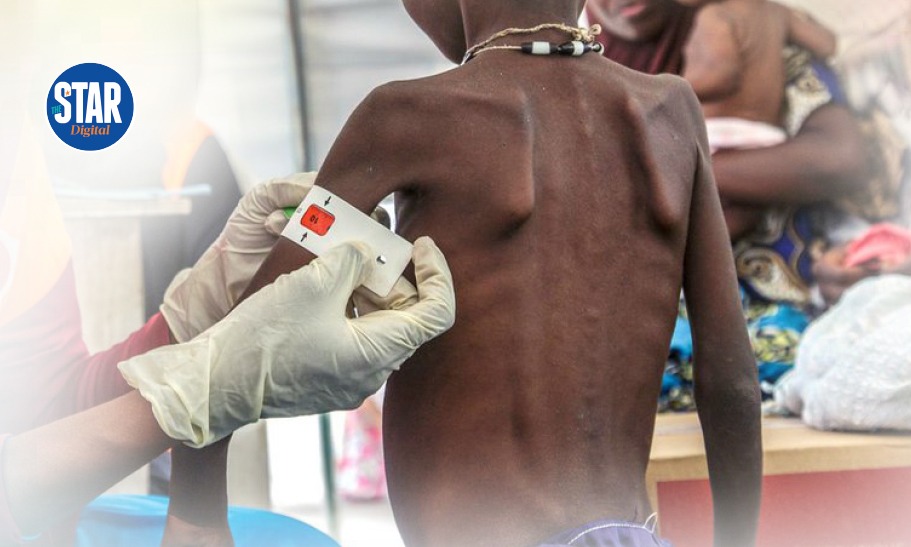
 There is acute malnutrition in ASAL counties /FILE
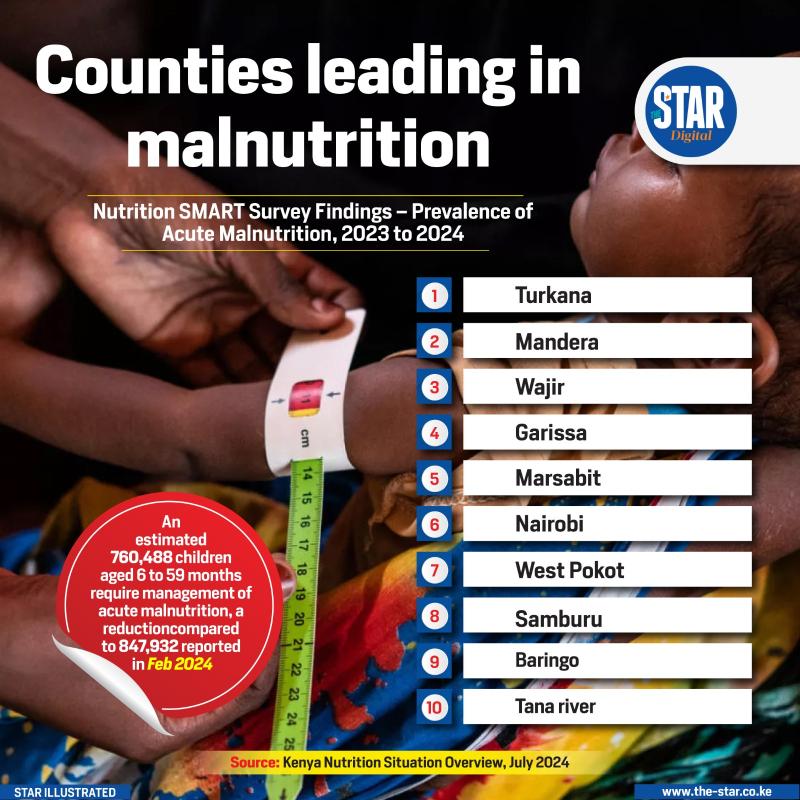 Counties leading in malnutrition
Local crops such as chickpeas, sorghum, maize, and soybeans are better alternatives to beating mulnutrition than conventional formulations that rely on milk and peanuts, according to a new study.
More than 2.7 million people in Kenya’s arid and semi-arid lands (ASALs) are facing acute food insecurity, while hundreds of thousands of children need treatment for malnutrition.
The study noted that locally grown crops such as sorghum, maize, soybeans, and chickpeas could help make lifesaving nutrition treatment more affordable and accessible.
The findings come at a time when poor rainfall, high food prices, and declining household food stocks are worsening the nutrition situation in vulnerable communities.
The study published in Current Developments in Nutrition examined a plant-based therapeutic food made from chickpeas, sorghum, maize, and soybeans as an alternative to conventional formulations that rely on milk and peanuts.
It showed that ready-to-use therapeutic food (RUTF) is a high-energy, nutrient-rich paste used to treat children with severe acute malnutrition. However, the researchers noted that existing treatment reaches only about 30 per cent of children who need it globally.
“One of the challenges is the cost of ingredients, particularly powdered milk, which is often sourced from wealthier countries. Dependence on imported ingredients can expose treatment programmes to supply disruptions and price increases, making it harder for lower-income countries to expand access,” the study showed.
The research team, led by Dr Aurelie Bechoff, Prof Efrat Monsonego-Ornan and Prof Ram Reifen of the Hebrew University of Jerusalem, developed a formulation known as ChSMS, using chickpeas, sorghum, maize and soybeans instead of milk and peanuts.
In preclinical tests, the formulation supported better recovery from malnutrition than the commercial peanut-and-milk product used for comparison, including catch-up growth.
The researchers also found that the plant-based formulation provided about 14 per cent of its energy from protein, compared with 10 per cent in the commercial product. Its protein-quality score was 87 per cent, against 69 per cent for the commercial formulation.
Prof Monsonego-Ornan said locally produced therapeutic foods could reduce dependence on expensive imports and improve access to treatment, provided their nutritional quality remained high.
The study found that beyond weight gain, indications of improvements in linear growth, raising the possibility that future formulations could help address different forms of malnutrition.
However, further research is needed to establish whether the product can safely and effectively treat children.
For Kenya, the findings are relevant as the country grapples with rising food insecurity and acute malnutrition, particularly in ASAL counties.
The Kenya Integrated Food Security Phase Classification (IPC) analysis estimates that about 2.7 million people in ASAL counties will require urgent food and livelihood assistance by the end of October 2026.
Approximately 348,000 are facing emergency levels of food insecurity, with Mandera, Turkana, Wajir, Garissa, Marsabit and Tana River among the most affected counties.
The researchers said producing therapeutic food from locally available crops could strengthen agricultural supply chains while reducing reliance on international suppliers.
The researchers from institutions in Israel, the United Kingdom, Nigeria, Kenya and Ireland noted that locally sourced ingredients could help make nutrition care more sustainable, but affordability must go hand in hand with proven safety and nutritional effectiveness.
Instant analysis
The Kenya Integrated Food Security Phase Classification (IPC) analysis that more than 883,000 cases of acute malnutrition among children aged six to 59 months nationally, including 224,300 cases of severe acute malnutrition. A further 117,000 cases are projected among pregnant and breastfeeding women and girls between April 2026 and March 2027.