 Kenya National Union of Nurses secretary-general Seth Panyako addressing the media in Kisumu. Faith Matete
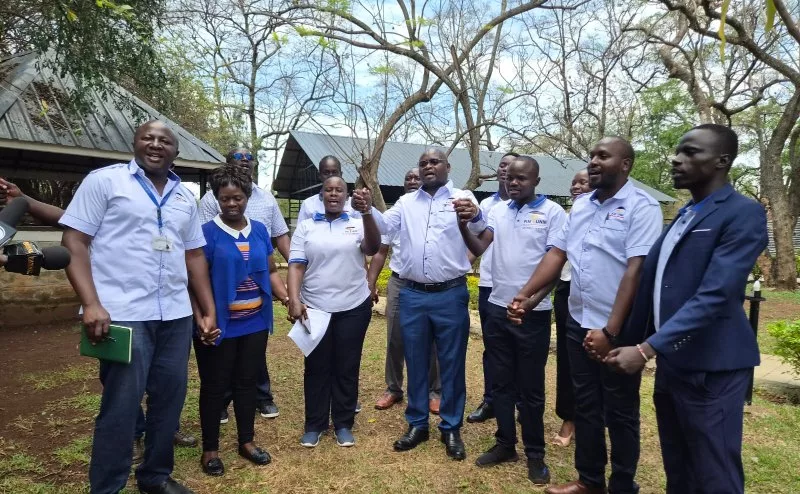 Kenya National Union of Nurses in Kisumu. Faith Matete
Kenya must strengthen Ebola preparedness and ensure healthcare workers are adequately trained and protected, Kenya National Union of Nurses secretary general Seth Panyako has said.
Panyako spoke following a confirmed case and reported death from Ebola.
The official urged the Ministry of Health to adhere strictly to World Health Organisation protocols on ebola management and other disease outbreaks to protect frontline workers and prevent further infections.
Speaking to the media in Kisumu, he said Kenya had skilled doctors and nurses capable of responding to public health emergencies but stressed the need for adequate training, equipment and institutional support.
“As a union, we understand and appreciate the seriousness of a confirmed ebola case in the country and the reported death of the patient,” Panyako said.
He said lessons from the Covid-19 pandemic should guide the country's response to ebola and other infectious disease threats.
The pandemic exposed gaps in the protection of frontline healthcare workers, prompting the union to engage relevant authorities to advocate for appropriate training and protective measures.
Panyako expressed confidence in nurses' ability to respond to outbreaks, noting that many had received training in emergency management and measures to protect themselves and the public.
However, he warned that preparedness must extend beyond individual skills to include effective screening, infection prevention and control measures and compliance with established public health protocols.
He said agencies responsible for screening travellers at points of entry must fulfil their obligations to minimise the risk of infectious diseases spreading.
“Travellers arriving from areas affected by ebola should be screened in line with applicable public health guidelines, with isolation and other protective measures implemented where necessary,” he said.
Panyako added that information available to the union at the time of his briefing indicated that healthcare workers placed under quarantine at Nairobi Hospital were not showing signs of ebola infection.
He said the situation underscored the importance of preparedness and strict adherence to infection prevention and control procedures.
The union boss also urged nurses working in private healthcare facilities, particularly in Nairobi, to join the union to strengthen the representation of their welfare and working conditions.
He cited nurses at Nairobi Hospital as an example of workers whose interests the union could not directly represent because they were not members.
Panyako said limited membership could prevent the union from obtaining detailed information about nurses' working conditions and welfare concerns, including challenges arising during disease outbreaks.
“When we raise concerns about nurses' welfare, including issues arising during an outbreak such as ebola, we may be asked to provide specific information that we do not necessarily have access to if the affected nurses are outside our membership,” he said.
Panyako said protecting healthcare workers was essential to ensuring hospitals could respond effectively to disease outbreaks without exposing staff and the public to unnecessary risks.
He called for stronger institutional support, effective screening and consistent implementation of public health protocols, saying these measures were critical to safeguarding healthcare workers and limiting the spread of infectious diseases.
INSTANT ANALYSIS
Kenya’s Ebola response will depend not only on screening travellers but also on protecting the healthcare workers expected to manage infections. Seth Panyako’s warning highlights the need for proper training, protective equipment and strict adherence to public health protocols. Lessons from Covid-19 remain relevant, while concerns over nurses’ welfare underline the importance of institutional support in ensuring hospitals can respond to outbreaks without exposing frontline staff to avoidable risks.