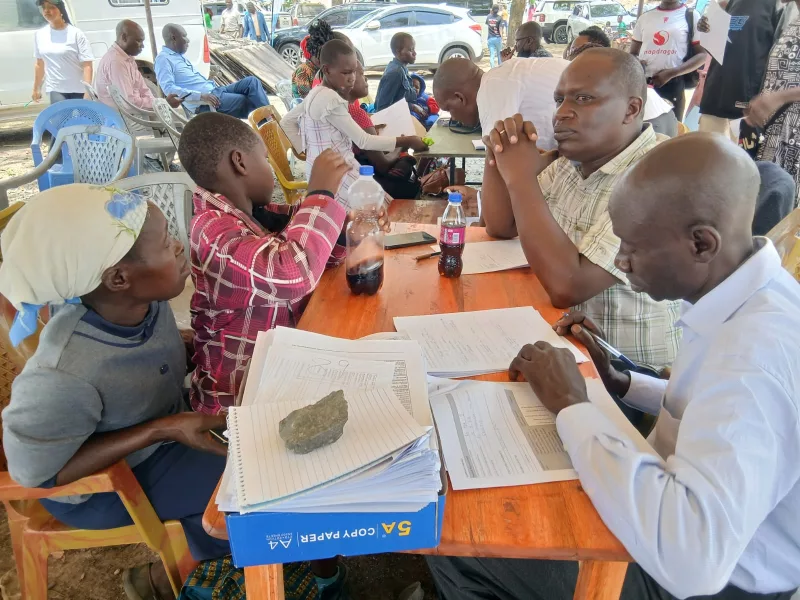
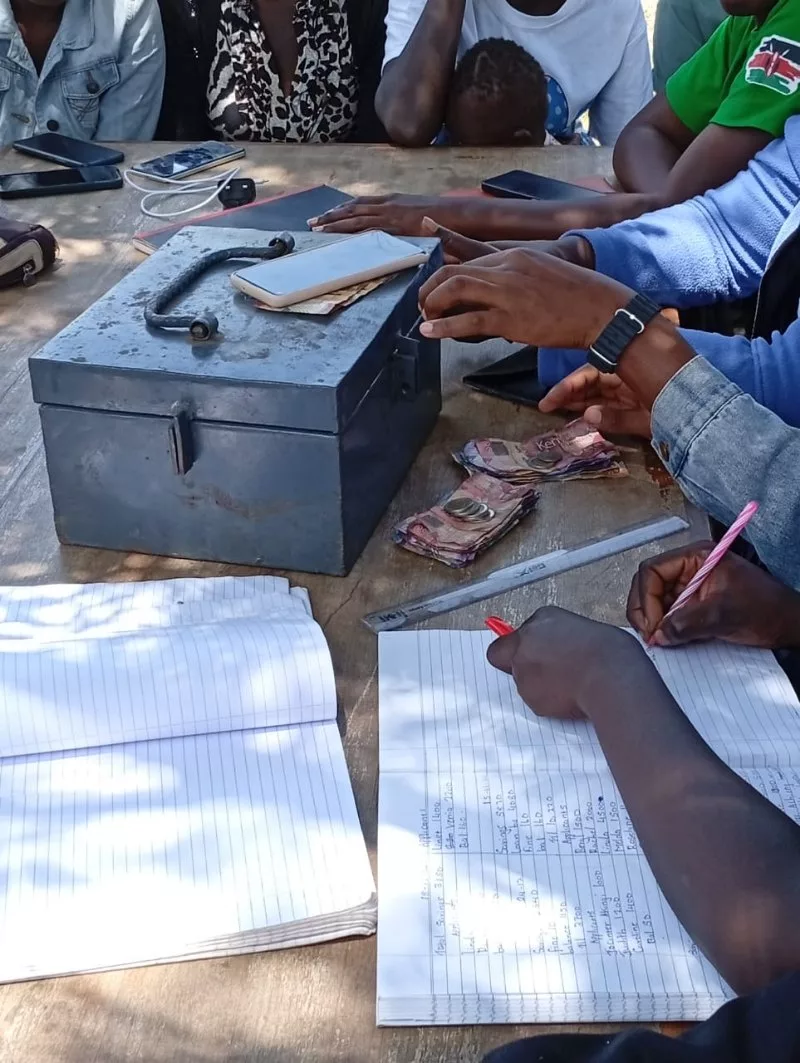
 The young mothers in Homa Bay learn craft-making and beadwork skills as they explore their creativity and develop practical skills for their future /FAITH MATETE
At 15, CA watched the life she had imagined for herself begin to slip away.
A Form 1 student from Gogo Katuma in Homa Bay town subcounty, she had looked forward to an education and a future of her own. Then she discovered she was pregnant.
The news brought fear, shame and disappointment. As the firstborn, her pregnancy was a painful blow to her parents, who had high hopes for her.
Unable to bear the stigma at home and school, CA stopped attending classes.
“I felt ashamed. I did not know what people would say about me,” she recalls.
After giving birth, she was sent to live with an aunt in another community to ‘save the family’s face’, as even her parents faced blame for her pregnancy.
At 16, with a newborn and few prospects, CA got married, hoping to find stability. Instead, she became pregnant again almost immediately. Her husband had no stable employment, leaving the young family struggling to meet basic needs.
She began losing hope, feeling her life had come to an end.
Then, during a routine household visit, a community health promoter told her about a group of teenage mothers who met every Sunday afternoon at Miniambo dispensary.
CA decided to attend. The first meeting at Gogo Shinners group offered something she desperately needed: the assurance she was not alone.
The young mothers shared their experiences, encouraged one another and received counselling.
They also learnt income-generating skills, including farming, beading, crafting and liquid soap making, alongside savings and loans.
For CA, the lessons offered more than practical skills. They helped her believe that becoming a mother at a young age did not have to end her dreams.
She planted sukuma wiki at her homestead and sold the vegetables to neighbours. From the proceeds, she made her first Sh50 contribution to the group’s savings.
After saving consistently, she qualified for a Sh200 loan, which she used to buy jaggery and sweets for resale. She repaid the loan, continued saving and gradually accessed larger loans to expand her stock.
Her business eventually generated enough income to help pay household bills and school fees for her firstborn, who is now in PP2, as well as buy clothes and other necessities for her children.
The progress also restored her confidence.
“I became confident,” she says.
Today, her ambitions extend beyond her individual business. Together with other young mothers in Gogo Shinners, she is part of a group that has installed a posho mill at a local centre.
The mothers operate it on a duty roster and save the profits after meeting electricity and other operating expenses. They hope to use the savings to establish another group business before the end of the year.
At 20, CA is also planning to return to school. She wants to save enough money to resume her education once her youngest child is old enough to start school.
Her experience reflects the challenges facing girls in Homa Bay, where teenage pregnancy can interrupt education and limit economic opportunities.
A 2025 Homa Bay county gender data sheet puts the teenage pregnancy rate at 23.2 per cent, significantly above the national average of 14 per cent.
The Kenya Demographic and Health Survey puts the county’s school dropout rate at 14.7 per cent, with teenage pregnancy identified as the main cause.
Behind these figures are girls navigating motherhood, poverty, interrupted education and social stigma, often with limited support.
The challenges came into focus as the world marked International Day of the Girl Child on October 11.
The annual observance called for an end to child marriage and greater investment in girls’ rights, opportunities and futures.
For girls such as CA, that investment can mean remaining in school, accessing support during pregnancy, building an income and regaining control over their lives.
For SA, the struggle began even before motherhood.
An orphan, she was raised by her maternal grandmother from the time she was a few months old.
Her ageing grandmother remains the household’s sole breadwinner, relying on charcoal burning and small-scale farming.
SA became pregnant at 17 while in Form 3. When doctors confirmed the pregnancy, both grandmother and granddaughter were devastated.
Unlike CA, however, S A had the support of her teachers and grandmother. She continued attending school until she was close to delivery.
After giving birth, she encountered the teenage mothers’ group at Miniambo dispensary while taking her baby for antenatal care.
She joined the Ladies of Vallar teen mothers’ group, where she learnt about table banking, savings, loans and income-generating activities.
A Sh200 loan enabled her to start a sukuma wiki business.
After repaying it and continuing to save, she qualified for a larger loan, which she used to start making maandazis to supplement her grocery business.
The income remains small, but it has helped her contribute to household expenses, buy nappies and other necessities for her baby, and support her grandmother.
Most importantly, SA returned to school this term after her baby turned six months old and was weaned.
She now balances classes, motherhood and her businesses, paying her fees little by little while providing for her child.
Her circumstances remain difficult and her business cannot yet sustain the family. Still, she is determined to complete secondary school.
For teenage mothers such as CA and SA, that hope is increasingly being supported by programmes that address their health needs and the economic circumstances that can keep young families in poverty.
Kisumu Medical and Education Trust (KMET) is implementing the Smart Start Initiative Plus in partnership with the Homa Bay and Nyamira governments.
The programme targets adolescent girls and young women aged 15 to 24.
In Homa Bay, it operates in Rachuonyo North, Suba South, Rangwe, Homa Bay town and Ndhiwa, as well as in five subcounties in Nyamira.
Yvonne Sewe, a project officer at KMET, says the initiative seeks to bridge the economic gap facing adolescent mothers by combining economic empowerment with nurturing care for young children.
It provides training in income-generating activities, life skills, handwork, pastry making and beading, alongside mentorship and counselling.
“We are looking at the adolescent mother holistically,” Sewe says.
The economic empowerment component uses a Savings for Empowerment model, enabling young women to save, access small loans and gradually build productive assets.
Their activities include poultry, fish and livestock farming, detergent and bread making, kiosks, fruit and vegetable vending, omena and fish businesses and beadwork.
Programme figures indicate 710 girls are engaged in businesses and income-generating activities, while 346 have acquired assets.
The groups have accumulated Sh2.1 million in savings and a loan portfolio of Sh1.9 million. Their social funds stand at Sh145,820.
Five groups have also accessed grants and loans from external entities amounting to Sh1.4 million.
Beyond economic empowerment, the programme addresses health and development needs.
Some 458 girls have been registered with the Social Health Authority, while 5,941 have accessed adolescent sexual and reproductive health services.
The initiative has also supported 603 kitchen gardens to improve household nutrition.
For girls whose education has been interrupted, it is creating pathways back to school. Data shows 104 girls aged 15 to 19 and 196 aged 20 to 24 have returned to school.
The groups have also become spaces where young mothers can confront challenges that money alone cannot resolve.
Julie Oyoo, a subcounty nutritionist working with adolescent mothers in Homa Bay, provides guidance on maternal and child nutrition, breastfeeding, growth and development.
She says some disturbing cases involve girls with intellectual disabilities `who have reportedly been sexually abused by family members.
Such cases highlight the need for stronger community surveillance, protection and referral systems.
Community health volunteers and promoters are particularly important because they are often the first to encounter vulnerable girls in their homes and communities.
“They know these communities and are able to identify vulnerable girls, follow them up at home and connect them with the services they need,” Oyoo says.
For SA, such a community connection opened the door to a different future.
The teenage mothers’ group did not erase her experience or restore the schooling she lost at 15. Nor did it remove the responsibilities of raising two children.
But it changed her sense of what was possible.
From a small patch of sukuma wiki to selling sweets and jaggery and eventually joining a group operating a posho mill, each step has given her greater control over her family’s future.
For CA, returning to Form 3 after motherhood is another way of reclaiming what she feared she had lost.
Their experiences show economic empowerment alone cannot solve teenage pregnancy or school dropout.
But access to skills, savings, small loans, healthcare, counselling and supportive communities can give young mothers room to rebuild their lives.
For SA, the story is still being written. She is saving, working and waiting for the day she can return to the classroom.
At 20, she has learnt that a difficult beginning does not have to determine the rest of her life.
Investing in girls means more than preventing early motherhood. It means ensuring that when childhood is disrupted, girls are not abandoned and that education, dignity and opportunity remain within reach.
The Star Newspaper Young Mothers project is part of the Young Mothers Consortium, a regional initiative supported by the Conrad N. Hilton Foundation and working across Kenya, Mozambique and Tanzania to centre young mothers’ leadership and voices.