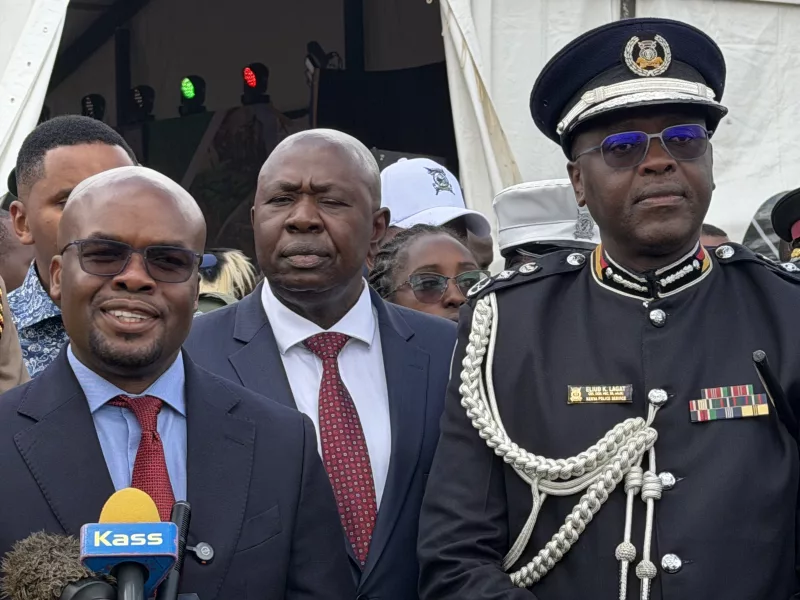
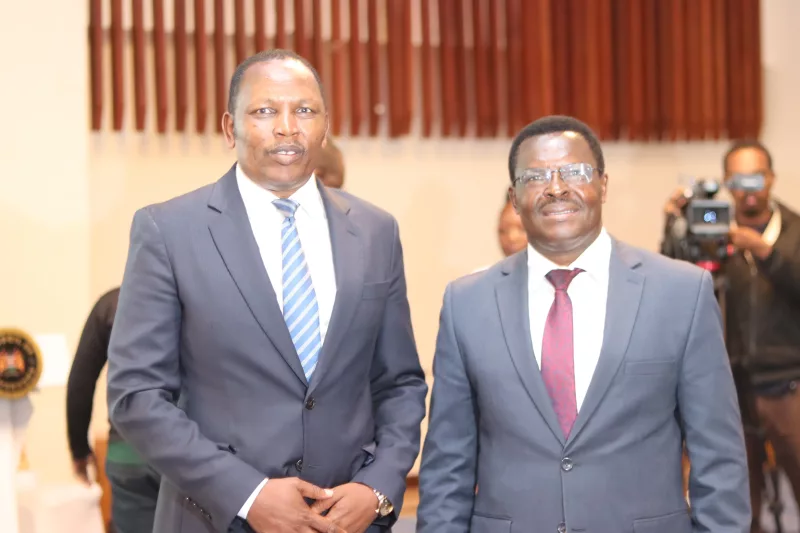
 The Governor of Samburu, Lati Lelelit, and newly elected CoG Chairperson Muthomi Njuki./HANDOUT
The Governor of Samburu, Lati Lelelit, has been appointed chairperson of the Security and Foreign Affairs Committee of the Council of Governors (CoG).
Lelelit is among the county chiefs elected to the CoG’s executive leadership for the 2026–2027 term, with the appointment placing him at the centre of county governments’ engagement on security and foreign relations.
His election comes as county governments continue to play a role in addressing local security challenges, coordinating with national security agencies and strengthening cooperation across devolved units.
The Security and Foreign Affairs Committee is expected to provide a platform for governors to discuss security concerns affecting their counties and engage relevant national institutions on matters requiring intergovernmental cooperation.
The Council of Governors brings together the heads of Kenya’s 47 county governments to coordinate county-level policy positions, promote consultation and represent devolved governments in engagements with the national government.
 The Governor of Samburu, Lati Lelelit, and newly elected CoG Chairperson Muthomi Njuki./HANDOUT
Tharaka Nithi Governor Muthomi Njuki has been elected chairperson of the Council of Governors, while Bungoma Governor Kenneth Lusaka will serve as vice-chairperson. Baringo Governor Benjamin Cheboi has been appointed the council’s whip.
The new executive team will oversee the council’s activities during the 2026–2027 term, with committee chairs responsible for coordinating discussions and policy positions within their respective portfolios.
Other appointments cover key areas, including finance, planning and economic affairs; health; agriculture; environment, forestry and climate change; education; human resources and social welfare; trade and cooperatives; transport and energy; and water and natural resources.
The council has also assigned responsibilities for tourism and wildlife, legal and constitutional affairs, public service, housing and urban development, and information and communication technology.
The appointments are intended to strengthen coordination among counties and provide a framework for governors to address shared challenges affecting service delivery and regional development.
The new leadership assumes office for a one-year term, during which the council will continue to represent county governments in negotiations and consultations with the national government.