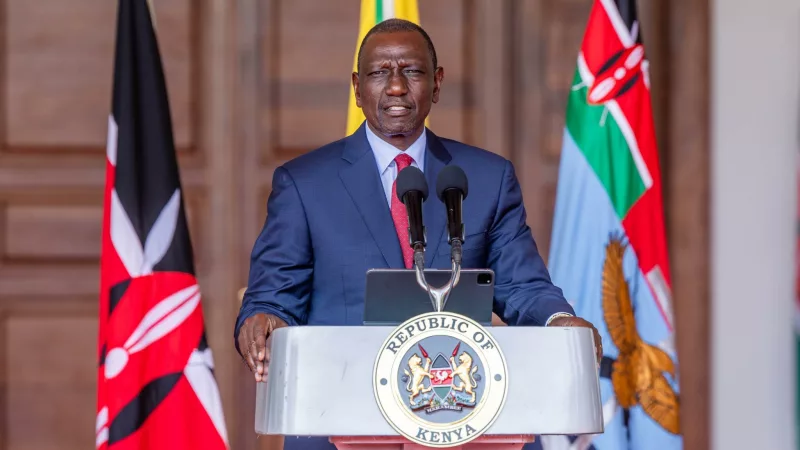
The Orange Democratic Movement has warned President William Ruto’s allies angling for the Deputy President’s seat that it will support his re-election bid only if the party secures the powerful position.
The demand sets the stage for a contest over the 2027 presidential ticket, with incumbent Deputy President Kithure Kindiki seeking to retain his position as other political interests within the ruling coalition press their claims.
ODM, through its national chairperson Gladys Wanga, insists the party will not enter into a pre-election arrangement with Ruto without a commitment that one of its own will become his running mate.
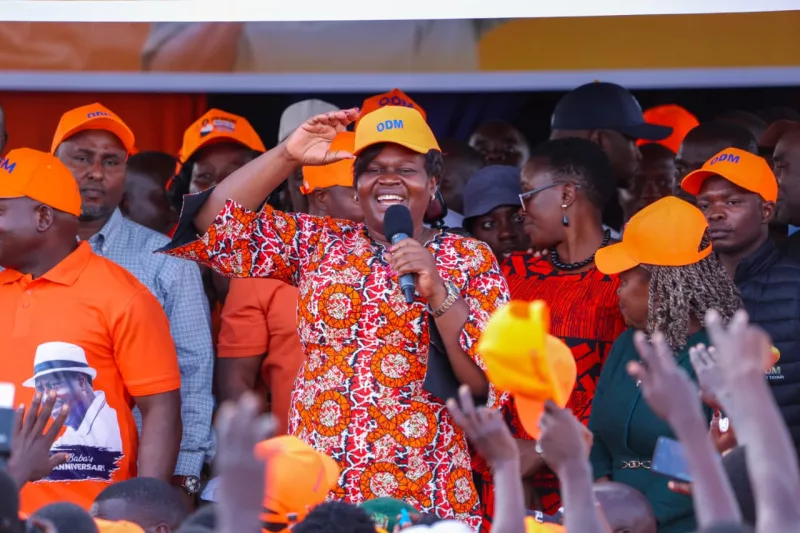
Speaking during a party event in Kakamega over the weekend, Wanga said ODM’s political strength must count in negotiations over the formation of the next government.
“And we want to tell the President, and our other brothers, we as ODM, we are a big party,” she said.
“When the President is re-elected, the Deputy President should be from ODM. That is the road that we are going to walk.”
The declaration places the Deputy President’s seat at the centre of negotiations over a possible political arrangement between Ruto’s United Democratic Alliance and the opposition party.
It also raises questions about Kindiki’s future in the ticket, given that the ruling party has already maintained he remains its designated running mate.
UDA secretary general Hassan Omar has affirmed that Kindiki is the party’s choice, while the Deputy President has defended his record in office as he seeks to retain the position.
ODM’s demand, therefore, introduces another layer of competition, with the party seeking to convert its political support base into influence over the composition of the next government.
The Deputy President’s seat has attracted considerable interest because it offers more than a place on the presidential ticket.
It provides national visibility, access to the centre of government and a prominent platform for political mobilisation.
For parties and leaders negotiating alliances, the position also offers a measure of influence over the government’s priorities and the distribution of senior roles should their coalition win the election.
The contest is further complicated by competing interests within the ruling coalition and Western Kenya, where leaders have also demanded consideration for the position.
The region’s political leadership is divided between those backing National Assembly Speaker Moses Wetang’ula and those supporting Cooperative CS Wycliffe Oparanya.
Their interest reflects the broader calculations around the running mate slot, as leaders seek to establish their bargaining power before formal coalition negotiations gather pace.
For Kindiki, the challenge is to defend his place on the ticket amid growing demands from political allies and potential coalition partners.
For ODM, the demand signals that it does not intend to settle for a supporting role in a possible arrangement with Ruto.
The party wants a direct stake in the leadership of the next government, with the Deputy President’s position serving as its proposed entry point.
However, securing the seat would depend on negotiations among the political players and whether Ruto is prepared to accommodate ODM’s demand, while managing competing interests within his own camp.
Wanga’s remarks also sought to counter predictions that ODM would weaken or collapse following the death of its longtime leader Raila Odinga.
“There are those who prophesied that after the death of Raila Odinga, ODM would crumble, but that has not happened,” she said.
The party chairperson pointed to ODM’s continued popularity in Kakamega as evidence that the outfit remained firmly rooted in its traditional strongholds.
She expressed confidence that the party would capture elective seats across the region in the 2027 General Election, from ward representatives to the governor’s office.
“Here in Kakamega, when I look around, ODM is still very popular. And in the next election, I know all seats will go to ODM, from MCA to governor,” she said.
ODM is betting that its grassroots networks and electoral base will give it leverage in discussions over a possible partnership with Ruto.
Yet the running mate question could test the relationship between the two sides, particularly if other allies of the President also demand a place on the ticket.
Beyond the coalition negotiations, Wanga sought to reassure ODM aspirants that the party would protect its internal nomination process ahead of the election.
She said the party would conduct free, fair and transparent nominations, promising that members’ preferences would determine who receives the party ticket.
“Anybody with the support of the members will fly the party’s flag,” she said.
The promise comes as parties begin positioning themselves for the 2027 contest, with nominations and coalition negotiations expected to shape the political landscape well before voters head to the ballot.