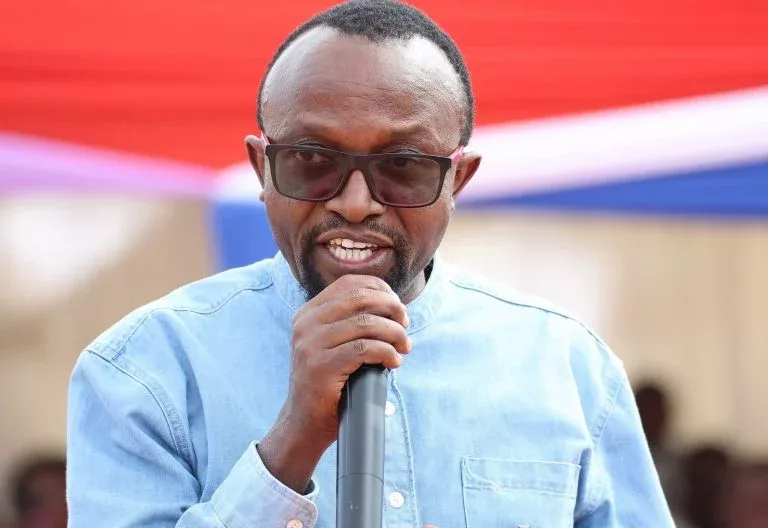
Nairobi Senator Edwin Sifuna’s biggest political vulnerability in a 2027 presidential bid could lie beyond the State House race itself; the numbers in Parliament.
Should Sifuna win the presidency, he could face a difficult road ahead if his party fails to elect a sizeable bloc of MPs and senators to support his administration.
Unlike some rival opposition formations, relatively few high-profile candidates have publicly emerged to signal their intention to contest parliamentary and other elective positions on his party’s ticket.
The situation could become more consequential if the opposition alliance holds together, with political formations associated with former Rigathi Gachagua’s, Kalonzo Musyoka’s and Fred Matiang’i’s commands substantial parliamentary numbers.
Such an outcome could give these parties considerable influence over legislation, government spending and the broader balance of power in Parliament, even if Sifuna were to emerge victorious in the presidential contest.
Some analysts say the biggest danger could be if there is a fallout within the Coalition.
Political analyst Alfred Kasembeli says that if Sifuna were to become president but lacked strong numbers in Parliament, a breakdown in relations with his allies could make governing considerably more difficult.
He could easily be blackmailed and in a worst case scenario, some MPs could attempt an impeachment.
“Without sufficient support among legislators, his administration could face difficulties advancing key legislation, securing approval for government spending and implementing parts of his policy agenda,” Kasembeli said.
The opposition brings together many political bigwigs with diverse interests.
Some analyst have predicted friction will be inevitable.
Despite Sifuna’s growing profile in the presidential race, his party appears not to have developed a similarly strong and extensive line-up of candidates seeking elective positions under its banner.
Political commentator Caleb Burudi attributes this in part to the timing of the formation of his political vehicle, The Equitable Party, which was launched only last week.
“This could present a challenge as the party seeks to translate presidential support into a broader electoral presence in 2027,” Burudi said.
He added that Gachagua and Kalonzo could emerge with significant influence in Parliament if their political formations succeed in attracting strong candidates across constituencies.
“Their ability to build broad alliances and field competitive parliamentary aspirants could determine whether they secure substantial numbers of seats in the National Assembly and Senate, giving them greater leverage in shaping legislation, budgets and the broader direction of government,” he said.
Gachagua has already set an ambitious target for his DCP, saying the party must secure a parliamentary majority to drive its legislative agenda and establish itself as a dominant political force ahead of the 2027 General Election.
In July, Gachagua said DCP was targeting at least 130 MPs, 20 senators, 20 governors and 720 MCAs.
“As DCP, we must emerge with at least 130 MPs, 720 MCAs, 20 governors and 20 senators. It is doable,” he said.
The former Deputy President reiterated the ambition last week during an engagement with clergy in Boston, United States, saying DCP expected to secure majorities in both the National Assembly and Senate.
He also wants to control about 20 counties.
“Our party is the most popular party in Kenya because we have listened to the people on the ground,” Gachagua said
For Sifuna, the issue is not simply whether he can mount a competitive presidential campaign.
In Kenya’s presidential system, Parliament plays a critical role in the functioning of government.
The President heads the Executive, but Parliament makes laws, approves government spending and exercises oversight over the Executive.
A president with substantial parliamentary support may therefore find it easier to advance legislation, secure funding for government programmes and pursue key policy priorities.
At the same time, Parliament is constitutionally mandated to scrutinise and hold the Executive accountable.