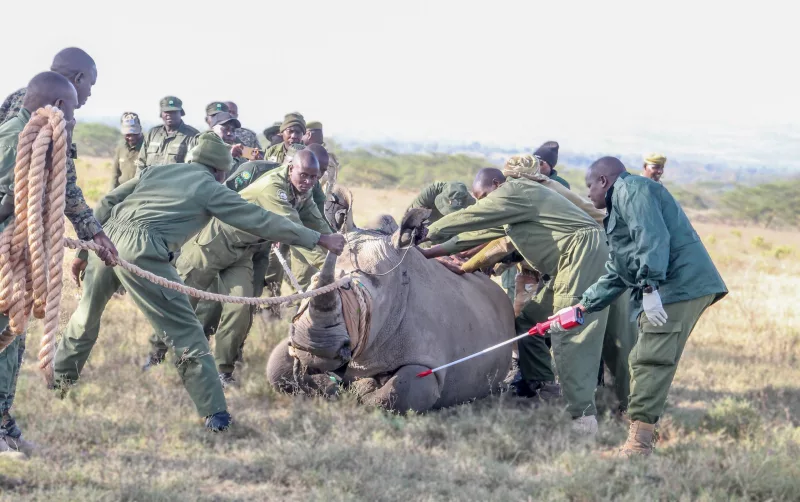
Veterinary officers have received a major boost after key government agencies backed calls for a review of their salaries and allowances to narrow the earnings gap with medical doctors.
This followed a petition by the Kenya Veterinary Association (KVA) to Parliament seeking harmonisation of their pay to match that of medical doctors.
The petition gained traction on Thursday after the Public Service Commission (PSC), Salaries and Remuneration Commission (SRC) and two state departments acknowledged the need for a fresh assessment of veterinarians’ remuneration.
Appearing before the National Assembly Labour Committee, the agencies supported an evidence-based review of job grades and allowances, although they stopped short of endorsing automatic pay parity with medical doctors.
PSC chief executive Paul Famba said veterinary doctors were critical health professionals whose contributions should not be considered inferior to those of their counterparts treating human patients.
Famba said both cadres shared the same basic salary structure in the public service, with differences in earnings largely arising from allowances and collective bargaining agreements.
“There is no separate veterinary scale to harmonise. The earnings gap arises from allowances tied to 24-hour hospital duty and the 2017 KMPDU Collective Bargaining Agreement,” he said.
Representing the State Department for Livestock Development, Abraham Sangula urged the SRC to conduct a comparative job evaluation that considers qualifications, training, occupational risks and the principle of equal remuneration for work of equal value.
The State Department for Public Service and Human Capital Development also acknowledged the veterinarians’ concerns, citing the duration of their training, working conditions and exposure to occupational hazards.
Jacob Mbijiwe, who presented the department’s submission, said the two cadres undergo comparable training, with veterinarians facing risks that justify a review of their allowances.
“When reviewing their allowances, the time of training for the two levels of doctors in medical, human and animal health should be considered. They all undergo the same duration of training,” he said.
The growing support came as MPs criticised government bureaucracy for prolonging the dispute, demanding a clear path towards resolving the veterinarians’ grievances.
Vihiga MP Ernest Kagesi opposed further delays, arguing veterinary doctors should be assessed alongside other health professionals rather than compared with unrelated cadres.
He also raised concerns about the internship stipend paid to veterinary doctors, describing it as inadequate.
Bungoma Woman Representative Catherine Wambilianga called for deliberate measures to narrow the earnings gap between veterinary and medical professionals.
Committee chairperson Ken Chonga said veterinary officers play a crucial role in protecting public health, particularly in detecting and containing diseases that can spread from animals to humans.
“We have seen that the prayers are justified and all the sectors who have presented have accepted the fact the KVA has all the justification to seek for harmonisation. What is missing is the roadmap,” he said.
He faulted government agencies for shifting responsibility among departments without providing a concrete plan to address the petition.
The committee directed that a joint multi-agency hearing be convened involving the Council of Governors, the State Department for Livestock Development, the Ministry of Health, the PSC, the SRC and the KVA.
The meeting is expected to establish eligibility criteria, undertake job evaluations and identify the budgetary provisions needed to address the pay disparities.