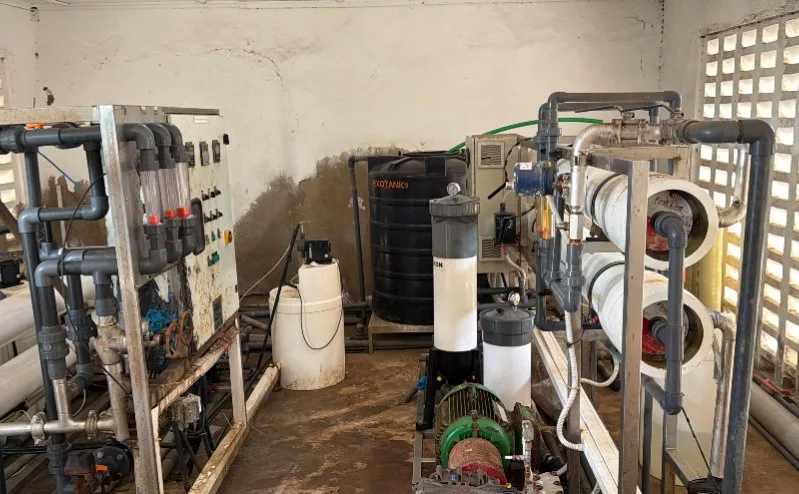
 Inside the Kiunga Solar Desalination Plant in Kiunga /BRIAN OTIENO
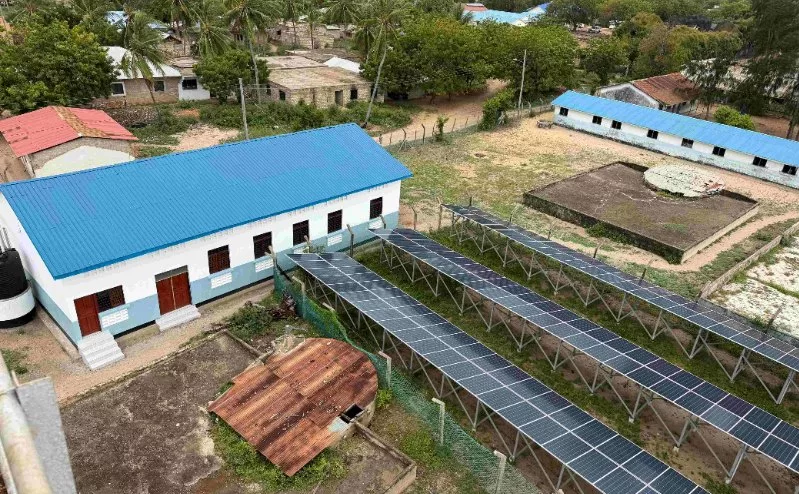 The Kiunga Solar Desalination Plant in Kiunga /BRIAN OTIENO
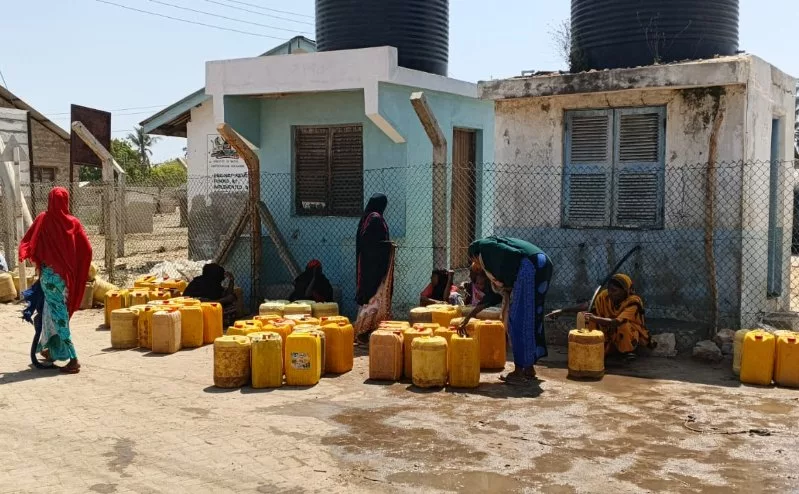 Kiunga residents in Lamu fetching water from the Kiunga Solar Desalination and Water-for-Peace Initiative /BRIAN OTIENO
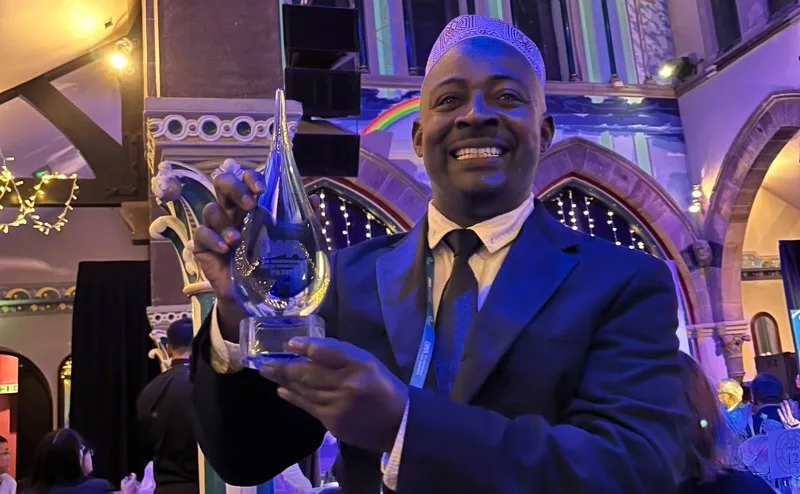 Lamu’s Shee Kupi Shee proudly displays Lamu’s award in Glasgow, Scotland on Tuesday evening /BRIAN OTIENO
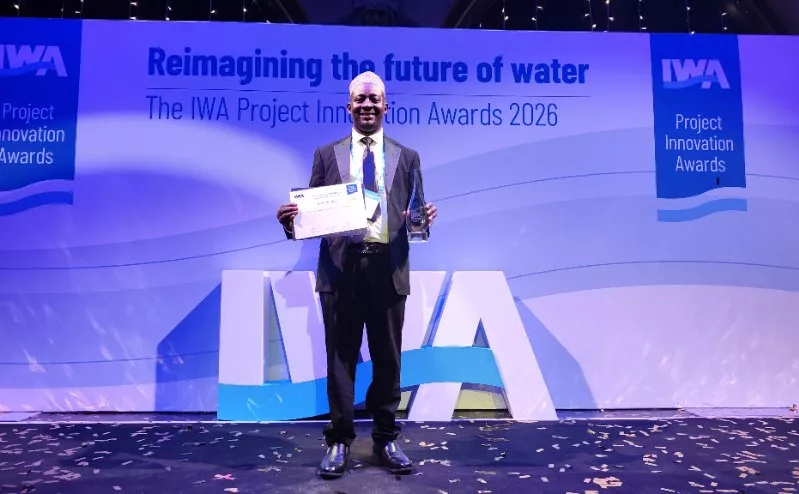 Lamu’s Shee Kupi Shee at the awards ceremony in Glasgow, Scotland on Tuesday evening /BRIAN OTIENO
“Water is not just a basic commodity. It can be an instrument for resilience, dignity and peace.”
In 2019, that statement was being put to the test in a village in Kiunga, Lamu county, where a mini-drought had started taking its toll.
Water was becoming scarce, creating competition for the commodity that threatened to become deadly.
Until an idea struck Shee Kupi Shee.
Using knowledge acquired during his Rotary Peace Fellowship programme and at Bahçeşehir University in Türkiye, Shee proposed using a water project to promote peace.
The idea became the Kiunga Solar Desalination and Water-for-Peace Initiative, addressing water scarcity in one of Lamu’s climate-vulnerable border communities.
The project uses solar energy to power the desalination of saline groundwater, producing about 5,000 litres of safe water per hour.
Water is distributed through a 15.1-kilometre network connecting 573 households and reaching about 3,500 people. The system also supports schools and health facilities, with the network extended towards neighbouring Ishakani.
Kiunga lies on the Kenya-Somalia border, and communities from neighbouring Jubaland, Somalia, cross into Kenya to access clean water.
Shee, the architect of the Kiunga Water-for-Peace model, said, “The project is about more than a desalination system. It is about showing that a remote border community can develop an innovative solution that responds to water scarcity, climate vulnerability and peace-building at the same time.”
For Amina Mohamed, a refugee, the project has restored dignity. Before the desalination plant, she walked long distances, sometimes several times a day, in search of water.
“It was exhausting and unsafe. But today, we can access clean water closer to home. It has restored dignity for us and made life easier for women like me,” she said.
Abuu Bwana, a person living with a disability, said travelling long distances for water forced him to depend on others.
“I had to at some point depend on others because it became untenable for me. This made some of them avoid me. But with the desalination plant in Kiunga, water is now accessible to me. The project has given people like me independence and improve the quality of life for us,” Bwana said.
Abdul Hassan, a student displaced from Boni Forest, also used to walk many kilometres for water before school, making him late or causing him to miss classes.
“Now that water is available nearby, I can focus on my studies,” the Form 3 student said.
On Tuesday evening, the initiative received recognition when Lamu county won gold at the 2026 International Water Association Project Innovation Awards in Glasgow, Scotland.
The initiative was selected from 320 submissions from 65 countries and won in the Governance, Institutions and Social Enterprise category.
Only 24 projects were selected across six categories. The Kiunga initiative was the only African project, while Lisbon took silver and China and Bangladesh took bronze.
Gold winners are considered for the IWA Grand Innovation Award, putting the Kiunga project in contention for the overall award.
Shee, Lamu county director for disaster risk management and peace-building, received the award on behalf of Governor Issa Timamy.
“This is a very proud moment for Lamu county. I am deeply honoured to receive this Gold Award on behalf of Governor Timamy, the Lamu government and, most importantly, the people of Kiunga,” he said.
“This recognition validates an idea we strongly believe in. That water is not just a basic service. It can be an instrument for resilience, dignity and peace.”
Shee said the recognition would give Lamu an international platform to showcase its experience in combining water security, renewable energy, climate resilience and peace-building.