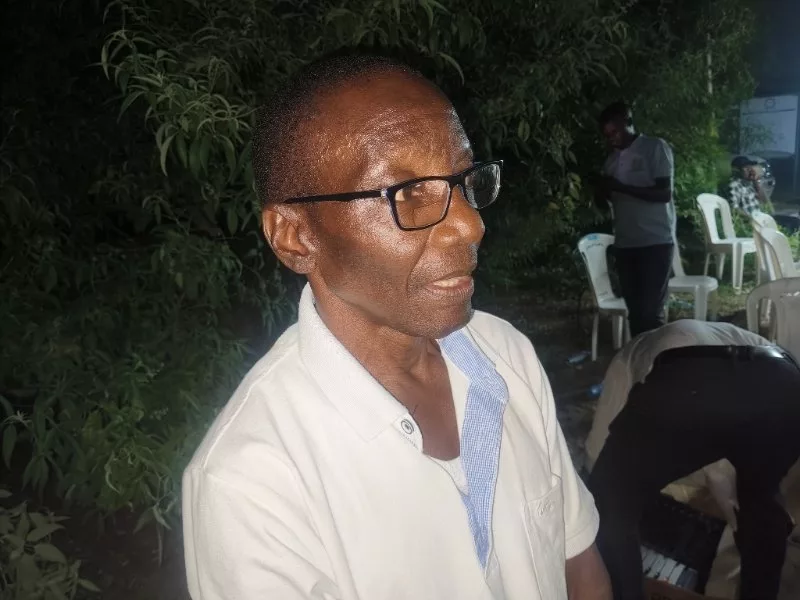
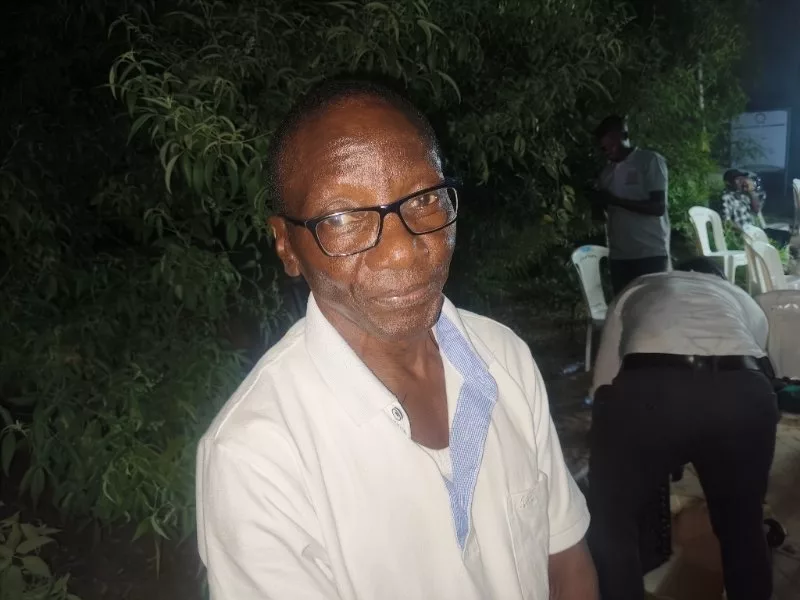
Francis Wanje, a 62-year-old retired tutor, had given up hope there would be justice for the eight family members he lost in the Shakahola massacre between January 2021 and September 2023.
For nine hours straight, he sat through the whole judgment at the Mombasa Law Courts on Monday thinking it would be the usual things in Kenya - the supposed killers of eight of his kin would be found not guilty and allowed to go scot free.
Although he had no faith in the Kenyan justice system, he decided to just sit and see how it goes anyway.
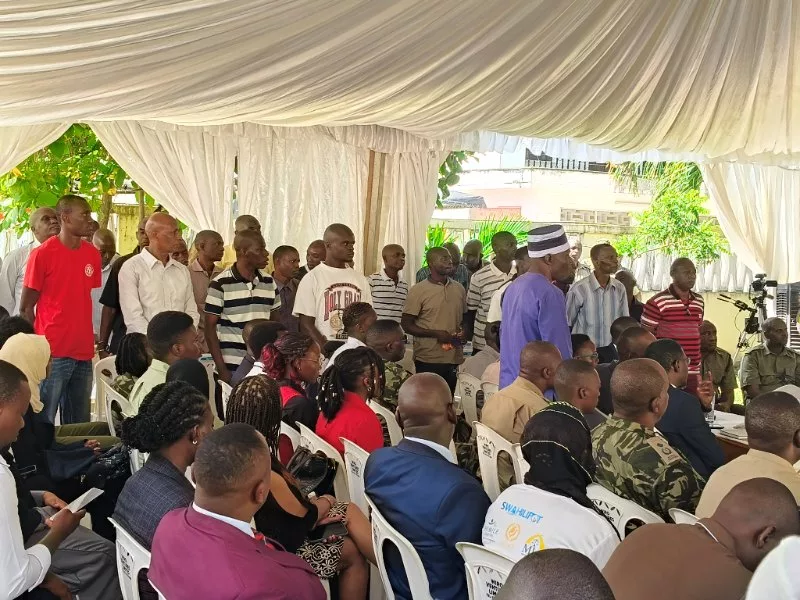
And so, it came as a bit of a surprise when High Court judge Diana Mochache, at exactly 6.19pm, started convicting all the 29 accused, including leader of the cult Paul Mackenzie and his associates, of the murder of 191 people.
He said although the conviction would not bring his loved ones back to life, it at least gives him closure, knowing justice has been done.
In one of the most consequential rulings in Kenya’s recent history, Mochache rejected Mackezie and his associates’ defense that the 190 children, all below 16 years of age, and one adult, whose murder they were charged with, fasted voluntarily in the pursuit of religious salvation.
Wanje lost his 35-year-old daughter Emily Wanje, together with her husband and their two children, Emily’s mother-in-law, Emily’s brother-in-law, together with his wife, and their son.
“I am happy. I was worried. This case started in 2023 and has been dragging to date. I thought nothing meaningful will come out of it because we have seen many cases that end up being discarded and there is no justice for the victims in the end,” Wanje told the Star shortly after the judgment.
“My delight is that today the case has gone well and all the accused have a case to answer. I know I will get justice now.
“This gives me renewed hope in the Kenyan justice system because for a long time we have been seeing jokes in the corridors of justice,” Wanje said.
The retired tutor, who taught at a Teacher Training College for decades, will now go back to his agribusiness at Shanzu, in Kisauni subcounty, knowing his Emily will get justice when Mochache will sentence the 29 on November 6.
“I am originally from Malindi but relocated to Shanzu where we gave birth to my daughter Emily,” he said.
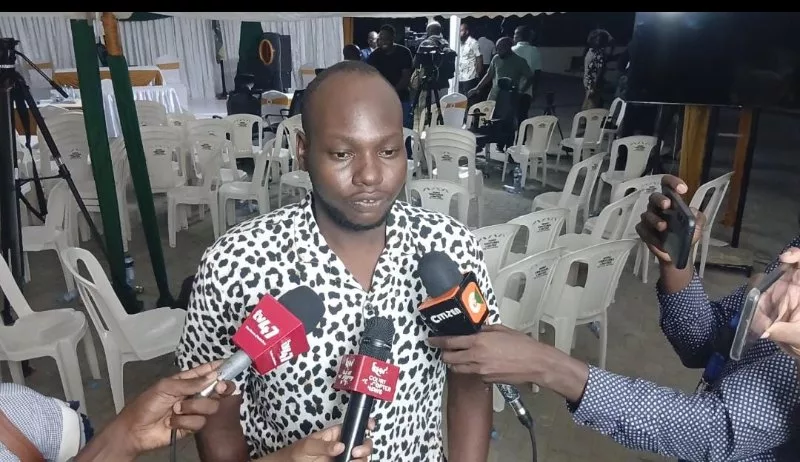
Dan Mackezie, the 24-year-old first born child of the convicted Mackenzie, said his father’s conviction is a relief to him and to the families of victims of the Shakahola massacre.
Dan, who was not spared of his father’s cruel religious teachings and methods, recalled the horrific ordeals he underwent when Mackenzie and his second in command Smart Deri Mwakalama beat him up because he sometimes refused to go to his church or follow his doctrines.
He had to escape from home at the age of 12 when he was forced to fast for a week, through thorough beatings from the church members, led by Smart.
He said he dropped out of school at Class 7 after escaping from home.
“Later, he just gave up on me and he said I’m on my own. That is why I ended up doing boda boda in Malindi,” he said.
He said his five siblings, including three sisters and two brothers, were rescued from Shakahola and are now at a rescue centre.
Dan described as sad what the victims went through at Shakahola.
He said he spoke to his father following his conviction.
“He told me that I have betrayed him. I don’t know from what,” Dan said shortly after his father’s conviction.
Asked how he felt watching his father being led away, he said he felt relief.
The court heard chilling details of the Shakahola massacre as Mochache read through the lengthy 1,000-page judgment.
Some children allegedly wore new clothes, bought for them by their parents, excited by the promise of going to heaven, as they were forced to starve.
Others even identified where their bodies should be buried after death.
Mochache described Mackenzie’s as an apocalyptic doomsday cult.
He had brainwashed his followers into rejecting authorities, forcing them to isolate themselves from the outside world, which he described as corrupted.
The vast Shakahola forest, where Mackenzie had bought 4,860 acres through his Good News International church, was supposed to be an escape from the vagaries of the condemned world.
Throughout the judgment, cult leader Mackenzie sat silently in the courtroom, his expression remaining largely unchanged as the accounts of deaths unfolded.
Mochache described how mothers watched their children starve to death, while brothers witnessed their siblings waste away and eventually die, only to be followed later by burial ceremonies that were labeled weddings.
Mackenzie had told his followers, forced to believe they were the chosen ones, that he would be the last to die, as he is the one who would close the door on earth after everyone else had ascended to heaven, the High Court judge said.
Mackenzie had assured them that they would all reach heaven, even if the journey involved “mangumi na mateke”, translated as kicks and blows.
Mackenzie, according to Mochache, rejected government institutions, their officers and all their activities, labeling them satanic and anti-Christ.
They were forced to burn their national identity cards and other official government documents.
Mackenzie had attacked democracy as a satanic doctrine, telling his followers the word ‘democracy’ was derived from the word ‘demon’, Mochache told the court.
This was a way of stripping the outside world of its legitimacy, hence the move to Shakahola forest, she explained.
However, Mochache said this was Mackenzie’s way of hiding from authorities.
Director of Public Prosecutions Renson Ingonga said the Shakahola case created a lot of public interest both nationally and internationally.
“To us, that is the best judgment we would ever get at the moment. To get a conviction to such a case of many counts, 191 counts, multiple accused persons, and several number of witnesses, is not something that comes that easily.
“We appreciate what the court has done today. We are happy with the verdict and will only wait for the sentencing in November 6,” Ingonga said shortly after the verdict on Monday evening.
John Onyango, the DCI deputy director, said they have seen justice has been served.
A total of 429 bodies were exhumed from shallow graves at Shakahola, out of which 191 were the subject of the case the 29 accused.
Originally, 31 people, including a person with disability, were charged with the murder of the 191 people, but two died during the trial.
The prosecution presented 123 witnesses while the defense presented nine.