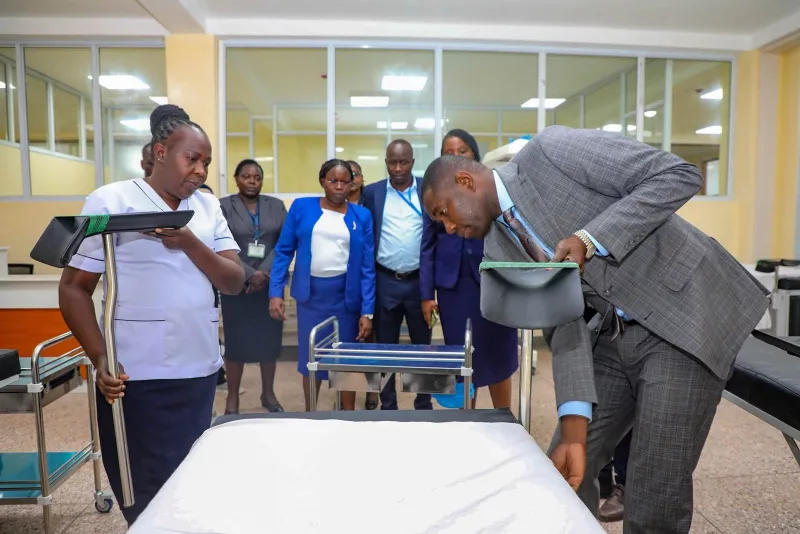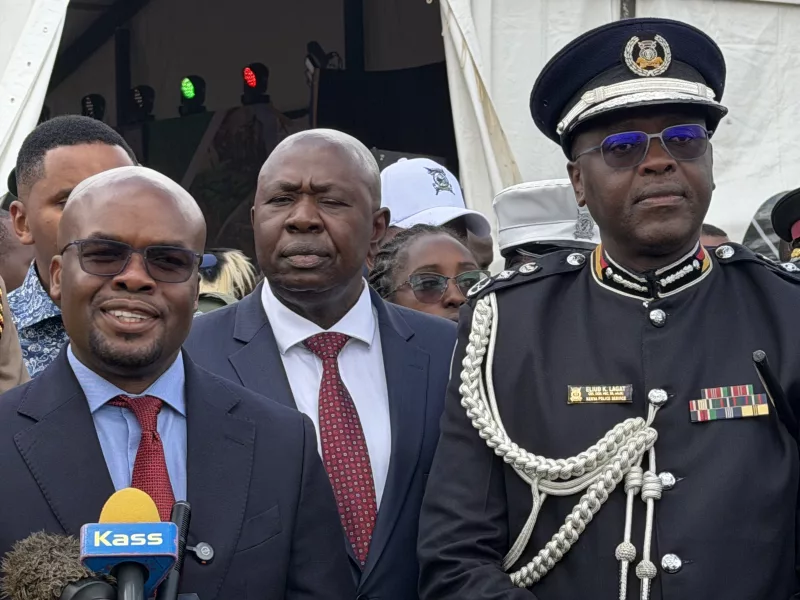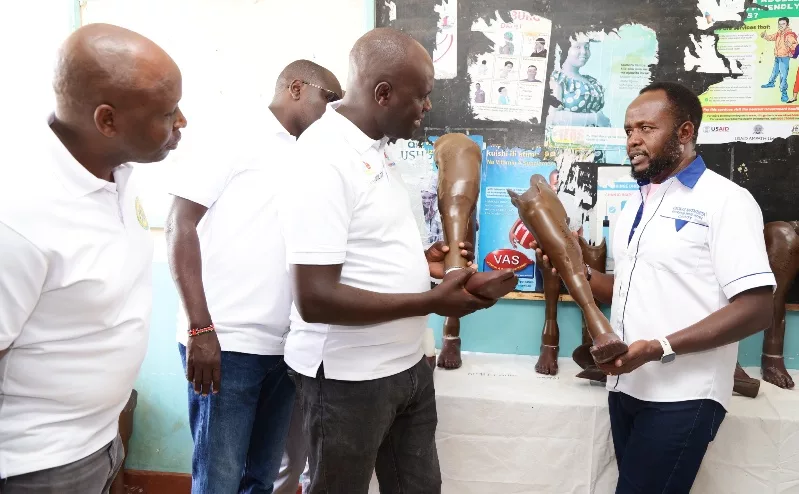
Governor George Natembeya (r) during a tour at the Trans Nzoia County Referral hospital orthopaedic facility
More than 100 amputees from Trans Nzoia and neighbouring counties have received artificial limbs, strengthening plans for a specialised orthopaedic unit at Trans Nzoia County Referral Hospital.
The initiative could position the Kitale-based hospital as a regional centre for patients with limb injuries and disabilities, serving Trans Nzoia and neighbouring counties in the North Rift.
Governor George Natembeya said the county had committed Sh7 million towards establishing and equipping the unit, with Sh2 million going towards equipment immediately and another Sh5 million for upgrading the facility.
He made the announcement while touring the hospital during an outreach organised by VisAbility (Swiss Ability Kenya), the Catholic Diocese of Kitale and the county department of health.
The governor said he wanted the hospital to become a leading orthopaedic centre serving patients from Turkana, West Pokot, Bungoma and neighbouring counties.
He said local health workers would be trained so that within a year the centre could operate independently and eventually train other personnel.
“We need to ensure that our people can access specialised care closer to home. Helping someone walk again is a life-changing service. Our health staff have a noble calling to help those who need care because they are sick. Please do it with dedication,” Natembeya said.
The proposed unit comes against a backdrop of a significant need for prosthetic services across the region, with many amputees unable to afford artificial limbs or travel long distances to access specialised care.
During the latest outreach, the team had initially planned to fit 50 people with artificial limbs but ended up serving more than 100. More than 150 people were identified as needing assistance.
Kenneth Kipyegon, the VisAbility representative and national chairpersonof the Association of Orthopaedic Prosthetics,said it was the organisation’s largest outreach so far.
The lightweight and affordable below-the-knee limbs use simple Swiss technology, allowing patients to regain mobility without the cost of more sophisticated prosthetics.
A team of five officers, working with volunteers and students, completed the fittings over two weeks.
Beneficiaries came from Trans Nzoia as well as West Pokot, Turkana, Kisumu and Uasin Gishu, underlining the demand for such services beyond the county’s borders.
Kipyegon said each county in the region was estimated to have between 1,200 and 2,000 amputees in need of assistance, suggesting a much larger unmet need than could be addressed through occasional medical outreaches
He said the Kitale model could be replicated elsewhere and that VisAbility would continue working with the county to strengthen its local capacity.
For some beneficiaries, the artificial limbs are already changing what they believe is possible after years of living with disability.
Caro Nalianya of the Catholic Diocese of Kitale said some people who had lived with amputations for years were now undergoing rehabilitation and walking again.
She called on the county and national governments to make prosthetic support a long-term programme rather than relying on one-off outreaches.
Julius Macharia from Kesogon in Cherang’any, Everlyne Serebwa from Kiminini and John Mbaye from Lodwar said the artificial limbs would enable them to return to their daily activities and work.
They urged the county and national governments to allocate funds through the health and gender departments to support amputees and review the cost of prosthetics, which they said remained beyond the reach of many patients.
The county administration is also exploring ways of ensuring the proposed orthopaedic unit remains financially sustainable.
Natembeya urged patients to manage conditions such as diabetes, which can contribute to serious health complications and proposed using insurance cover to help sustain services at the unit.
County secretary Truphosa Amere said supporting people with disabilities was both a social responsibility and a moral duty.
Health executive Christopher Lorot said the county would continue rolling out policies targeting marginalised residents.
Director of medical services Isaac Babu said the county was deepening its partnership with the Catholic Church and international organisations to sustain programmes supporting people with disabilities
“By moving from simple distribution to building local capacity, the government is not only giving immediate aid but also creating infrastructure that will serve the community for years,” he said.
Hospital medical superintendent Dr Vyuntine Mukhwana thanked the governor for supporting the initiative and described the outreach as a success.
The county now faces the task of turning the proposed unit from an investment pledge into a functioning regional service, including equipping the facility, training staff and ensuring patients can afford the prosthetic and rehabilitation services they need.
For amputees who have struggled for years without access to artificial limbs, that will be the measure of whether the Kitale initiative becomes more than another short-term medical outreach.