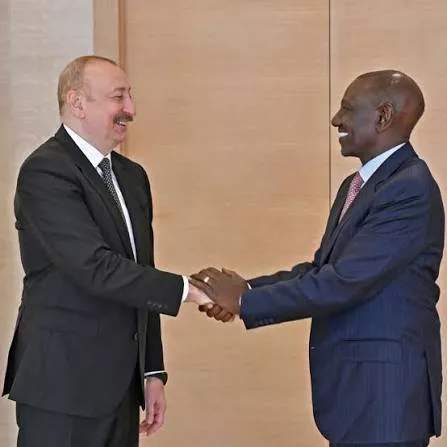
 President Ilham Aliyev of Azerbaijan and President William Ruto at the Baku Olympic Stadium, on the sidelines of the World Urban Forum 13, May 2026/HANDOUT
Kenya and Azerbaijan are opening a new chapter in their bilateral relations, with the two countries expanding cooperation beyond traditional diplomacy into trade, technology, urban development, education, energy, security and other areas of mutual interest.
Although Kenya and Azerbaijan established diplomatic relations about two decades ago, ties between the two countries have historically remained limited.
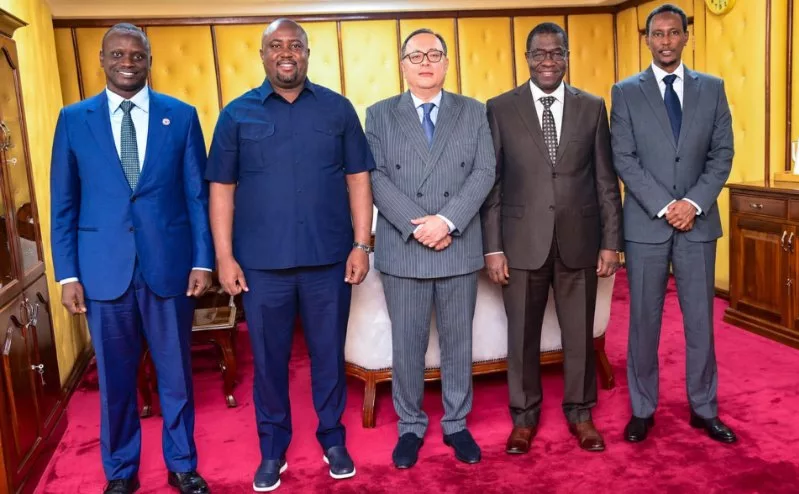 Ambassador Sultan Hajiyev meeting with Ministry of Energy & Petroleum Cabinet Secretary (CS) Hon. James Opiyo Wandayi, PS Alex Wachira and other team members in follow-up to President Ruto’s engagement with SOCAR President./HANDOUT
The growing partnership has been reinforced by high-level political engagements, including a bilateral meeting between President William Ruto and Azerbaijan President Ilham Aliyev on the sidelines of the 13th Session of the World Urban Forum (WUF13) in Baku.
The meeting provided an opportunity for the two leaders to discuss ways of expanding economic, trade and strategic cooperation, while also exchanging invitations for official state visits.
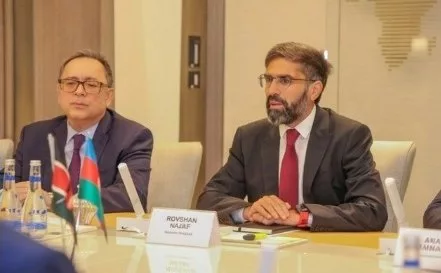
SOCAR President Rovshan Najaf holds a meeting with President William Ruto on the sidelines of the World Urban Forum (WUF13) in Baku, May 2026/HANDOUT
The emerging partnership is anchored on several areas, including oil and gas, infrastructure, renewable energy, affordable housing, agriculture, trade and defence.
The cooperation reflects the interests of two countries seeking to diversify economic and diplomatic partnerships while strengthening their engagement within the Global South.
Urban development has emerged as one of the most visible areas of cooperation. Kenya's experience in addressing rapid urbanisation and Azerbaijan's growing profile in smart-city development have created opportunities for the two countries to exchange expertise.
The World Urban Forum in Baku, convened by UN-Habitat and the Government of Azerbaijan in May 2026, provided another platform for discussions on sustainable urban development.
The engagement built on cooperation developed during the second African Urban Forum held in Nairobi and has created opportunities for collaboration in affordable housing, smart cities and urban planning.
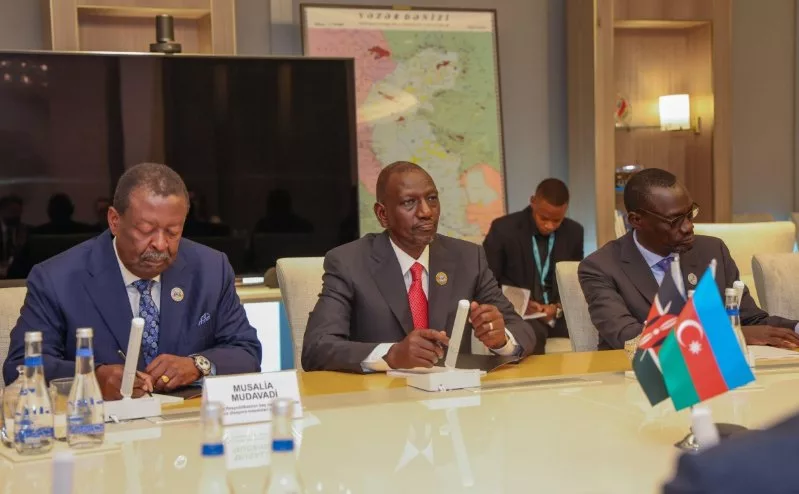 President Ruto Holding talks with SOCAR President Rovshan Najaf on the sidelines of the World Urban Forum (WUF13) in Baku, May 2026/HANDOUT
Diplomatic relations have also been supported by a growing network of government-to-government engagements.
Azerbaijan's decision to strengthen its diplomatic presence in Kenya was highlighted by the historic visit of Foreign Minister Jeyhun Bayramov to Nairobi in June 2025.
It was his first official visit to Kenya and coincided with the inauguration of Azerbaijan's embassy in the country and celebrations marking Azerbaijan's Independence Day.
Bayramov was received by Ruto, with discussions focusing on strengthening bilateral and multilateral cooperation. The visit signalled Baku's growing interest in Africa and its recognition of Kenya as an important partner and regional gateway.
The relationship has also developed through humanitarian and social initiatives. In December 2024, Leyla Aliyeva visited Kenya and held discussions on potential cooperation in education, healthcare, environmental protection and culture.
During the visit, she was received by Ruto and visited Nairobi Secondary School, where she presided over the inauguration of a computer room equipped through the Heydar Aliyev Foundation.
She also visited Kangemi Health Centre, where support had included the provision of incubators for infants.
Education has become another avenue through which the partnership is creating direct links between citizens of the two countries.
Kenyan students have benefited from fully funded higher education opportunities under the Heydar Aliyev scholarship programme, named after Azerbaijan's national leader.
The initiatives supported by the Heydar Aliyev Foundation and the Azerbaijan International Development Agency have also sought to expand opportunities for young people while strengthening people-to-people ties.
“Kenya has increasingly become an important partner for Azerbaijan in Africa, with cooperation expanding beyond diplomacy into areas that directly support development and human capital,” Heydar Aliyev Foundation indicated.
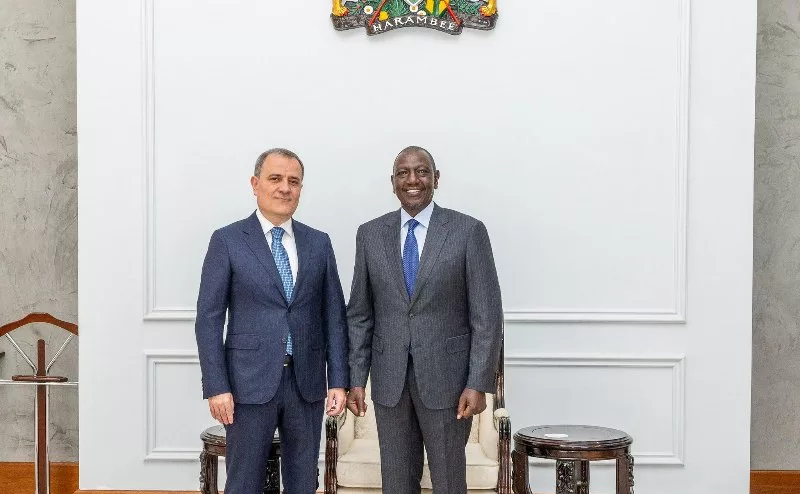 President William Samoei Ruto and Minister of Foreign Affairs of Azerbaijan Jeyhun Bayramov, June 2025/HANDOUT
Legal and judicial cooperation has similarly gained momentum.
Azerbaijan's Supreme Court Chairperson Inam Karimov visited Nairobi in February 2025, while Chief Justice Martha Koome led a Kenyan delegation to Baku in June 2026 for high-level engagements with Karimov and Constitutional Court Chairman Farhad Abdullayev.
During the visit, Kenya and Azerbaijan signed a memorandum of understanding between their Supreme Courts, providing a framework for capacity-building among judges and cooperation on specialised adjudication, including environmental, commercial and energy law.
Law enforcement agencies have also been building closer links. During Azerbaijani Prosecutor General Kamran Aliyev's visit to Nairobi in June 2025, discussions with Kenya's Director of Public Prosecutions Renson Ingonga focused on legal reforms and strengthening cooperation in combating transnational crime and corruption.
The two countries have further expanded cooperation in correctional services, with Kenya's Principal Secretary for Correctional Services Salome Muhia-Beacco visiting Baku and Azerbaijan's Deputy Minister of Justice and head of its penitentiary system, Mirsaleh Seyidov, participating in Correctional Services Week activities in Nairobi in 2025.
Azerbaijan's interest in Kenya also comes as Baku seeks deeper relations with African states, while Nairobi continues to pursue diversified international partnerships and a stronger voice for developing countries in global affairs.
“At the heart of the Kenya-Azerbaijan relationship is an opportunity for two countries from different regions to exchange expertise, expand economic opportunities and work together on issues affecting the Global South,” an official involved in the engagement emphasised.
With cooperation now spanning energy, infrastructure, housing, technology, education, justice, security and urban development, the relationship is increasingly taking on a broader strategic character.