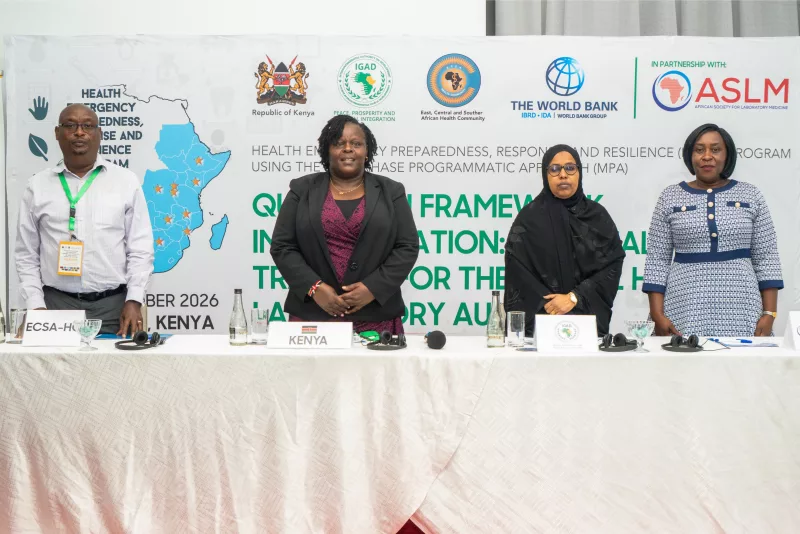
The Intergovernmental Authority on Development (IGAD) has called for stronger animal health laboratory systems across Eastern and Southern Africa, saying regional cooperation, quality assurance and trained auditors are critical to detecting disease outbreaks early and preventing their spread across borders.
IGAD said countries must invest in competent laboratory personnel, reliable diagnostic systems and harmonised standards to strengthen preparedness and response to public health emergencies, particularly diseases that spread between animals and humans.
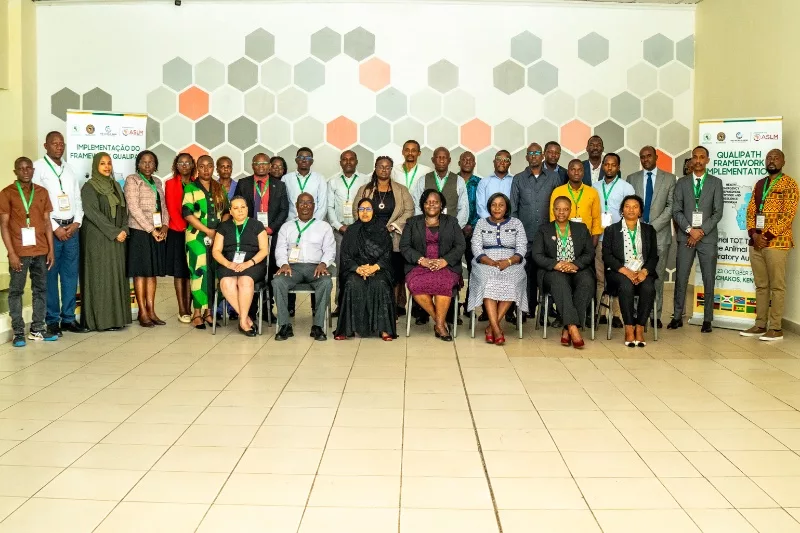
Speaking during the opening of a Regional Training of Trainers Workshop for Laboratory Auditors on the QualiPATH Framework in Machakos, Kenya, on Monday, October 19, IGAD’s Head of Mission to Kenya, Ambassador Fatuma Adan, said no country could effectively tackle emerging health threats alone.
“As IGAD, we strongly believe that no country can tackle health threats alone. Pathogens do not respect borders,” Adan said in remarks delivered on behalf of the IGAD Executive Secretary and the Director of the Health and Social Development Division.
She said regional preparedness depended on collaboration, information sharing, mutual accountability and the harmonisation of laboratory standards among participating countries.
The five-day workshop, running from October 19 to 23, is being held under the Health Emergency Preparedness, Response and Resilience Programme (HEPRR-MPA), which seeks to strengthen preparedness, disease detection and response capacities across Eastern and Southern Africa.
The training brings together participants from Kenya, Mozambique, Zambia, Rwanda, the Democratic Republic of Congo, Sao Tome, Malawi, Ethiopia and Burundi.
Adan said the region continued to face multiple public health threats, including Ebola, Marburg virus disease, Mpox, cholera, dengue and Rift Valley fever, underscoring the need for effective surveillance systems and dependable laboratory services.
“Preparedness cannot begin when an outbreak starts. It must be built through strong systems, competent personnel, and quality-assured laboratories that can rapidly detect and characterize health threats before they spread across borders,” she said.
She added that investment in laboratory systems was essential not only for public health but also for national security, regional stability, trade, livestock health, food security and the wellbeing of communities.
Animal health laboratories are particularly important in identifying and monitoring zoonotic diseases, which can be transmitted between animals and humans. Their work also supports transboundary animal disease surveillance, livestock production and the protection of livelihoods.
The QualiPATH Framework provides a structured approach to strengthening laboratory quality management systems and helping facilities progressively work towards international accreditation standards.
Through the training, IGAD and its partners aim to establish a pool of competent auditors who will conduct baseline assessments, identify gaps in laboratory quality systems, mentor laboratory personnel and promote continuous improvement across participating countries.
The auditors are expected to support laboratories in meeting internationally recognised standards while reducing reliance on external expertise and strengthening national ownership of quality management systems.
Adan said the regional network emerging from the training would provide an important platform for peer learning and cross-country technical support.
“The regional network of auditors that will emerge from this training will become an important resource for peer learning, cross-country support, and sustained laboratory strengthening,” she said.
IGAD is working with the African Society for Laboratory Medicine (ASLM) and the East, Central and Southern Africa Health Community (ECSA-HC) to advance laboratory systems under the regional programme. While IGAD is focusing on animal health laboratories, ECSA-HC is supporting human health laboratories.
Representing the Government of Kenya, Romona Ndanyi, Deputy Director of Veterinary Services at the Directorate of Veterinary Services, welcomed participants to the regional workshop and reaffirmed Kenya’s commitment to advancing laboratory quality management.
Ndanyi said animal health laboratories were a critical line of defence against emerging and zoonotic diseases, providing early detection, rapid confirmation and essential data for timely intervention.
She noted that differences in the implementation of quality management systems across laboratories remained a challenge, making a standardised and progressive framework necessary to help facilities improve their performance.
Kenya also pledged continued support for the objectives of the HEPRR programme and efforts to strengthen laboratory quality across the region.
The organisers urged participants to apply the skills acquired during the workshop in their respective countries, conduct national assessments and train other laboratory professionals.
The initiative is expected to contribute to a more coordinated regional laboratory network capable of supporting early warning, evidence-based decision-making and faster responses to health emergencies.