However, the ruling has simultaneously opened a more consequential test for the opposition as it seeks to assemble a political force capable of facing President William Ruto in next year’s election.
The tribunal on Wednesday set aside the decision by the Office of the Registrar of Political Parties to decline the reservation of the Linda Mwananchi Movement name and directed the Registrar to take action on the application within seven days.
The tribunal found that the refusal had no lawful basis and amounted to an unjustified limitation of the applicants’ right to form or participate in forming a political party.
The decision gives the Sifuna-associated camp substantially more room to build a formal political vehicle around the Linda Mwananchi identity.
The outfit has increasingly become associated with the emerging opposition mobilisation ahead of the 2027 elections.
But beyond the legal implications, the decision has exposed a much larger political question: whether the opposition can use the opportunity to build a coalition based on compromise and common purpose, or whether competing ambitions will once again produce separate political vehicles.
Political analyst Fred Sasia said Sifuna’s negotiating position could become stronger following the development.
“A recognised name gives politicians, activists and supporters something around which to organise, rather than relying only on informal campaigns,” he said.
According to Sasia, the legal victory gives the movement an organisational identity at a critical stage of the political cycle. However, he said the real test would be what Sifuna and his allies do with the leverage that comes with the ruling.
“The test for Sifuna is whether he can use his increased leverage to build consensus,” Sasia said.
He added that the other opposition actors would face an equally important test as they negotiate with a political formation whose bargaining position has now been strengthened.
“The test for the other opposition actors is whether they can negotiate with a stronger Sifuna without allowing competition over political space to derail cooperation,” he said.
Sifuna and his allies have previously indicated that Linda Mwananchi would seek to work with like-minded political parties.
Last week, the movement’s leadership resolved that Sifuna would serve as its leader and presidential candidate and announced plans to unveil a political party in early October.
The same resolution said Linda Mwananchi would seek to build a coalition with parties sharing its political objectives.
That development makes the question of coalition-building even more significant.
Sasia said one of the central questions now is whether Linda Mwananchi will eventually operate as a standalone party, become the centre of a broader coalition or function as an electoral alliance platform.
He said the development, therefore, tests whether Sifuna can turn political leverage into coalition-building.
“A stronger negotiating position does not necessarily mean Sifuna has to dominate the coalition,” Sasia said.
“In fact, the more consequential test could be whether he can use that position to bring different factions into a workable arrangement.”
If Linda Mwananchi becomes a platform around which several opposition groups negotiate, Sifuna’s role could consequently evolve from being associated with a particular political project to becoming one of the key negotiators in a wider opposition arrangement.
That possibility, however, comes against the backdrop of disagreements over leadership and the eventual presidential ticket.
The question of who should lead the opposition has already generated tensions within Linda Mwananchi. Siaya Governor James Orengo had declared his intention to seek the presidency.
The latest position from Linda Mwananchi leaders, however, is that Sifuna will be their presidential candidate.
Orengo has since reaffirmed his commitment to opposition unity without directly endorsing or rejecting the decision to settle on Sifuna.
“I support the struggle for change which cannot be achieved without unity and positive political action,” he said.
Political commentator Caleb Burudi said the developments would ultimately test the opposition’s decision-making mechanism.
“This may ultimately be the biggest test,” he said.
He argued that once several opposition leaders agree to work together, difficult questions inevitably arise over who makes the key decisions and how competing interests are accommodated.
“Suppose several opposition leaders agree to work together. Who makes the difficult decisions?” he asked.
Burudi said the questions would include who determines the presidential candidate, how parliamentary candidates are chosen where coalition partners have competing interests, who controls the coalition’s party machinery, how disagreements are resolved and how resources and campaign responsibilities are distributed.
“If the Linda Mwananchi negotiations produce transparent mechanisms for answering such questions, they could provide a foundation for a wider coalition,” he said.
“If they cannot, the difficulties could foreshadow larger problems.”
Those questions are becoming increasingly relevant as other political vehicles emerge within the opposition space.
Embakasi East MP Babu Owino is associated with The Mwananchi Party, which officially changed its name from Muungano Party on September 10, 2026. The party has separately explained that its creation and recognition by the Registrar predates the formation of Linda Mwananchi.
This means the emerging opposition landscape could involve several political vehicles rather than a single organisation, raising the possibility of negotiations over how the parties cooperate without necessarily dissolving their individual identities.
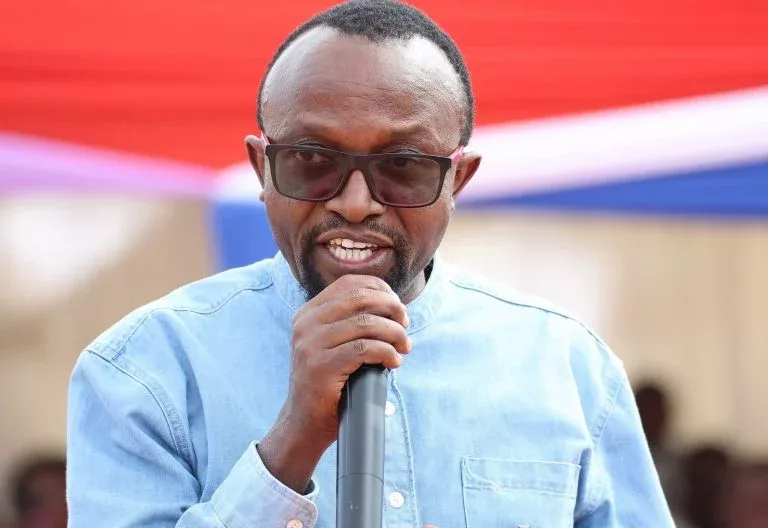
In an earlier address, Sifuna underscored the personal and political investment that he and other supporters associate with the movement.
“This Linda Mwananchi tumeipigania na maisha yetu buana! We have lost lives, properties, time with our families, our state of minds, our own identity as well to build this movement,” he said.
His remarks capture why the question of political ownership and identity is likely to remain sensitive as negotiations intensify.
It remains to be seen whether different formations can agree on a structure that accommodates their leaders, supporters and electoral interests without allowing competition to overwhelm the broader objective of presenting a united political alternative.