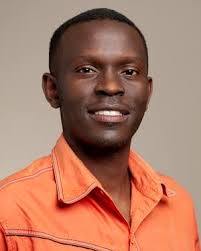
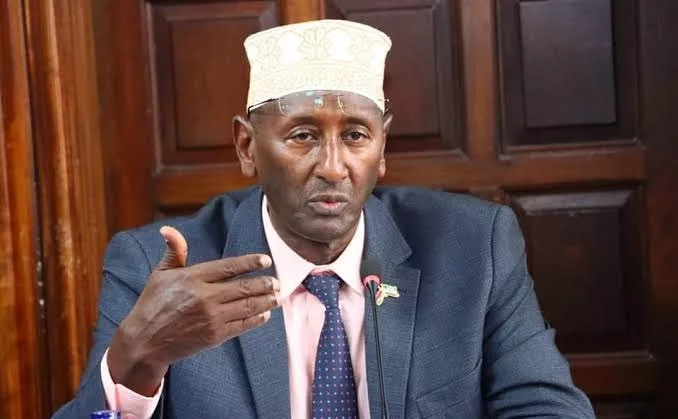
 Marsabit Senator Mohamed Said Chute
The battle for the Marsabit Senate seat is taking shape around competing claims of experience, community backing, development and representation.
Senator Mohamed Said Chute will have to defend his record against a growing field of challengers.
Read Also
Chute is seeking another term and has positioned his incumbency as an advantage. He points to his legislative work, oversight role and initiatives targeting education, youth and women.
But the emerging challenge is already taking different forms, with community elders backing candidates while other aspirants focus on grassroots mobilisation.
Rendille elders have endorsed former Marsabit Public Service Board chairman Ambrose Hargura as their preferred candidate.
Hargura has framed his campaign around stronger oversight, accountability and a more visible Senate presence in the county.
He argues that Marsabit still has gaps in transparency, efficiency and equitable development. He says the Senate must play a stronger role in protecting devolution and scrutinising the use of public funds.
Hargura is seeking to turn his public service experience into a political proposition.
He previously served as a sub-county administrator and chairman of the county Public Service Board. He says his experience in administration, governance and peace-building gives him the capacity to take on the senator role.
His Rendille endorsement, however, is only one component of the wider contest.
Hargura says the elders have mandated him to build partnerships with other communities, making coalition-building across Marsabit’s diverse population central to his campaign.
He also points to his role in a UN-backed peace process in Moyale following the inter-community clashes after the 2013 elections.
He also cites his record at the Public Service Board, where he says he championed inclusivity and equitable access to employment.
Another emerging challenger, Mohammed Galgallo, is seeking to build his campaign around young people, women and economic opportunity.
Galgallo has pledged to push for policies supporting small businesses, innovation and access to markets. Youth employment and women’s economic empowerment are central to his platform.
He has also placed peace and social cohesion at the centre of his campaign. He argues that insecurity and political or ethnic conflict can undermine development and disrupt public projects.
His candidature adds a generational dimension to a race already featuring more experienced political and public-service figures.
For Chute, the contest is an opportunity to put his Senate record before voters. The incumbent argues that he has represented Marsabit’s interests in the Senate, sponsored legislation and consistently raised issues affecting the county.
He cites the County Governments (Amendment) Bill, 2026, which he says seeks to strengthen implementation of the two-thirds gender principle and inclusion of persons with disabilities in county leadership.
He has also pointed to his role in the County Assembly Services Act, which deals with procedures for removing a member of a County Assembly Service Board and suspending a county assembly clerk.
Beyond legislation, Chute has sought to associate his tenure with education, community development and empowerment programmes for women and young people.
His campaign message is therefore largely one of continuity. He says residents know his record and the issues affecting them and should judge him on what he has delivered.
“I have done what we were meant to do. I have done well as a senator, taken up Marsabit cause at every level and spoken fearlessly on behalf of the people,” he said.
Chute is also attempting to frame the election as a contest over issues rather than clan mobilisation. He has urged voters to reject tribalism, name-calling and political propaganda.
His supporters argue that his grassroots presence and development record give him a strong base.
Jarso Wario of Saku said Chute had discharged his oversight responsibilities effectively and cited projects including classroom construction, relief food distribution and employment opportunities.
In Moyale, Dansoye Ali described the senator as a leader with grassroots support, while Ali Galgallo pointed to youth empowerment initiatives and support for young people seeking to establish small enterprises.
Yet the endorsements emerging for his challengers show that community mobilisation will remain an important factor in the contest.
The endorsement of Hargura by Rendille elders and that of Mohammed Galgallo by DN clan elders of the Borana community indicate early attempts by aspirants to consolidate support through established community structures.
The challenge for each candidate will be translating such endorsements into broader countywide support in a county whose politics cuts across communities, clans and geographical interests.
Another potential contender is also relying on grassroots mobilisation but has not publicly declared his candidature because of his current position. His supporters are nevertheless campaigning for him and expressing confidence that he can challenge Chute.
Governor Mohamud Ali, who is serving his second and final term, has also been urged by supporters to reconsider his decision to retire from active politics and seek the Senate seat.
“We want Governor Mohamud to vie for Senate seat, we need him in politics,” one supporter said.
His possible entry would further reshape the contest by bringing the governor’s political network and experience into an already widening field.
For now, Chute remains focused on defending his record, while Hargura and Galgallo are presenting different alternatives built around public-service experience, oversight, youth empowerment, accountability and community mobilisation.
The race is therefore beginning to move beyond the question of who can challenge the incumbent to a broader contest over what voters want from their senator: continuity, stronger oversight, greater youth and women opportunities, or a different approach to representation and devolution.
INSTANT ANALYSIS
The Marsabit Senate
race is shifting from an incumbent defending his record to a wider contest
shaped by community endorsements, public-service credentials and grassroots
mobilisation. Chute is relying on his legislative and development record, while
Hargura is pitching stronger oversight and accountability and Galgallo is
targeting youth and women through economic opportunity. The possible entry of
Governor Mohamud Ali could further complicate alliances and broaden the field.