 Livestock auction goes live at Nairobi ASK Show
For the first time in the history of the Nairobi International Trade Fair, the Agricultural Society of Kenya (ASK) livestock auction went live, drawing large crowds and fetching hundreds of thousands of shillings for top animals.
The auction, held at the Jamhuri Park Showground in Nairobi, was one of the highlights of the 125th edition of the trade fair, which was officially opened on Wednesday by Agriculture Cabinet Secretary Mutahi Kagwe.
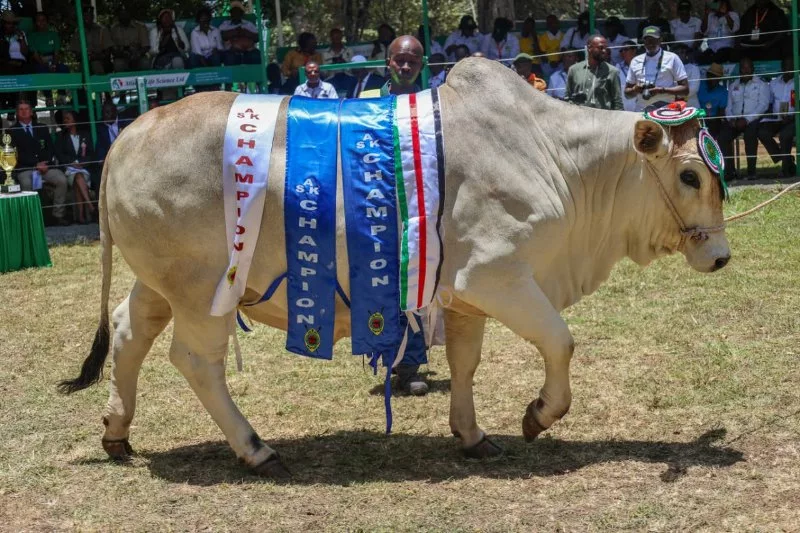
The Supreme Champion Boran bull, weighing 625kg, fetched Sh850,000 after it was bought by Alfazar.
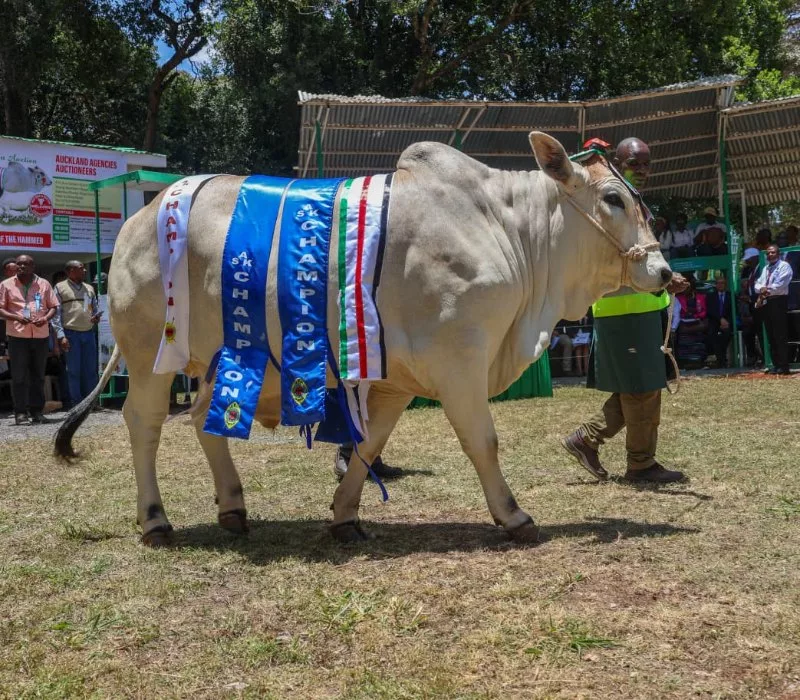
Kagwe bought the reserve champion crossbred bull for Sh900,000. The bull weighed 775kg.
Agriculture Principal Secretary Paul Ronoh bought the third bull, weighing 490kg, for Sh450,000. All the winning bulls were from Kenya Seed Company.
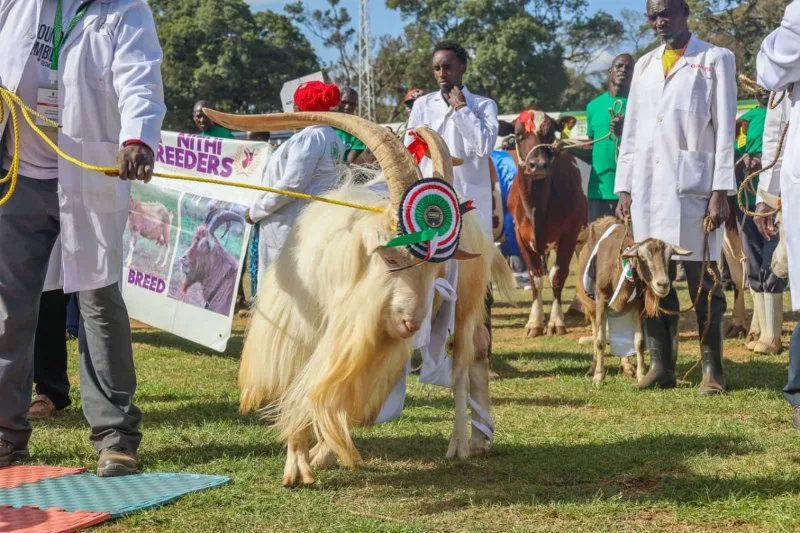
But the showstopper was a goat weighing 99kg. The Saane hybrid goat is from Musa Juma’s farm in Kisumu County. He said the three-and-a-half-year-old goat is selling for Sh110,000.
The auction attracted a large crowd of farmers, livestock breeders and visitors, adding a commercial dimension to the livestock displays that have traditionally been a major attraction at the Nairobi show.
The livestock auction was held as visitors moved between animal displays, agricultural machinery, new digital technologies and other exhibits, with the trade fair showcasing how technology and innovation are increasingly shaping Kenya’s agriculture.
The 125th edition of the fair, organised by the Agricultural Society of Kenya, has attracted about 400 exhibitors from Kenya and abroad. Agricultural technology, climate-smart farming and innovation are among the key themes of this year’s exhibition.
Farmers, businesses and families have continued to converge on the showground, where exhibitors are displaying technologies and products covering agriculture, livestock, trade and other sectors.
Speaking during the opening of the fair, ASK Nairobi Branch chairman Levi Mukhweso and ASK chief executive officer Batram Muthoka highlighted the growing role of technology in helping farmers respond to changing weather patterns and other challenges.
“Agriculture is moving into the digital space. We are showcasing drones, for example, which can be used for spraying farms and demonstrate how technology can change farming practices,” Muthoka said.
“One of our key focuses this year is climate-smart agriculture. We are bringing together initiatives and technologies that can help farmers mitigate the challenges that come with climate change,” he added.
Among the exhibits are seed varieties developed to withstand some of the conditions associated with climate change, including high temperatures and drought.
“We have looked at the seed sector, with players bringing seed varieties that are able to withstand high temperature as well as drought, which are some of the effects associated with climate change,” Muthoka said.
Mukhweso said the exhibition was also giving farmers an opportunity to access agricultural technologies from international exhibitors, including irrigation equipment and tractors from Thailand.
“We want farmers to come to the show and learn from these technologies. The show provides an opportunity for farmers to learn how to use artificial intelligence to know which crops to plant and how to plan for the changing weather conditions,” he said.