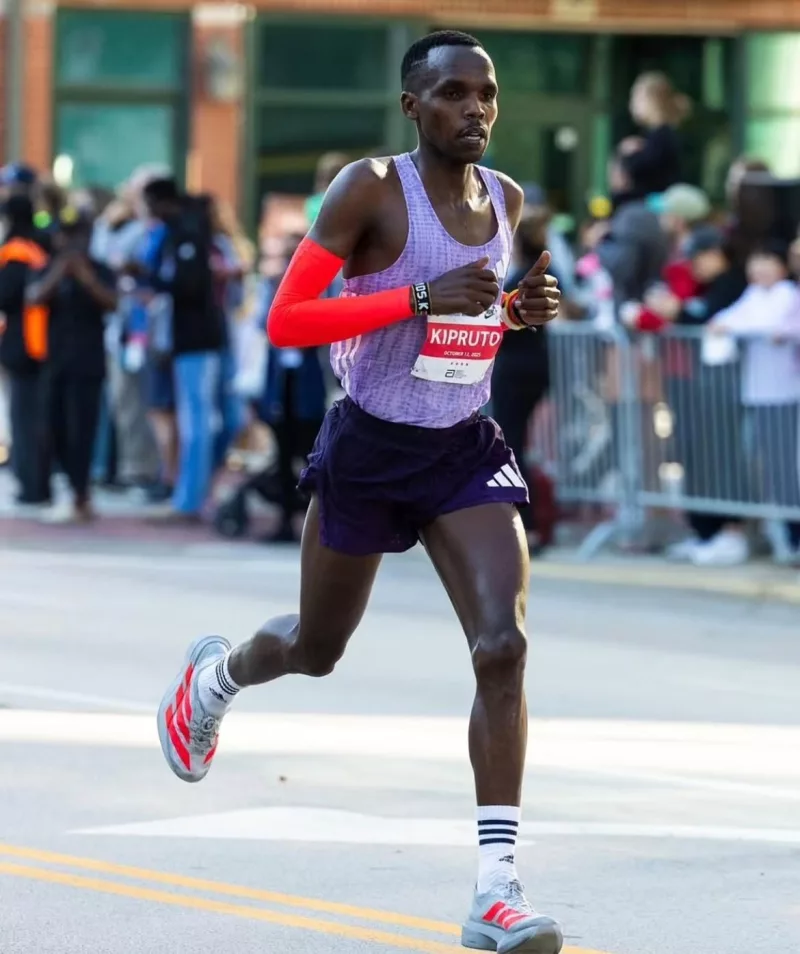
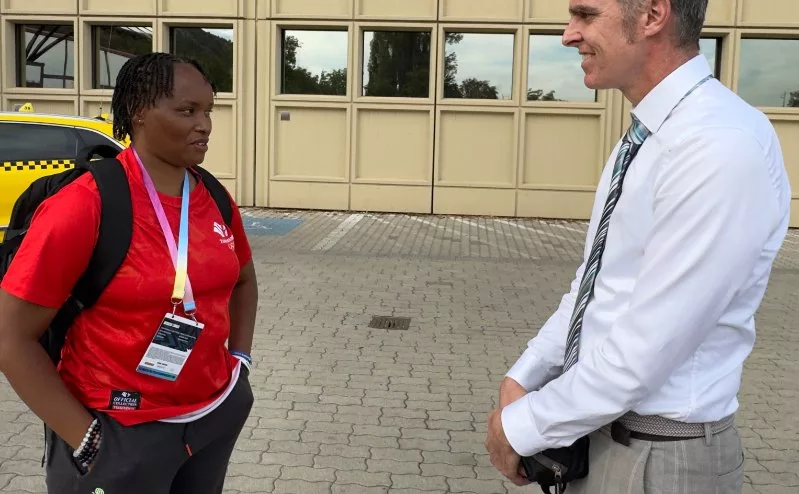
 Kenyan sprints coach Perpetual Mbutu with Croatian official Duje Bonacci in Budapest/HANDOUT
Athletics Kenya (AK) and the National Olympic Committee of Kenya (NOC-K) have brokered a groundbreaking strategic sports alliance with the Croatian city of Varaždin, aiming to aggressively diversify the East African nation’s athletic portfolio ahead of hosting the 2029 World Athletics Championships.
Coming shortly after Nairobi’s successful bid to host the global track and field competition in 2029, the partnership signals a dramatic paradigm shift for Kenya, the undisputed global powerhouse of distance running, as it aims to build competitive depth in non-traditional events, specifically sprints, jumps, and throws.
Under the new agreement, elite Kenyan power and field athletes will relocate to Varaždin — a historic sporting hub in northern Croatia — for extended, multi-season training camps designed to bridge the transition from winter training into the summer competitive season.
The primary objective is to give Kenyan athletes structural access to the world-class training facilities and high-level European competition circuits they have historically lacked at home.
Technical expertise from Croatian clubs, which boast a rich pedigree of Olympic success in field disciplines will directly support the elite development pipeline.
Notable track and field icons, including former world high jump champion Blanka Vlašić, are slated to provide direct mentorship and technical oversight. “Croatian coaches have much international success in these events,” noted international athletics agent and insider Duje Bonacci, who is facilitating the link.
“I will be happy as manager to help both Kenyan athletes find and reach the meetings that can push the results to a higher level.”
Mid-wifed on the sidelines of the recent World Athletics Ultimate Championship in Budapest, the alliance leverages Croatia’s formidable history in technical field events, which includes producing multiple Olympic gold medalists such as discus legend Sandra Perković and javelin champion Sara Kolak.
For Kenyan sports planners, tapping into this specialised European knowledge base is critical to dismantling systemic barriers that have previously isolated Kenyan field athletes from the global podium.
“This will give great exposure for the athletes to break the barrier they were not able to break because they lacked the exposure,” Kenyan sprints coach Perpetua Mbutu said in Budapest. “Yes, we train well in Kenya, but we need more facilities that we can get in Europe, and in Croatia through the partnership.”
Endorsing the initiative, Barnaba Korir, the AK youth development chairman and the NOC-K first deputy president, hailed the partnership as a critical evolutionary step for the country’s next generation of stars.
“Africa has never been short of talent, but we can’t always wait for Europe or America to build the biggest stages. We must proactively build our own athletes to conquer them,” Korir, who was also in Budapest for the meeting with Bonacci, stated.
“By embedding our youth and field athletes into elite European systems early, we are ensuring that Kenya expands its dominance. This structural exposure is exactly what will transform us from a distance-running nation into an all-around athletics superpower.”
The strategic intervention arrives at a pivotal moment. Nairobi was recently awarded the hosting rights for the 22nd edition of the World Athletics Championships in 2029.
By establishing this direct technical bridge to Europe, sports authorities in Nairobi are issuing a clear statement of intent: when the world descends on the Kenyan capital in 2029, the hosts intend to contend for global medals far beyond their traditional stronghold on the track.