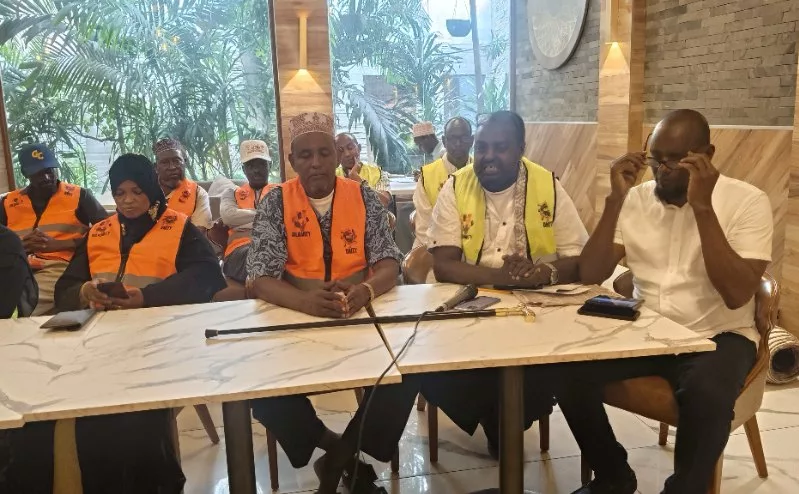
 Cushite Community Association founder Madam Hawa [L], chair Ali Sheikh Aden [2nd R] and opinion leader Abdi Daib [R] in Mombasa on Saturday / BRIAN OTIENO
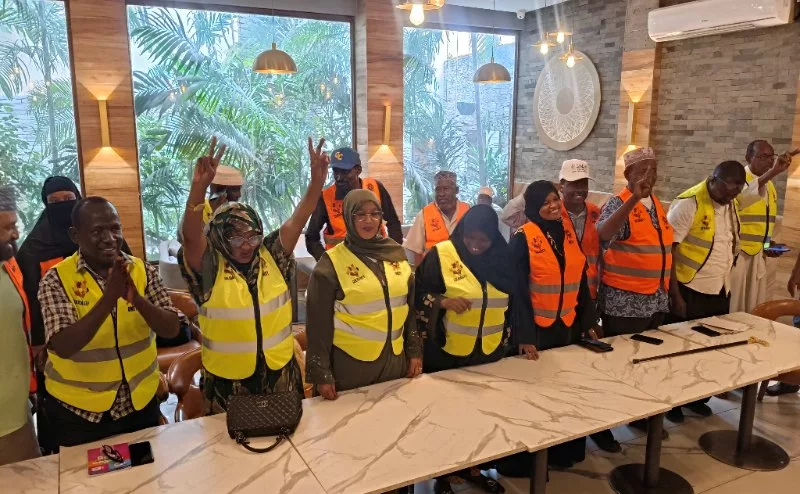 Cushite Community Association deputy chair Khadija Mohamed Halakhe [4TH L] and founder Madam Hawa [4TH R] in Mombasa on Saturday / BRIAN OTIENO
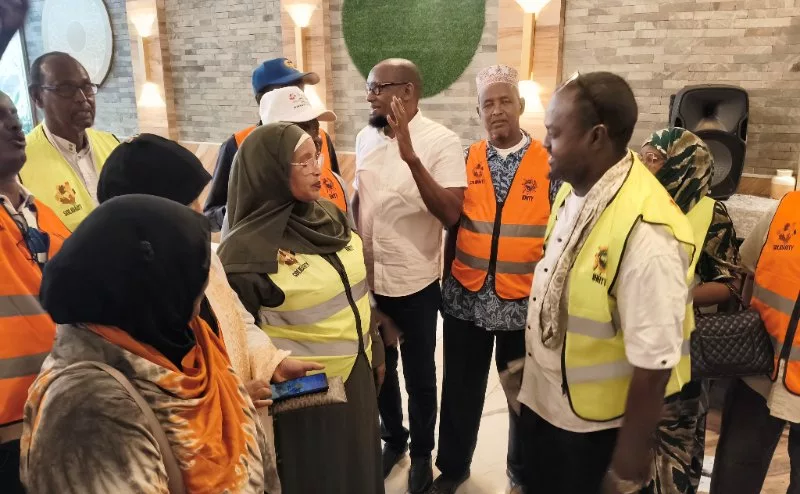 Abdi Daib [white, raised hand] with the Cushitic Community Association members in Mombasa on Saturday / BRIAN OTIENO
The Cushitic community in Mombasa has launched a campaign to have their members register as voters and vote in the county.
Led by opinion leader Abdi Daib, under the Cushite Community Association, the community members say most of their activities are in Mombasa, where they live permanently and they have to make their numbers count this time round.
“Let every eligible Cushite register as voters where they lawfully reside, participate peacefully, and make their own informed choice about the leadership of their home county and country,” Daib said.
He said they want to use their strength in numbers to highlight the social, economic, political and financial issues affecting their community, including healthcare, education, employment, business opportunities, access to finance, youth and women empowerment, representation, and equitable access to government programs.
“Where you live, work, raise your family and depend on public services matters. We should not treat every election as a reason to leave Mombasa simply because a relative or community member is contesting elsewhere,” Daib said.
The community had a meeting on Saturday to strategize on the way forward and also make plans to welcome Health CS Aden Duale who had a meeting with them on Sunday at the Serani ground.
After the Sunday meeting, where they expressed support for Duale, Mombasa governor Abdulswamad Nassir and President William Ruto, the community said plans are on place to start mobilizing their members, especially the youth, to register as voters in Mombasa and vote in the 2027 general elections.
Daib called on political leaders from other counties to respect the democratic choices of Cushites who are permanently resident in Mombasa.
“Our people should not be mobilized to travel back and forth merely for electoral purposes,” Daib said.
“This is about unity, dignity, participation and being heard.”
The Cushitic community comprises members of the Somali, Borana, Rendile, Orma, Gabra, Sakuye, Boni (Waata), Burji, and the Dahalo communities.
Others are the Aweer, Dasenach, Wayyi, Konso and the El Molo, but all these are very few in numbers.
They are mainly from the Garissa, Wajir, Mandera, Marsabit, Isiolo, and Tana River counties.
According to the 2019 population census, the Cushites in Kenya were roughly 3.6 million, about 7.5 per cent of the total population then.
In Mombasa, their numbers are estimated to be around 50,000-55,000.
On Saturday, the Cushite Community Association spokesperson Shukri Ahmed said they are mostly businesspeople and are now seeking recognition from both the Mombasa county government and the national government.
“We are big stakeholders of the Mombasa economy and we would like that recognition. We have been doing business in Mombasa for ages and although we have a good working relationship with the county, we need this to be enhanced,” Ahmed said.
He said the county must continue improving the business environment by ensuring there is continuous peace and security.
“When it comes to the electioneering period, there is always that unease when it comes to security. We need assurance that our businesses will be safe and the environment will continue being conducive for us to trade,” Ahmed
Said Jillo Tona, the Burji community chair, said the Cushitic community in Mombasa must exercise their political right by registering as voters in Mombasa and vote in the 2027 general elections.
“We will only have the strength and bargaining power in Mombasa if we make our numbers count. Without being voters here, we cannot make demands. That is why we have to register as voters here and vote here,” Jillo said.
He lamented the trend where when election day nears, members of their communities travel out of Mombasa to Wajir, Garissa, Isiolo, Mandera, Marsabit, and Tana River counties to vote.
“We as elders from the Cushitic community must encourage our people at the grassroots to register as voters and vote here in Mombasa. This is where we live most of our lives,” Jillo said.
“With a voter’s card, we can vote out whoever has not done anything for us as a community and vote in the ones we think will help us more.”
He said with their numbers, it is possible to even one of their own to the MP and MCA positions in Mombasa so that their interests are taken care of more.
Khadija Mohamed Halakhe, the Cushite Community Association deputy chair, they do not have adequate representation at both the national and county level, hence their suffering.
“We need more nominations in the Senate, the National Assembly and the Mombasa county assembly, so that or interests are protected and well taken care of,” Halakhe said.
The Cushite Community Association founder Madam Hawa called for unity among their community members saying it is in their unity that they draw their strength.
Ali Sheikh Aden, the association chair, said they rally behind Health CS Aden Duale to lead the Cushitic community in the country.
“We know if we fully support the CS at the national level, we at the county level will also stand to benefit, especially now that he is close with President William Ruto, who has shown us love as a community,” Sheikh said.
The Cushitic chair said the community throws its weight behind Mombasa governor Abdulswamad Nassir, who he said has been close to them and helped them thrive in terms of business.
Sheikh said most of their youth have waiting cards and thus cannot register as voters in Mombasa yet.
“We don’t know what is happening. But we talked about this some time back and the governor promised to follow it up. We will remind him about it because time is running out and we need to have our people register as voters right here in Mombasa,” Sheikh said.
He said the Cushitic community must produce at least three MCAs in the Mombasa county assembly.