West Pokot county is improving healthcare access for teen girls and young women as it seeks to reduce the teen pregnancy rate of 36.3 per cent, more than twice the national average.
It is also confronting systemic challenges of female genital mutilation and early marriage, as well as gender-based violence and HIV infection.
The moves are part of a five-year strategy in the HER Health Initiative launched by the county. It’s part of a national initiative targeting five counties: Garissa, Homa Bay, Samburu, Tana River and West Pokot
The West Pokot teen pregnancy rate of 36.3 per cent is higher than the national average of 15 per cent for adolescent girls aged 15 to 19, according to the Kenya Demographic and Health Survey.
Samburu has the highest teen pregnancy rate of more than 50 per cent, followed by West Pokot at 36.3 per cent and Marsabit at 29.4 per cent.
Governor Simon Kachapin says the teen pregnancies, FGM and early marriage have been severely hurting health outcomes and economic opportunities for girls and young women.
The county has entered into a strategic multi-sectoral partnership with the National Council for Population and Development (NCPD) and the Reproductive Health Network of Kenya (RHNK) to roll out the HER Health Initiative.
The initiative includes HER Health Happens Here, which aims to create
youth-responsive health frameworks across all subcounties.
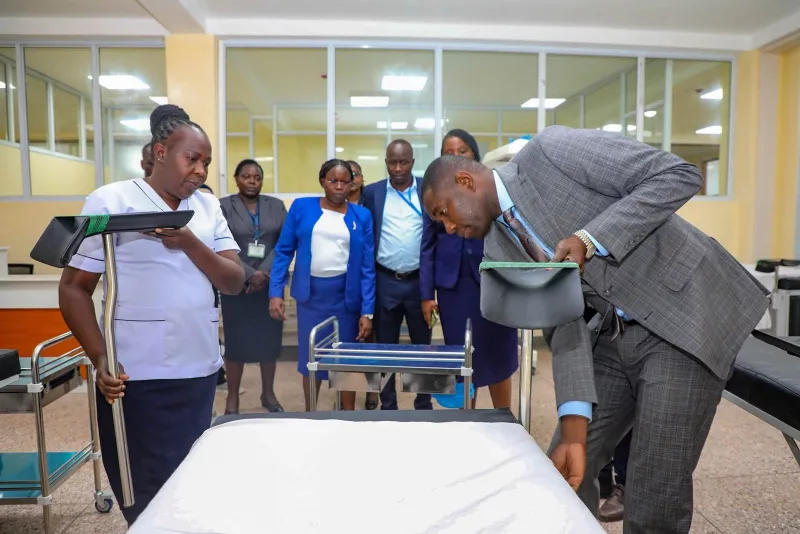
A team from the partners met Governor Kachapin in Kapenguria to discuss the new programme that he called critical in dealing with problems of girls and young women.
The team was led by Fidelis Ndung’u, who is a deputy director of Public Education and Advocacy at the NCPD, alongside representatives from RHNK
Ndungu said the HER Initiative operates on three levels - national, county and community. It aligns local strategies with national legal and policy frameworks to ensure structural support.
“The county level strengthens local healthcare facilities to provide youth-friendly, inclusive, and non-judgmental services,” Ndungu said.
The third component is the community level for mobilising grassroots stakeholders to eliminate backward practices such as FGM and child marriage, and to protect young women’s rights.
A central priority is to improve the county’s health indicators - Reproductive, Maternal, Newborn, Child, and Adolescent Health.
Speaking during the partners’ meeting, Kachapin emphasised the urgency of a coordinated response across all levels of government and civil society.
“We are still battling with FGM, teenage pregnancies, and early childhood marriages among other retrogressive practices,” he said.
“We must work together to bridge the gap in a coordinated manner to reduce these percentages and overcome these challenges we confront every day.”
He said the implementation would involve active participation from community youth champions, public health officers, and civil society actors to ensure the five-year roadmap succeeds.