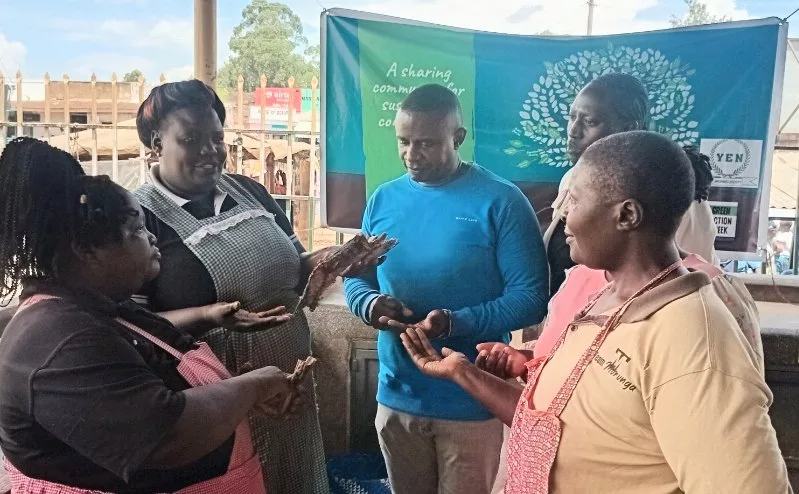
 Youth Education Network director Michael Mung’oma engaging with residents of Matungu at Harambe market during the launch of the Green Action Week campaign 2026 on Wednesday /HILTON OTENYO
County governments have been urged to mobilise resources to promote the farming and consumption of highly nutritious crops as part of efforts to support healthy living.
Youth Education Network (Yen) director Michael Mung’oma said deliberate action was needed to rebuild food sovereignty and protect future generations from diet-related diseases.
He spoke during the launch of a Green Action Week campaign in Western Kenya at Harambe market in Matungu constituency on Wednesday.
Mung’oma said the campaign, themed “A sharing community”, aims to promote the production and consumption of nutritious foods, including groundnuts, sesame, traditional vegetables, millet and sorghum.
“Recognition of indigenous foods in national and county policies would be a good beginning, while reframing them as nutritious, climate-smart and culturally proud is as important as growing them,” he said.
Mung’oma urged counties to include indigenous crops and wild foods in their food and nutrition security strategies, county development plans and agricultural extension services.
“Food and nutrition security strategies, county development plans and extension services should explicitly name and budget for indigenous crops and wild foods, including research and farmer training on millet, sorghum, sesame, groundnuts and traditional vegetables,” he said.
Mung’oma said climate change, urbanisation, environmental degradation and growing dependence on commercial food systems were eroding indigenous food varieties and traditional knowledge on how to find, prepare and preserve them.
“The people who hold this knowledge have few places to share it. Women who are traditional custodians of food culture are left out of decision-making spaces, as young people grow up with little awareness of the local food systems around them,” he said.
He said the trend was increasing communities’ dependence on external food sources while contributing to the loss of cultural practices that have historically supported environmental resilience.
The campaign will be conducted through village market forums bringing together elders, traders and consumers; women-led storytelling circles that place custodians of food culture at the centre; and school-community interactions connecting learners with skills in growing, gathering and preparing traditional foods.
Mung’oma said the campaign was also intended to promote healthier diets amid growing concerns over non-communicable diseases.
“Health experts have warned that non-communicable diseases such as obesity, type 2 diabetes and hypertension, once seen as illnesses of older and wealthier people, are increasingly affecting younger populations, including those in rural areas,” he said.
“Diets high in sugar, refined carbohydrates, salt and unhealthy fats, and low in fibre and variety, are a major driver.”
Mung’oma said perceptions among young people were also contributing to the decline of traditional foods.
“Many young people see traditional foods as poor people’s food or a relic of the past,” he said.
He said whole grains such as millet and sorghum, protein-rich groundnuts and sesame, micronutrient-dense traditional vegetables, fish, mushrooms and termites were generally nutrient-rich and suited to local climates.