 The Senate ICT committee vice chairperson Miraj Abdillahi and chairperson Allan Chesang in Kilifi county on Tuesday / BRIAN OTIENO
 The Senate ICT committee at the Huduma Centre in Kilifi on Tuesday / BRIAN OTIENO
Kilifi residents are forced to share a single Huduma Centre, making essential government services difficult to access for the more than 1.4 million people in the county.
The Huduma Centre in Sokoni ward, Kilifi North subcounty, serves 1,453,787 residents spread across 35 wards, rendering service delivery ineffective and inefficient.
Other Huduma centres in Kaloleni, Kilifi South, Malindi, Ganze and Rabai subcounties are under construction.
This was revealed when senators visited the county on Tuesday to assess government service delivery to residents.
Furthermore, the limited services offered by the centre are hampered by an inadequate electricity supply.
“This is one of the most critical factors cited as affecting service delivery,” Trans Nzoia Senator Allan Chesang said.
Chesang chairs the Senate ICT Committee, which undertook an inspection visit to Kilifi to assess the implementation of ICT policies, digital transformation initiatives and the utilisation of technology in enhancing county governance and service delivery.
The lack of a steady electricity supply delays essential services, such as the registration and issuance of national identification cards.
This is one of the main reasons a high number of residents in Kilifi lack national IDs—a matter that shocked the visiting senators.
Nominated Senator Miraj Abdillahi, the committee vice chairperson, said the lack of national ID cards means many residents cannot access the Social Health Authority (SHA) scheme.
“And it is not only SHA that these residents cannot access. It affects quite a number of other government services and programmes as well,” she said.
Abdillahi said youth as old as 24 in Kilifi lack IDs, meaning no matter how hard they work, they cannot register for SHA, access the affordable housing programme, or benefit from university funding opportunities, among other essential public services.
“We must do something to ensure we accelerate the registration and issuance of national ID cards. This will greatly enhance the exercise of one’s right to vote, because right now, people without ID cards cannot register as voters and cannot vote in the 2027 elections,” Senator Abdillahi said.
Chesang said the senators’ visit was aimed at assessing the progress of ongoing government projects and supporting efforts to ensure their prompt completion to improve access to services.
He said the Senate Mashinani initiative, under which the senators toured the county, is meant to hear first-hand the challenges affecting residents at the grassroots to find swift solutions.
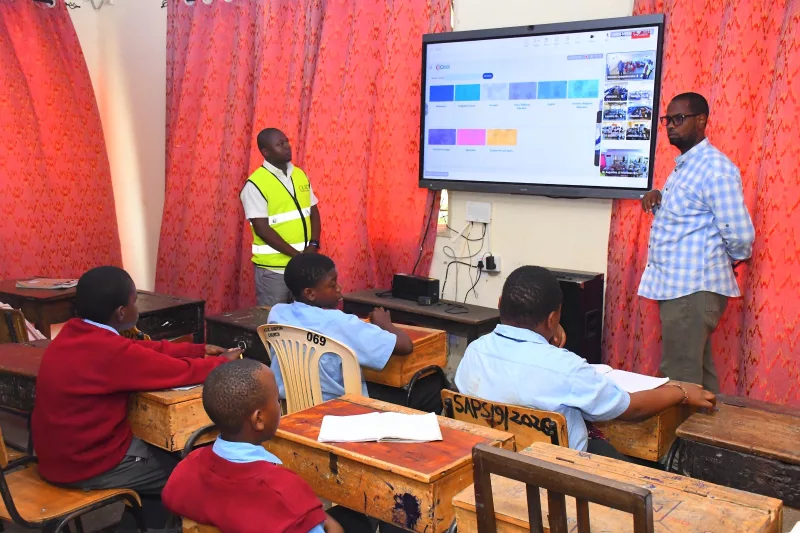
At the Kilifi county headquarters, Chesang’s committee examined the systems used by the county to deliver services digitally.
The Trans Nzoia senator said the integration of technology in revenue collection, access to information, inter-departmental communication and interaction between the county government and residents is notable.
“These are the issues that need to be addressed. The county’s ICT infrastructure may not be where it ought to be, but work has been done and we see efforts aimed at improving efficiency, accessibility, and reliability of public services,” Chesang said.
He commended the digitisation of public services, noting that technology has made it possible for residents living far from Huduma Centres and other government offices to access services without travelling long distances.
“The only thing denying residents some of these services is the interruption occasioned by limited power supply,” he noted, calling on relevant authorities to ensure an adequate supply of electricity across the county.
The Senate Mashinani initiative, he noted, was designed to enable the Senate to engage directly with communities and strengthen the connection between government and the public.
“By bringing public institutions closer to citizens and ensuring that issues affecting communities inform oversight and service delivery, we are able to assess whether existing ICT infrastructure and systems are adequate to meet the growing demand for online and technology-enabled services,” Chesang said.