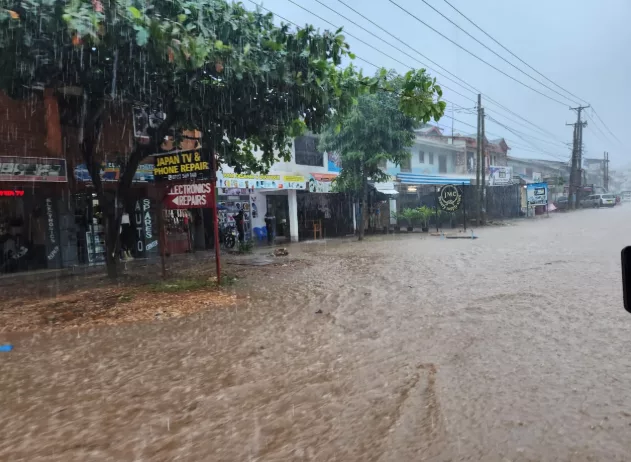
 El Nino
Farmers have been urged to intensify pest and disease surveillance and protect harvested crops as heavy rains are expected to increase the risk of flooding, crop diseases and post-harvest losses.
The warning comes as the October-December rainfall season approaches, with the IGAD Climate Prediction and Applications Centre (ICPAC) forecasting wetter-than-normal conditions across much of the Greater Horn of Africa.
ICPAC says there is a 90 per cent chance of enhanced rainfall over southern Ethiopia, central and southern Somalia and northeastern Kenya, while parts of central Kenya, the Lake Victoria Basin and neighbouring countries have a high likelihood of receiving more than 400mm of seasonal rainfall.
The regional climate centre says El Nino has developed and is expected to strengthen during the remainder of 2026, while a positive Indian Ocean Dipole is also expected to contribute to enhanced rainfall during the season.
The outlook has prompted aak-GROW/CropLife Kenya to call for early action by farmers, agro-dealers and other players in the agricultural supply chain to reduce possible losses.
“Preparedness is critical to managing the risks associated with the forecast El Nino conditions. We are calling on farmers, agro-dealers and stakeholders across the agricultural supply chain to act early, strengthen pest surveillance and safeguard both crops and harvested produce,” said aak-GROW chief executive officer Joel Mutai.
The wetter conditions could benefit farmers by improving water availability and supporting crop growth, but excessive rainfall can also cause waterlogging, flooding, soil erosion and damage to crops and farm infrastructure.
According to FAO, El Nino has historically been associated with above-average rainfall in the Horn of Africa between October and December, increasing the risk of flooding and landslides and their impacts on agriculture.
Mutai told farmers to monitor crops closely. He said farmers should strengthen field scouting because prolonged wetness and high humidity can create favourable conditions for fungal diseases.
He advised farmers to maintain appropriate spacing and plant populations, use raised beds where practical and regularly inspect crops for early signs of infection.
Fruit farmers have also been advised to prune excess branches to improve air circulation and reduce prolonged moisture around plants.
The organisation warned that changing weather conditions could also trigger pest outbreaks, making early detection important.
Farmers have been encouraged to use available pest surveillance and early warning systems and remain alert for migratory pests such as desert locusts and African armyworm.
It also urged farmers to watch for possible resurgence of fall armyworm, stem borers and diamondback moths later in the season and into early 2027.
Farmers have also been advised to harvest on time and ensure produce is properly dried before storage to reduce the risk of mould and aflatoxin contamination.
This is particularly important for maize and other crops that can develop aflatoxins when exposed to moisture under poor storage conditions.
The Pest Control Products Board (PCPB) lists Aflasafe KE01, developed by KALRO, among registered biopesticides for crop production for controlling toxigenic Aspergillus flavus in maize.
Mutai told farmers to begin weed control early because frequent rainfall can encourage rapid weed growth and interfere with the effectiveness of herbicides if applications are followed by heavy rain.
“Integrated approaches such as mulching, cover crops and conservation agriculture can help suppress weeds while protecting soil,” he said.
He said flooding could disrupt farm input supplies. Heavy rains could also affect the agricultural supply chain by damaging roads and infrastructure and disrupting movement of seeds, fertilisers, pesticides and livestock vaccines.
aak-GROW said agro-dealers should consider pre-positioning essential agricultural inputs in areas expected to experience high demand.
Farmers have also been cautioned against turning to unregistered products when legitimate supplies become difficult to obtain.
The PCPB says pest control products must be registered before being imported or sold in Kenya and that their use must follow approved label directions.
The regulator maintains a list of registered pest control products for use in Kenya, including conventional pesticides and biopesticides.
Farmers have also been asked to safely dispose of empty pesticide containers and prevent them from being washed into rivers and other water sources during flooding.
Mutai said livestock are also at risk, and that livestock farmers should ensure animals are vaccinated on time and to monitor them closely during periods of flooding and prolonged wet conditions.
Flooding can disrupt access to grazing areas, contaminate water sources and create conditions that favour some livestock diseases and their vectors.