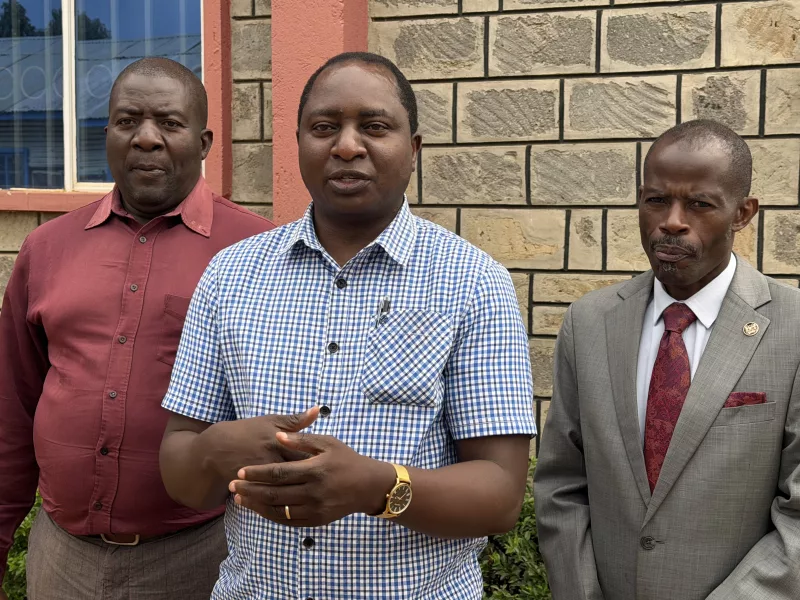
 Officials from the NCCK and Uasin Gishu county during launch of an MoU on youth in the region
The National Council of Churches of Kenya (NCCK) has rolled out a strategy to help empower youth in order to shun violence ahead of next year’s elections.
Read Also
NCCK called on the government, counties and other development partners to focus on issues affecting youth many of whom are desperate and are easy targets for political manipulation.
The Uasin Gishu chapter of the NCCK has presented a memorandum to the county government seeking the establishment of a County Youth Employment and Economic Empowerment Programme.
The proposal is part of a national initiative by the NCCK dubbed "Claiming Space, Claiming Kenya," which seeks to empower young people and shield them from violence, crime, and political manipulation before, during, and after the 2027 general election.
The memorandum was presented during an engagement between NCCK church leaders and officials from the county department of youth and sports.
NCCK Uasin Gishu deputy chairperson Rev. Joseph Watila commended the county's efforts in youth empowerment but raised concern over rising cases of crime, goonism, femicide, and drug abuse, which he attributed to idleness among young people.
He called for the youth agenda to be fully incorporated into the County Integrated Development Plan (CIDP), with more playing grounds completed and more talent-harnessing tournaments organised to help export local talent.
“The NCCk is keen to work with al partners in helping empower youth in various ways so that they can engage in meaningful and positive activities to earn a living,” Watila said.
NCCK and affiliated churches will also use religious forums to sensitise youth on the need to keep peace and unity during the election period.
Uasin Gishu chief officer for youth and sports Victorine Kapkiai said there were ongoing county interventions targeting the youth in all areas.
She said the engagements include the establishment of ICT hubs across the county and a modern youth centre equipped with a theatre at the county headquarters which is expected to be complete by the end of the next financial year.
She said the county is using a ward-based model to reach the youth and has so far engaged over 12,000 young people through 600 teams under the Governor's Cup, an initiative that has also helped in addressing drug abuse and other challenges.
She added that the County, in partnership with NCCK, will bring together over 2,000 youth for a mentorship program.
The NCCK and the county have agreed to work together to find amicable solutions to youth unemployment, which they described as a major and evolving problem.
Bishop Josphat Kimani, a member of the NCCK North Rift Regional Committee, said the church is a co-partner in youth development and emphasized the need for enhanced sensitization through pulpit messaging on elections and youth participation.
"As we head towards elections, the youth are likely to be misused. We must work together to reach them and encourage them to even vie for political positions. If we neglect them, it might be a time bomb in waiting," said Bishop Kimani.
Rev. Simon Kimutai noted that goonism, youth unemployment, and the misuse of the boda boda sector for criminal activities remain major challenges.
He proposed the development of sports academies, speedy completion and utilization of the 64 Stadium and Kipchoge Keino Stadium, and adherence to the 30 percent youth employment requirement.
Rev. Silah Rutto, the NCCK Youth Representative, called for follow-ups on school dropouts, provision of free Wi-Fi at designated points in the city and urban centres, and a proper tracking mechanism to monitor youth progress after accessing the initiatives.
Deputy Director for Sports, Pius Mosbei, said the County had allocated adequate funds to support youth through sporting activities.
"We are also rolling out empowerment programs such as Jiajiri and working through our 13 Vocational Training Centres (VTCs) to provide tools and skills," he said.
The church leaders commended Uasin Gishu county for improved security in areas like Langas Estate, attributing it to sustained youth engagement initiatives.