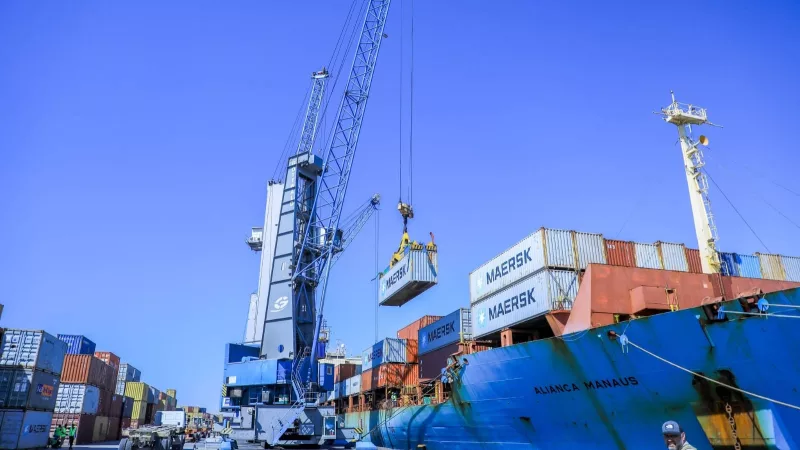
Djibouti, Mogadishu and Dar es Salaam took the top three positions among ports in East and Horn of Africa in a World Bank ranking of 400 container ports globally. Kenya’s Lamu Port ranked sixth in the regional comparison, while Mombasa ranked ninth.
Djibouti ranked 53 globally, followed by Mogadishu at 127 and Dar es Salaam at 255. Lamu ranked 345, while Mombasa was 396.
The rankings shifted significantly from the previous year. Djibouti rose from rank 364 to 53 globally, while Dar es Salaam moved from 360 to 255. Mogadishu climbed 36 places from 163 to 127. Mombasa fell from 375 to 396, while Lamu entered the 2025 ranking at 345 after not receiving a ranking in 2024.
Other ports in the regional comparison were Port Victoria in Seychelles at rank 287, Le Port in Réunion at 316, Longoni in Mayotte at 367 and Port Louis in Mauritius at 369.
Globally, Fuzhou and Dalian in China ranked first and second, followed by Salalah in Oman. Among African ports, Tanger Med in Morocco ranked highest at rank 6 globally, followed by Port Said in Egypt at rank 15.
Produced annually by the World Bank and S&P Global Market Intelligence, the Container Port Performance Index (CPPI) compares port performance mainly by looking at how long container ships spend in port.
It takes account of vessel size and the number of containers loaded, unloaded or moved during each visit. The World Bank describes the index as a benchmarking and diagnostic tool rather than a complete assessment of a port’s management or overall performance.
“The improved ranking of Mogadishu Port is encouraging. It reflects the combined efforts of workers, management and partners. We still have more work to do to reduce vessel delays, improve cargo handling and provide more predictable services to shipping lines, importers and exporters,” said Ambassador Mohamed Ali Nur, Director General of the Mogadishu Port Authority.
Mogadishu Port has expanded its operations since 2025. The port opened a new container terminal, increasing annual container-handling capacity from about 150,000 to 250,000 twenty-foot equivalent units. It has added cargo-handling equipment, including forklifts, and moved to 24-hour operations with continuous movement of cargo vehicles. The Mogadishu Port Authority says the changes are helping reduce congestion and improve the movement of ships and cargo.
The rankings came amid major disruption to shipping routes. The World Bank says the 2024–25 Red Sea crisis forced many vessels to reroute around the Cape of Good Hope, adding 10 to 14 days to some Asia–Europe journeys and disrupting shipping schedules across the Indian Ocean. Despite this, Djibouti, Mogadishu and Dar es Salaam improved their CPPI scores in 2025.
Mombasa moved in the opposite direction. The report says rerouted shipping services and higher demand along the transport corridor contributed to longer waiting times at anchorage and before ships could berth. It also points to landside and administrative bottlenecks that added to congestion.
Across Sub-Saharan Africa, the World Bank says “ports generally recorded longer vessel turnaround times. It links this partly to capacity constraints, import-heavy trade, weaker connections between ports and inland transport networks and limited competition between ports.”