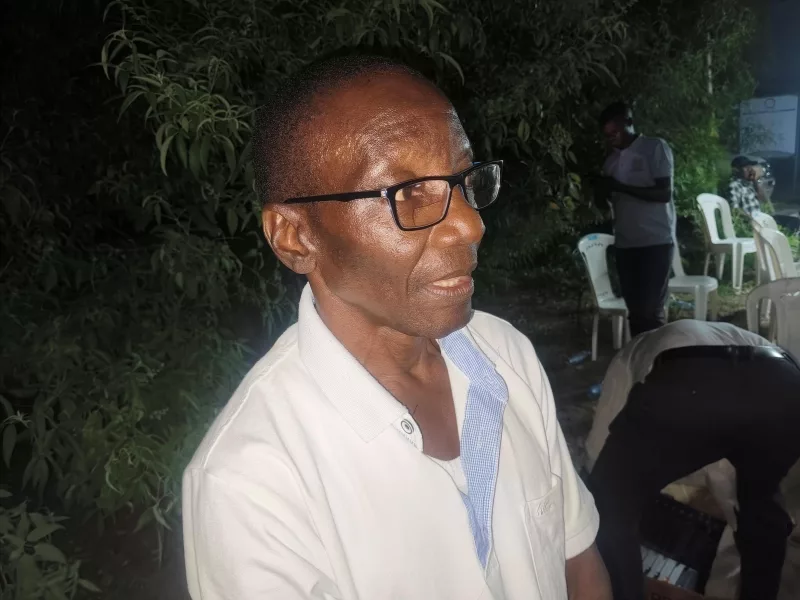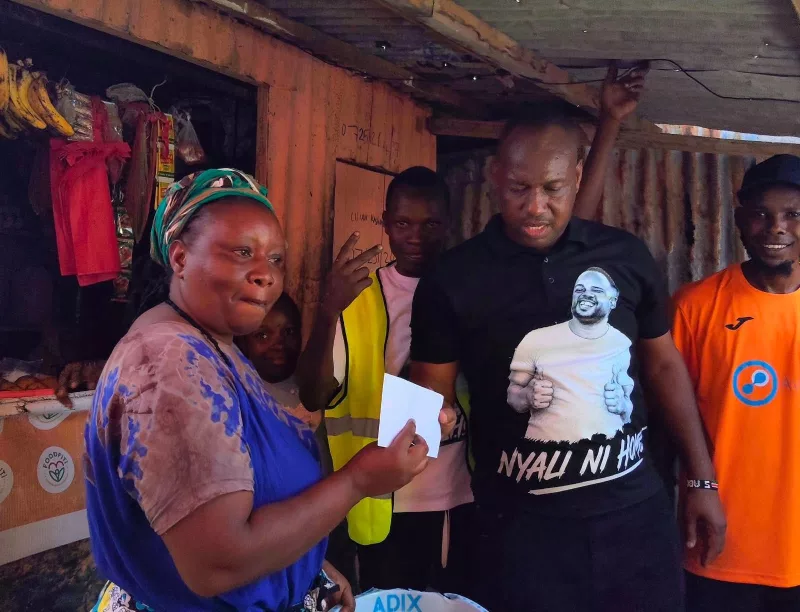
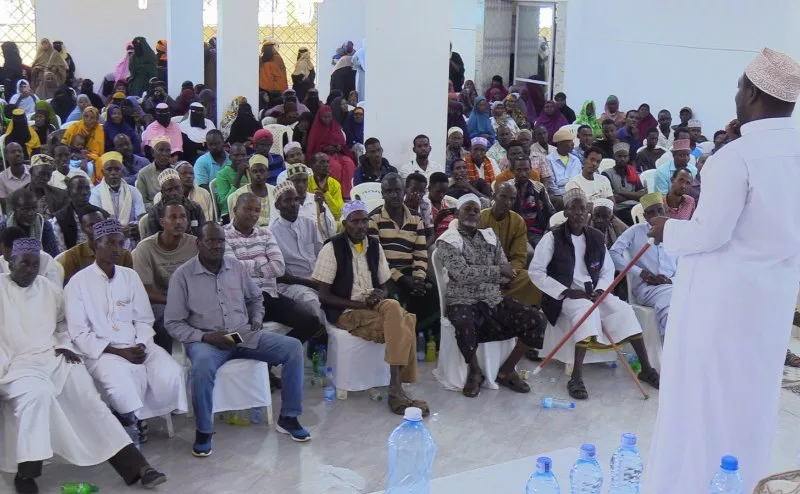
 Garsen MP Ali Wario addresses members of the Wardei, Orma and Borana communities at Tadhib Hall in Malindi town.
Pastoralist communities in Kilifi have raised concerns over what they describe as discrimination in the issuance of national identity cards
They claim the practice has limited their participation in electoral processes.
Members of the Wardhei, Orma, and Borana communities claimed they were still being subjected to vetting when applying for identity cards, despite a directive by President William Ruto outlawing the practice.
Wardhei elder Sala Kulo and Orma youth Ahmed Yunus said the requirement had forced many residents to travel to Tana River county to obtain IDs. They spoke during a meeting with Garsen MP Ali Wario at Tadhib Hall in Malindi.
Yunus said residents whose names were associated with communities traditionally found in Tana River were often directed to acquire their documents from that county.
“We have a problem obtaining national identity cards in Malindi. If you visit the Registrar of Persons offices and they discover your name is, for example, Adan, we are labelled as residents of Tana River county and told to seek services there,” he said.
Yunus said he was among those affected and had been forced to travel to Tana River to obtain his ID through a vetting committee.
“I am forced to travel to Garsen every general election year to vote, yet I was born in Malindi,” he said.
Kulo said the problem had also affected his family, forcing him to travel to Garsen whenever his children needed identity cards.
He said the situation had made it difficult for his family to access government services and economic opportunities in Malindi and Kilifi county.
“Every general election year, I am forced to carry all my wives and children, about 25 in number, to Garsen to participate in voting," Kulo said.
"I miss out on opportunities such as bursaries for my children here in Malindi constituency and Kilifi county because officers refer me to Garsen, where I am a registered voter.”
He urged the national government to ensure its directive on the issuance of IDs without vetting is implemented, saying many young people from the affected communities have been unable to acquire identity documents upon attaining the age of 18.
“It is total discrimination that Wardhei, Orma and Borana communities in Kilifi county are forced to travel to Tana River county for IDs. This has denied many people who have attained 18 years the opportunity to be registered as Kenyans and voters,” he said.
Community members asked Wario to intervene and help ensure residents can obtain their identification documents within Kilifi.
Wario promised to engage Kilifi elected leaders and national government officials to find a lasting solution to the matter.
He questioned why residents in Kilifi and Mombasa should face different requirements from those in Tana River when seeking identity cards.
“Are Kilifi and Mombasa different countries from Tana River, where vetting must be done for people to get IDs? I am very disappointed by national government officials who are defying the President and continuing to discriminate against pastoralist communities in this area,” Wario said.
He said he had convened a meeting involving elected leaders and administrative officers to address the issue.
Wario further linked the lack of identity documents and voter registration to the region's ability to secure a fair share of national resources.
“As a region, we have a very huge population, but many of our people do not have IDs and hence do not vote. Those who have IDs have not registered as voters, and this has denied us an opportunity to fight for our share of the national cake due to numbers,” he said.
He urged residents to acquire identity cards and register as voters ahead of the election.
INSTANT ANALYSIS
Persistent ethnic profiling in ID issuance directly undermines citizenship rights and electoral participation for pastoralist communities in Kilifi. By defying presidential directives on vetting, administrative hurdles impose unnecessary financial burdens, disenfranchise youth and skew resource allocation ahead of the election, demanding urgent national policy enforcement.