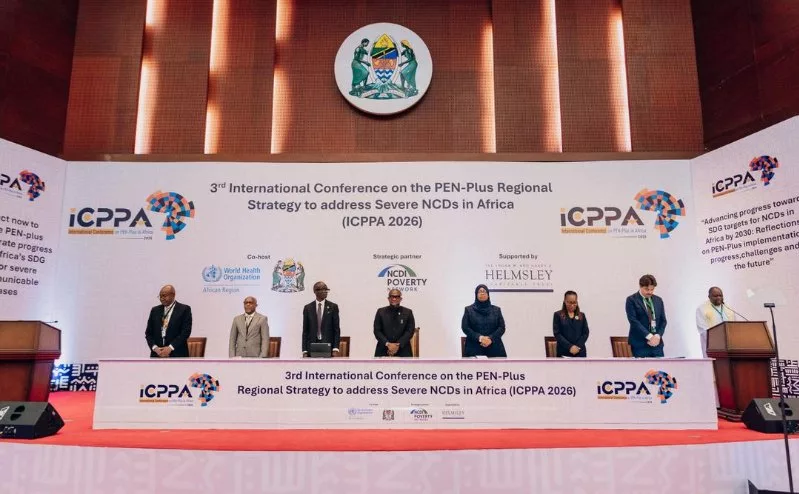
 Delegates at the 3rd International Conference on WHO #PENPlus Strategy Implementation in Africa (ICPPA 2026)
Africa's cancer burden is falling heavily on the working-age population, with adults aged 40 to 64 accounting for the largest share of new cases and cancer deaths in 2023, a new study published in The Lancet Oncology has found.
The study estimates that 681,000 cancer cases occurred among people aged 40 to 64 in Africa in 2023, representing 44.2 per cent of all cancer cases on the continent.
The age group also recorded about 397,000 cancer deaths, equivalent to 43 per cent of all cancer deaths.
People aged 15 to 39 accounted for another 372,000 new cancer cases, or 24.2 per cent of the total. The group recorded about 150,000 deaths, representing 16.3 per cent of cancer deaths.
Adults aged 65 and above accounted for 401,000 new cases, or 26 per cent of all cases, and 334,000 deaths, equivalent to 36.2 per cent of cancer deaths.
The figures show that cancer is not only a disease affecting older people, with a significant proportion of Africa's cancer burden occurring among adolescents, young adults and people in their economically productive years.
The study estimates that cancers affecting people aged 40 to 64 generated 15.2 million disability-adjusted life years in Africa in 2023, equivalent to 44.8 per cent of the continent's total cancer DALYs.
Researchers say the figures underline the need for stronger prevention, screening, early diagnosis and treatment services across Africa to reduce premature deaths and the wider social and economic impact of cancer.
According to the report, the cancer burden in Africa is large and growing, with rising cases and deaths exposing major gaps in prevention, early diagnosis and access to treatment..
The study found that cancer cases increased by 229 per cent between 1990 and 2023, rising from an estimated 467,000 cases to 1.54 million. In 2023, cancer was linked to about 923,000 deaths and 33.94 million disability-adjusted life years (DALYs).
Africa accounted for an estimated 306,000 cancer deaths and 10.7 million DALYs in 2023.
Specialised oncology facilities remain scarce and are largely concentrated in urban areas. Access to mammography, which can help detect breast cancer early, is also limited by infrastructure and financial barriers.
Breast cancer illustrates the disparity. Despite relatively low incidence compared with some high-income regions, Africa has some of the highest breast cancer mortality rates globally.
Cervical cancer presents another major challenge. It remains the leading cause of female cancer mortality and cancer-related DALYs in Africa, with the absolute burden having doubled since 1990.
Gastrointestinal cancers are also emerging as a major concern. They accounted for about a quarter of cancer cases and DALYs and one-third of cancer deaths in Africa in 2023.
Stomach cancer has declined in part because of improved management of H. pylori infection. At the same time, colorectal and pancreatic cancers are increasing.