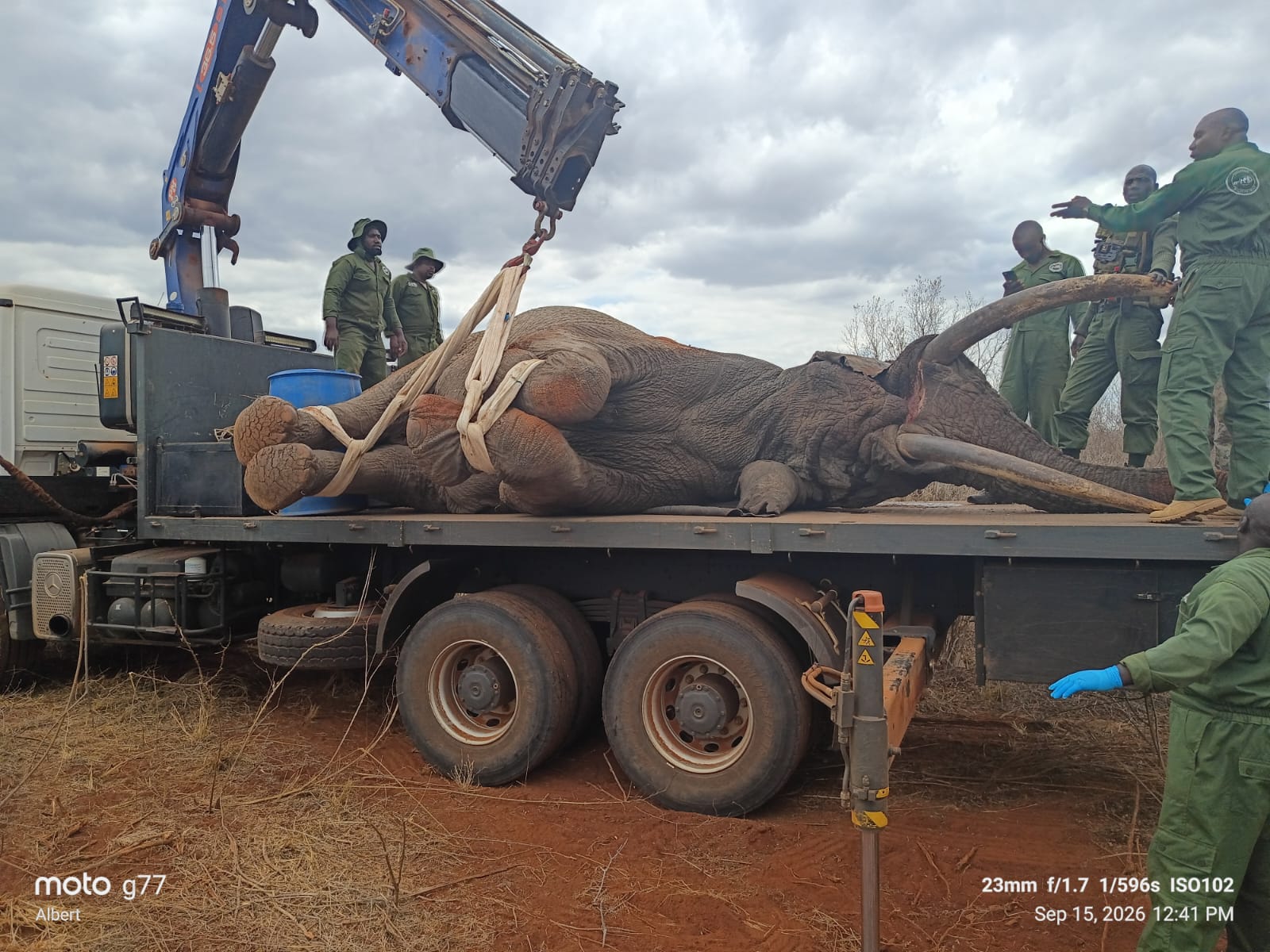
An elephant bull that repeatedly broke through fences, raided farms and destroyed crops has been captured and translocated in Tsavo following growing risks to both residents and the animal.
The operation was carried out by the Kenya Wildlife Service (KWS) and Sheldrick Wildlife Trust (SWT) Tsavo Mobile Veterinary Team in collaboration with the KWS/SWT Southern Mobile Veterinary Unit.
The bull had repeatedly breached fences in search of food, bringing it into conflict with people and putting itself at risk in the process.
For the teams involved, however, the intervention was about more than moving a troublesome animal.
KWS said translocation is among the measures used to manage human-wildlife conflict and support long-term coexistence between communities and wildlife.
"Translocation remains one of the most effective exercises for managing human-wildlife conflict and supporting long-term coexistence between people and wildlife," KWS stated.
The operation also highlighted the role played by mobile veterinary teams, which respond to wildlife emergencies in the field, treat injured animals and participate in interventions involving animals that pose a risk to communities.
The intervention comes as Kenya continues to grapple with the challenge of protecting growing wildlife populations while reducing conflict with communities living near protected areas and wildlife corridors.
In recent years, KWS has carried out a number of elephant translocations after individual animals or groups repeatedly entered farms and caused damage.
In October 2025, KWS relocated a bull elephant from Kithoka Village near Imenti Forest in Meru County to Tsavo East National Park after it repeatedly breached electric fences and raided crops.
KWS said the animal had become highly skilled at breaking through fences and warned that elephants can learn from successful behaviour.
The Meru case also illustrated why moving an individual elephant can sometimes be considered after other measures have failed.
KWS said the bull had developed a taste for farmers' crops and had become adept at breaching fences installed to keep wildlife away from farms.
The agency said relocation was intended to protect both people and the animal while preventing the learned behaviour from contributing to wider conflict.
A similar challenge has been reported in other parts of the country.
In January, farmers in Ndaragwa, Nyandarua County, raised concerns over elephants that had learned to cross an electric fence and repeatedly entered farms, destroying crops and disrupting livelihoods. Some residents said the invasions occurred both during the day and at night.
In June, KWS also moved three elephants from Kamboo in Kibwezi West following months of conflict in which the animals repeatedly raided farms and destroyed crops. The situation had forced some farmers to spend nights guarding their fields.
The cases point to a wider challenge facing wildlife managers as human settlements, agriculture and infrastructure increasingly overlap with wildlife movement areas.
KWS has identified changes in land use, competition for dispersal areas and climate change among factors contributing to rising human-wildlife conflict. Its conservation measures include game-proof fencing and wildlife translocation.
Translocation is, however, not simply a matter of catching an animal and taking it somewhere else.
Elephant immobilisation and relocation require specialised veterinary and capture teams, with KWS protocols providing guidance on the safe immobilisation of the animals.
KWS records show that elephant translocation has been used in Kenya for decades, including moves involving hundreds of elephants for different conservation and conflict-management purposes.