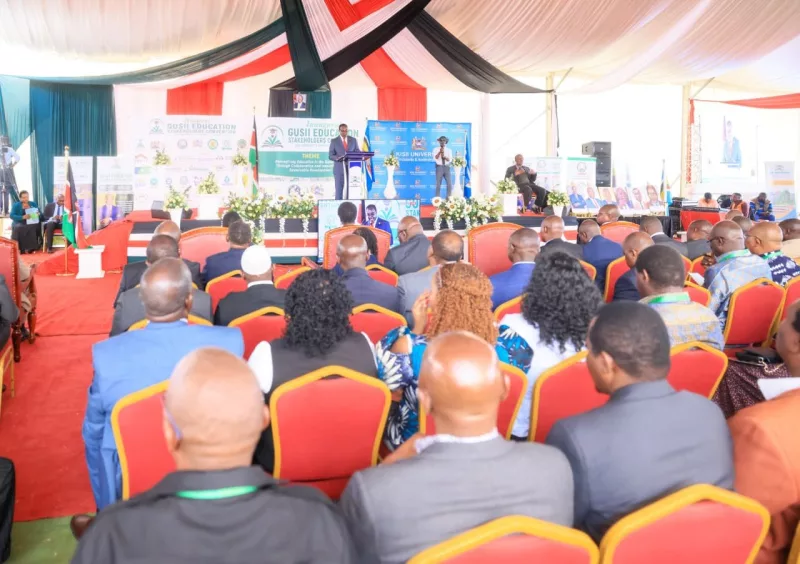
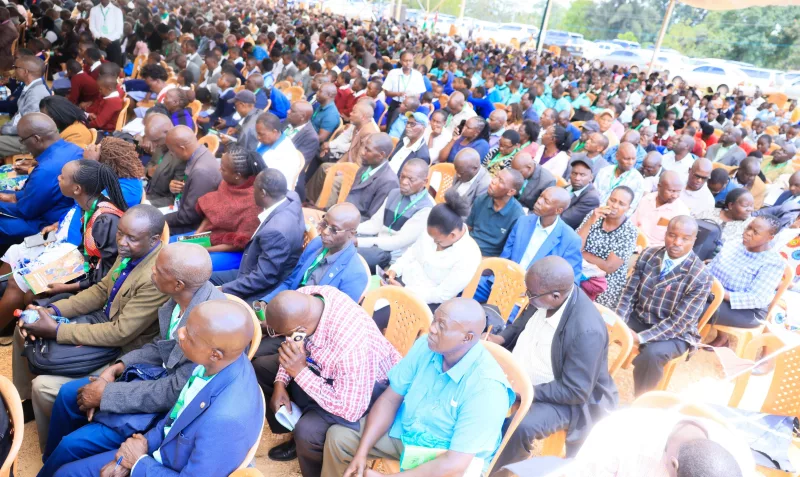
 Education Cabinet Secretary Julius Ogamba presides over the opening of the inaugural Gusii Education Stakeholders’ Convention at Kisii University, September 10, 2026 /MoE
Education Cabinet Secretary Julius Ogamba has led education stakeholders in Gusii in a renewed push to improve the region's education standards.
The reformers will happen through evidence-based reforms targeting teaching, learner outcomes, technology, teacher development and equity.
The stakeholders, drawn from schools, universities, government, families, communities, private sector, faith-based organisations and development partners, made the commitment during the Gusii Education Stakeholders Convention held at Kisii University on Thursday and Friday.
The convention, held under Ogamba’s patronage, brought together experts to examine challenges facing education in the region and agree on practical measures to address them.
Other key figures present included Kisii Governor Simba Arati, his Nyamira counterpart Amos Nyaribo and Kisii University vice chancellor Nathan Ogechi.
Unlike previous discussions largely based on general concerns, the resolutions were informed by a baseline survey conducted by a Kisii University research team and subsequent consultations with stakeholders.
“The baseline survey and consultations provided an opportunity to move beyond anecdotal accounts to the identification of real challenges, underlying causes, promising practices and locally appropriate solutions,” the convention said.
The stakeholders identified digital transformation, teacher development, assessment,science, technology, engineering and mathematics (STEM), performance, learner wellbeing, technical and vocational education training and higher education, education financing and competency-based education among areas requiring urgent attention.
They called for greater investment in digital education, including extending access to lower schools, strengthening teachers’ digital skills and mobilising resources for technology infrastructure.
On teacher development, the stakeholders resolved to move beyond the workshop-based model towards continuous professional development.
They also called for stronger alignment between teacher deployment and subject specialisation, particularly in junior school and for promotion criteria to take classroom performance into account.
Poor performance in mathematics and sciences, especially at junior grades, emerged as another priority.
The stakeholders proposed targeted and data-driven STEM interventions, early identification and remediation of numeracy gaps and improved access to laboratories, textbooks, internet connectivity and materials for learners with special needs.
The convention also raised concerns over drug and substance abuse, mental health, indiscipline, violence, absenteeism, early pregnancy and gender-based violence among learners.
It called for stronger guidance and counselling, positive parenting, life-skills education and closer collaboration between schools, families, communities and religious organisations.
The stakeholders further backed reforms in Tvet and higher education, including the establishment of a School of Engineering at Kisii University and measures to improve industry-based training.
Industries were urged to absorb at least 20 per cent of trainees as interns, while the government was asked to ensure timely funding to prevent trainee dropouts.
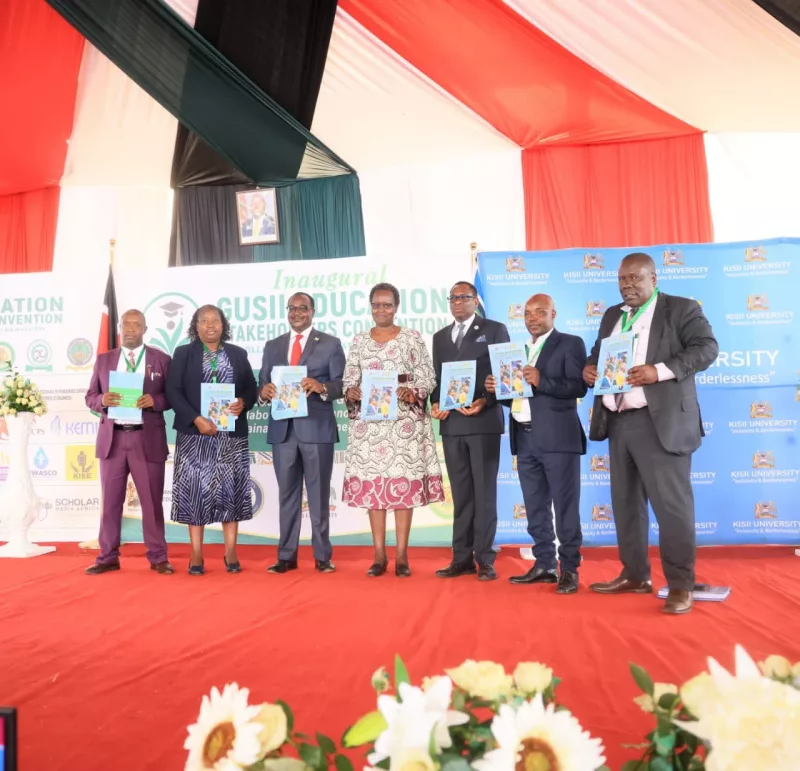 The convention focused on improving education outcomes, promoting equity, strengthening infrastructure and teacher development /MoE
On equity and inclusion, the convention called for greater support for needy learners, including school-level bursaries and stronger provision for learners with disabilities and special needs.
“The convention recognised the need to strengthen diversity, equity and inclusion in Gusii schools,” the stakeholders said, calling for proper engagement in managing additional levies for pressing needs such as school meals and tuition for learners with disabilities.
The convention also revived the proposed Centre of Excellence in Health Education and Training, which is intended to strengthen specialist health training, research and service delivery in the region.
The stakeholders handed over the convention to Kisii University, which will anchor the initiative and coordinate implementation, while calling on national and county governments, universities, communities, development partners and the private sector to turn the resolutions into concrete action.
They committed to periodic review, accountability and sustained partnerships to ensure the recommendations translate into measurable improvements in education across Gusii land.
 The convention raised concerns over drug and substance abuse, mental health, indiscipline, violence, absenteeism, early pregnancy and gender-based violence among learners.