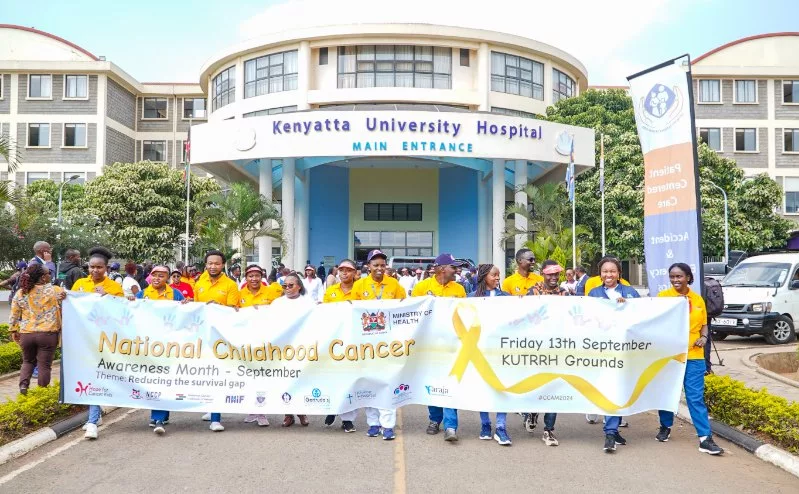
 The National Childhood Cancer Awareness Month launch event at KUTRRH
Africa accounted for nearly four in every 10 childhood cancer deaths globally in 2023, highlighting the deep inequalities in access to cancer diagnosis and treatment, a new study published in The Lancet Oncology has found.
The study estimates that 54,700 children and adolescents aged 0 to 19 died from cancer in Africa in 2023, up from 36,400 deaths in 1990.
The continent accounted for 38 per cent of the estimated 144,000 childhood cancer deaths recorded globally in 2023.
The five leading childhood cancers in Africa were leukaemia, non-Hodgkin lymphoma, other malignant neoplasms, brain and central nervous system cancers, and cancers of the bone and articular cartilage.
Despite the rise in the absolute number of deaths, the age-specific childhood cancer death rate in Africa declined from 10.5 deaths per 100,000 people in 1990 to 7.5 per 100,000 in 2023.
The researchers say the decline in the death rate is overshadowed by Africa's disproportionately high share of global childhood cancer deaths.
Childhood cancer also accounted for 4.5 million disability-adjusted life years in Africa in 2023, representing 38 per cent of the global total.
The findings point to persistent gaps in early diagnosis, specialist care and access to treatment across the continent.
The researchers say addressing these inequalities will require stronger cancer systems and equitable access to care for children regardless of where they live.
The World Health Organization says palliative care relieves symptoms caused by cancer and improves the quality of life of patients and their families. Not all children with cancer can be cured, but relief of suffering is possible for everyone.
Paediatric palliative care is considered a core component of comprehensive care, starting when the disease is diagnosed and continuing throughout treatment and care, regardless of whether a child receives treatment with curative intent.
According to the report, the cancer burden in Africa is large and growing, with rising cases and deaths exposing major gaps in prevention, early diagnosis and access to treatment..
The study found that cancer cases increased by 229 per cent between 1990 and 2023, rising from an estimated 467,000 cases to 1.54 million. In 2023, cancer was linked to about 923,000 deaths and 33.94 million disability-adjusted life years (DALYs).
Africa accounted for an estimated 306,000 cancer deaths and 10.7 million DALYs in 2023.
Specialised oncology facilities remain scarce and are largely concentrated in urban areas. Access to mammography, which can help detect breast cancer early, is also limited by infrastructure and financial barriers.
Breast cancer illustrates the disparity. Despite relatively low incidence compared with some high-income regions, Africa has some of the highest breast cancer mortality rates globally.
Cervical cancer presents another major challenge. It remains the leading cause of female cancer mortality and cancer-related DALYs in Africa, with the absolute burden having doubled since 1990.
Gastrointestinal cancers are also emerging as a major concern. They accounted for about a quarter of cancer cases and DALYs and one-third of cancer deaths in Africa in 2023.
Stomach cancer has declined in part because of improved management of H. pylori infection. At the same time, colorectal and pancreatic cancers are increasing.