
The government has set aside Sh10 billion to modernise smallholder tea factories, expand value addition and mechanise operations to improve earnings for thousands of farmers across the country.
Agriculture PS Paul Ronoh said Sh4.5 billion has already been released, with Sh1 billion directed towards factory modernisation while the remaining funds have been used to subsidise fertiliser.
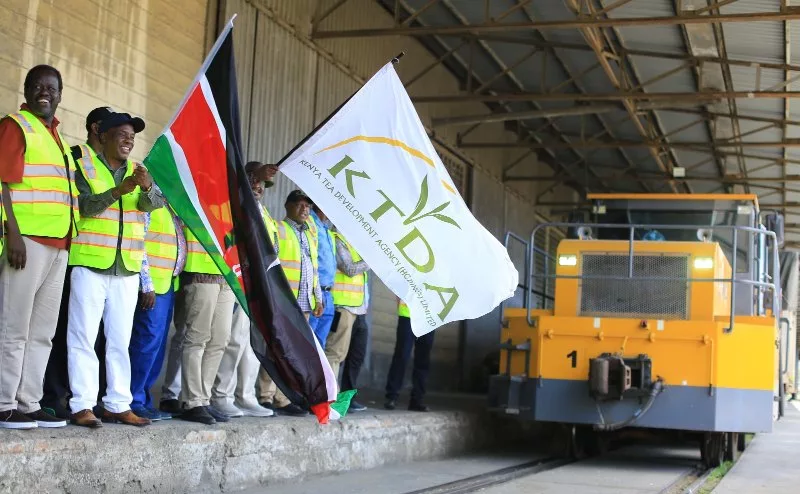
Ronoh spoke at the Port of Mombasa during the flagging off of 30,000 metric tonnes of fertiliser for Kenya Tea Development Agency (KTDA) farmers.
He said the shipment marks the first consignment of 99,000 metric tonnes scheduled for nationwide distribution ahead of the rainy season.
The PS praised KTDA for securing the fertiliser months earlier than last year, when deliveries reached farmers in December, saying timely supply would improve productivity.
He said the government had implemented wide-ranging reforms in the tea sector to improve efficiency, strengthen tea marketing and increase returns for smallholder farmers.
He assured KTDA that the remaining funds under the government support programme would be released to ensure the agency remains financially stable for efficient operations.
Ronoh said recent tea auction performance indicates brighter prospects for farmers after KTDA sold all its tea, while prices improved due to expanded marketing efforts led by the Tea Board of Kenya (TBK).
“The tea sector is on course to transform and contribute more to farmers' livelihoods and the country's economic growth,” Ronoh said.
Tea farmers will purchase the subsidised fertiliser at Sh2,000 per bag, the same price offered to farmers under the national fertiliser subsidy programme.
The PS said KTDA was required to procure fertiliser through competitive international bidding to guarantee quality and value for money. He commended the Tea Board of Kenya for tightening enforcement measures within the industry.
Ronoh urged farmers to maintain quality standards by harvesting only mature tea leaves, noting that quality remains key to securing better prices in both local and international markets.
He announced that a scientific tea testing centre had completed its pilot phase and would soon become fully operational. The centre will address long-standing concerns over tea quality testing and certification.
Farmers were encouraged to seek guidance from agricultural extension officers and KTDA officials on the correct timing and methods of fertiliser application.
The government is also pushing for more value addition within Kenya by encouraging local packaging of tea instead of exporting it in bulk for packaging abroad.
Ronoh said tax incentives on packaging materials were intended to encourage investors and processors to package Kenyan tea locally, creating jobs and increasing the value retained within the country.
KTDA chairman Enos Njeru said the fertiliser consignment will produce about 1.9 million 50kg bags of NPK 26:5:5 for distribution to smallholder tea farmers.
Njeru said KTDA procures fertiliser through international competitive bidding to secure quality inputs at affordable prices.
The fertiliser will be transported from Mombasa to Nairobi by rail before being distributed by road to tea factories across tea-growing regions, where farmers will collect their allocations.
Njeru said timely fertiliser application remains critical for maintaining healthy tea bushes and sustaining production of high-quality green leaf.