Education Cabinet Secretary Migos Ogamba has challenged teachers to embrace a changing role in classrooms as artificial intelligence, digital learning and competency-based education reshape how learners acquire and apply knowledge.
Ogamba said technology alone would not transform education, warning that teachers must develop new skills to help learners think critically, collaborate, innovate and apply knowledge to real-life challenges.
“We can provide digital devices. We can introduce new curricula and strengthen assessment systems. But the teacher remains central to translating education policy into a meaningful classroom experience,” Ogamba said.
“The teacher of today must increasingly be a facilitator, a mentor, an innovator, a researcher and a lifelong learner. The competency-based approach requires teachers to help learners discover, create, collaborate and apply knowledge. At the same time, we must address teacher welfare and working conditions that enable educators to perform these responsibilities effectively.”
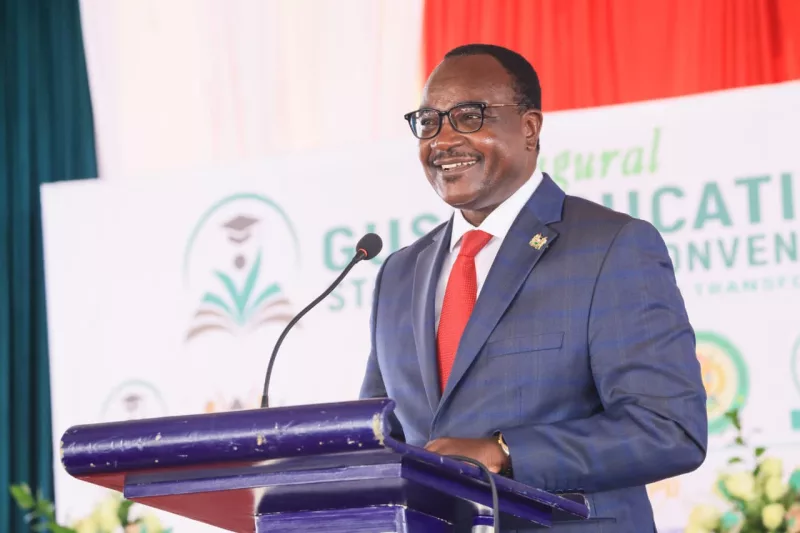
The CS spoke in Kisii on Thursday during the opening of the inaugural Gusii Education Stakeholders Convention at Kisii University, held under the theme, “Reimagining Education in the Gusii Region through Collaboration and Innovation for Sustainable Development.”
The convention brought together government officials, education agencies, university and college leaders, teachers, parents, learners, development partners, private-sector representatives and other stakeholders to discuss education outcomes in Kisii and Nyamira counties.
Ogamba said the rapid development of artificial intelligence and other digital technologies had changed the debate from whether schools should adopt technology to whether they were using it effectively to improve learning.
“The digital revolution is no longer approaching. It is already here. Artificial intelligence, digital learning, online resource platforms and emerging technologies are changing the way knowledge is created, shared and applied,” he said.
“The question, therefore, is no longer whether schools should embrace technology. The question is: how do we ensure that technology actually improves learning? Our digital transformation agenda must therefore go beyond providing devices.”
Ogamba lauded Equity Bank for their partnership in the convention, saying collaboration between government and the private sector were important in supporting efforts to improve education outcomes.
Representing Equity Group MD and CEO Dr James Mwangi and Equity Bank Kenya Managing Director Moses Nyabanda, Equity Bank Kenya Head of Education Sector Peter Ndoro said education remained one of the most powerful tools for social and economic transformation.
Ndoro said the changing education landscape required stakeholders to look beyond academic achievement and equip learners with skills relevant to a changing economy. Ndoro said collaboration could not be separated from efforts to rethink education.
“If we are serious about reimagining education, collaboration cannot be optional. No single institution can transform education alone. Government provides policy, resources and an enabling environment. Schools and universities provide knowledge and nurture talent," Ndoro said.
"Teachers shape the minds and character of learners. Parents provide support and guidance. Development partners bring expertise and resources. The private sector contributes investment, innovation, technology and opportunities, while communities provide local knowledge and ownership."
He said bringing these stakeholders together could help move education discussions from isolated interventions to solutions grounded in the realities facing learners.
“When these players come together around a shared purpose, we can achieve far more than any one institution could achieve alone. This convention provides precisely such an opportunity: a platform to listen, learn from one another, challenge existing approaches and develop solutions that respond to the realities of learners in the Gusii region,” he said.
The CS said the convention was informed by a baseline assessment conducted by scholars from Kisii University to establish the state of education in Kisii and Nyamira counties.
The assessment examined educational performance, equity and inclusion, infrastructure, digital transformation, teacher development, TVET and higher education, financing and partnerships, learner well-being, assessment institutions, climate resilience and emerging challenges.
According to Ogamba, the findings showed that the region had considerable strengths but continued to face disparities in educational outcomes, resources, infrastructure, inclusion and institutional capacity.
“The value of the baseline is not simply that it gives us another report. Its real value is that it challenges us to move from assumptions to evidence, from isolated interventions to coordinated action, and from short-term responses to long-term transformation for the singular benefit of the Gusii region and our learners at large,” he said.
He called on delegates to ensure the convention produced practical commitments rather than becoming another event on the education calendar.
“This must be a working convention. We must leave Kisii University with clear priorities, commitments, partnerships, and mechanisms for implementation,” he said.