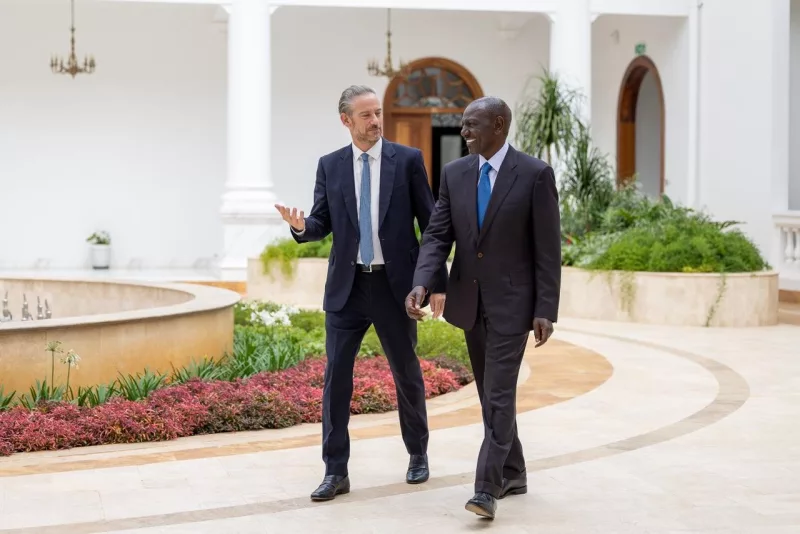
Outgoing French Ambassador Arnaud Suquet said France is deliberately moving away from the model of permanent military deployments, which has characterised its engagement in parts of Africa. Suquet said the new approach would be based on flexible partnerships tailored to individual countries.
“We're not looking at filling the void. We don't want to reproduce the security or military partnerships we had before. It has to be a different framework,” Suquet said in an interview.
“That doesn't mean we're not interested in security and science cooperation”
Amb Suquet is returning to headquarters as director for Africa and the Indian Ocean. His remarks signal Paris’ new security approach in Africa, coming after France and Kenya signed a Defence Cooperation Agreement in October 2025.
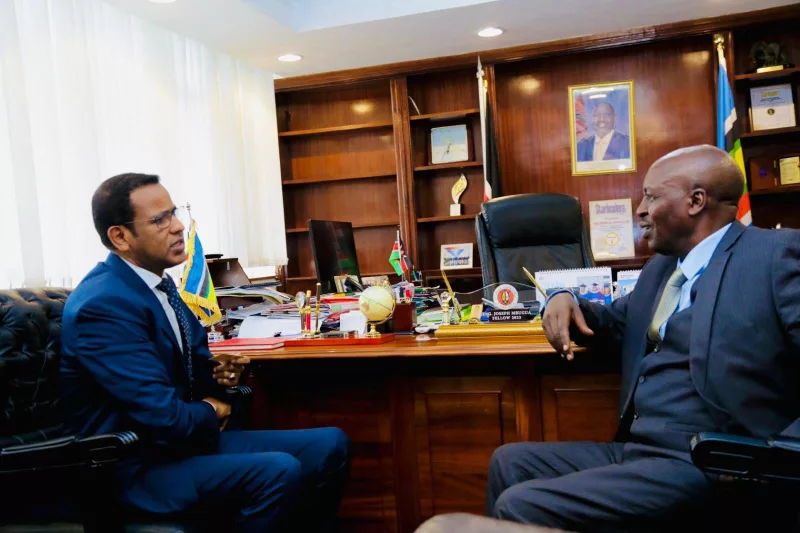
The agreement provides a framework for cooperation in intelligence sharing, maritime security, peacekeeping, training and humanitarian assistance, according to Kenya's Ministry of Defence. It was signed by Defence CS Soipan Tuya and Suquet at Defence Headquarters in Nairobi.
But Suquet stressed the agreement should not be interpreted as a move by France to establish a new military foothold in Kenya or replace other Western security partners.
“We're not here to have a permanent base or permanent military presence,” he said.
France, he added, had already reduced its military footprint across the continent and closed almost all its permanent military bases, with Djibouti remaining its principal base in Africa.
This also comes at a time France is seeking to rebuild relationships across Africa, especially in West Africa, following the expulsion or withdrawal of French forces from several countries there.
Paris has increasingly sought to present its engagement with African countries as a partnership of equals rather than a continuation of the military and political arrangements associated with its former colonies.
Coming after the hosting of the Africa Forward Summit, Kenya provides an important test of that new approach because, unlike France's traditional partners in Francophone West Africa, it has no colonial relationship with Paris and maintains extensive security partnerships with several other countries.
The Africa Forward Summit in Nairobi in May was part of that effort, with President Emmanuel Macron seeking to deepen relations with English-speaking African states and promote what Paris calls a new partnership with Africa.
Kenya's strategic position makes it particularly valuable to that strategy.
The agreement with France also comes as Kenya diversifies its defence relationships. Nairobi has signed defence cooperation arrangements with the UK, the US, Turkey, Ethiopia and several other European and Asian partners.
Suquet said France did not want to become Kenya's exclusive or “reference” security partner.
Instead, he said, cooperation would focus on areas where the two countries have common interests, particularly maritime security and information sharing.
That interest is partly driven by geography, he said.
France retains territories and strategic interests in the western Indian Ocean, including Mayotte, while Kenya occupies a strategically important position along the East African coast.
“We share some security challenges in terms of maritime security,” Suquet said, adding that the two countries had an interest in sharing maritime information.
The security of the Indian Ocean has assumed greater importance following disruptions in the Red Sea and wider Middle East, which have threatened shipping and exposed the vulnerability of critical international sea routes.
Kenya itself has increasingly positioned its navy and other security institutions as important players in protecting the Western Indian Ocean, where threats include piracy, maritime terrorism, trafficking, illegal fishing and attacks on shipping.
The Defence Cooperation Agreement, therefore, gives Nairobi and Paris a formal framework for cooperation in an area of growing strategic importance.
Kenya's Defence Ministry said at the signing that the agreement was intended to strengthen bilateral defence relations and advance cooperation in areas including maritime security and regional stability.
The agreement was negotiated against a backdrop of a broader expansion in Kenya's defence diplomacy.
Nairobi has sought partnerships not only with traditional Western allies but also with countries such as Japan, Italy, the Czech Republic and others, with maritime security, intelligence sharing, military training and defence technology increasingly featuring in those relationships.
The French model, Suquet suggested, will, therefore, be one of mobility rather than permanent presence.
“We have reduced our presence on the continent. We have closed almost all our permanent military bases.”
The new approach, he said, would not involve a static military presence but would allow France to work with partner countries according to their needs.
“So the model is not to have a static, permanent military presence. It's more flexible, but very much present with the country and fitting the needs of the country,” he said.