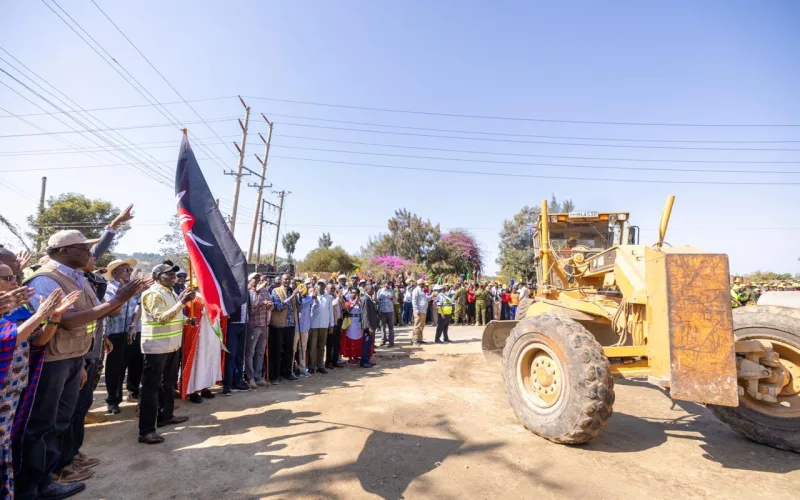
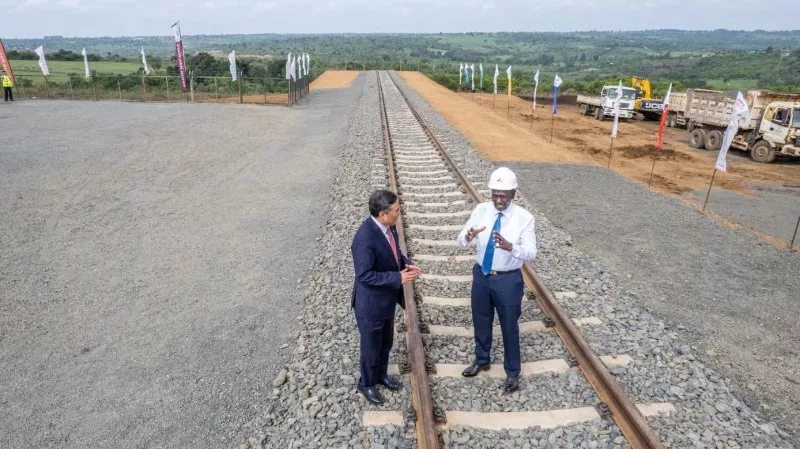
 President William Ruto during the launch of the Naivasha-Kisumu-Malaba SGR on March 19 /PCS.
Four years into President William Ruto’s administration, the long-delayed Standard Gauge Railway (SGR) extension to western Kenya has finally moved from promise to construction, reviving a project that had stalled for years over financing.
The Naivasha-Kisumu-Malaba railway is being presented as the missing link in Kenya’s SGR network, connecting the existing line from Mombasa to Naivasha with Uganda and, eventually, a wider East African rail network.
But with the project carrying an estimated price tag of about Sh700 billion, the central question is whether the western extension can generate enough economic activity and freight business to justify the enormous investment.
From stalled project to construction
The project has been on Kenya’s infrastructure agenda for more than a decade.
The SGR was originally intended to run from Mombasa through Nairobi and Naivasha to Kisumu and eventually Malaba, before linking with Uganda and other landlocked markets.
The western extension, however, stalled after Chinese financing for the remaining sections failed to materialise.
Work on the SGR stopped at Naivasha in 2019, with the railway falling short of Kenya’s western border and the Ugandan frontier.
Ruto revived the project after taking office, repeatedly promising to complete the missing section.
In November 2025, he announced that construction from Naivasha to Kisumu and onward to Malaba would begin in January 2026, describing the project as necessary to “close the loop” and position Kenya at the centre of East Africa’s transport and logistics network.
"We shall extend the Standard Gauge Railway from Naivasha to Kisumu and onward to Malaba, closing the loop, connecting the region, and positioning Kenya as the heart of East Africa’s transport and logistics system,” Ruto stated at the time.
The January deadline slipped, but the project eventually reached the groundbreaking stage.
Ruto launched the Naivasha section at Suswa in Narok County on March 19, 2026, while two days later he joined Ugandan President Yoweri Museveni in Kisumu to launch the Kisumu-Malaba section.
Kenya Railways subsequently confirmed that actual construction works had commenced in Narok in July.
According to the ministry of roads and transport, the project comprises a 264-kilometre Naivasha-Kisumu main line, an 8.69-kilometre branch to the proposed Kisumu Port, and a 107-kilometre Kisumu-Malaba section.
The financing question
The project’s revival has also come with a shift in how Kenya intends to finance the railway.
Unlike the earlier SGR sections, which were largely built with Chinese loans, the Naivasha–Kisumu–Malaba extension is being pursued through a more diversified financing model.
The government is looking to combine domestic revenue streams, including the Railway Development Levy, with infrastructure bonds and other alternative sources of capital.
The approach forms part of a broader effort by the Ruto administration to reduce reliance on conventional external borrowing and mobilise private and domestic capital for large infrastructure projects.
President William Ruto has argued that Kenya must explore innovative financing, including public-private partnerships, rather than continue relying on unsustainable borrowing.
“We cannot continue funding essential infrastructure through unsustainable borrowing and burdening taxpayers with additional taxes. But neither can we afford to postpone these imperatives without risking our future. There is a need to be innovative in the use of our national revenues or the national revenues at our disposal,” he said earlier in November last year during the State of Nation address.
The newly established National Infrastructure Fund is part of that broader financing architecture.
Parliament said the Fund is intended to mobilise capital from non-traditional sources and shift infrastructure financing towards an investment-led model, with transport among the sectors it can support.