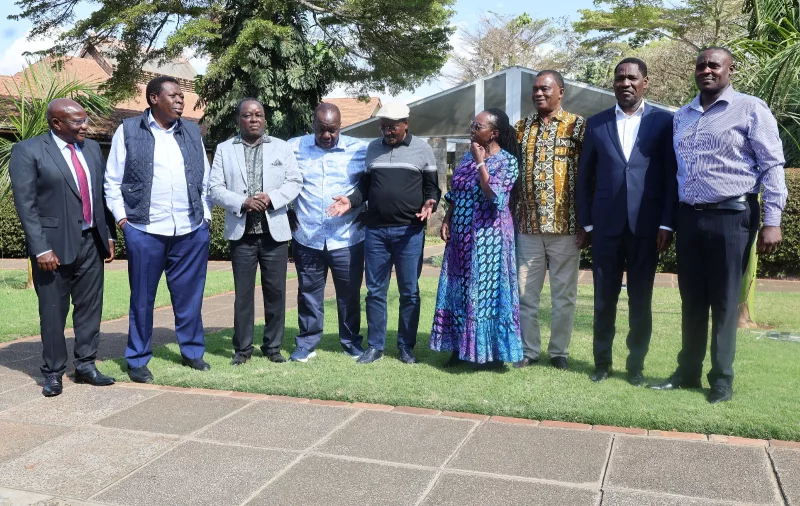
Despite holding several meetings, they are yet to have a breakthrough on the question of who will fly the opposition’s presidential flag in 2027.
The latest gathering was at Windsor Golf Club in Kiambu on Wednesday, a meeting that brought together the principals but with no tangible outcome.
Wiper leader Kalonzo Musyoka said the meeting was aimed at deepening unity and charting the way forward for the alliance.
“Our mission remains clear: unite Kenyans, restore hope, and Komboa Kenya,” Kalonzo said of the meeting.
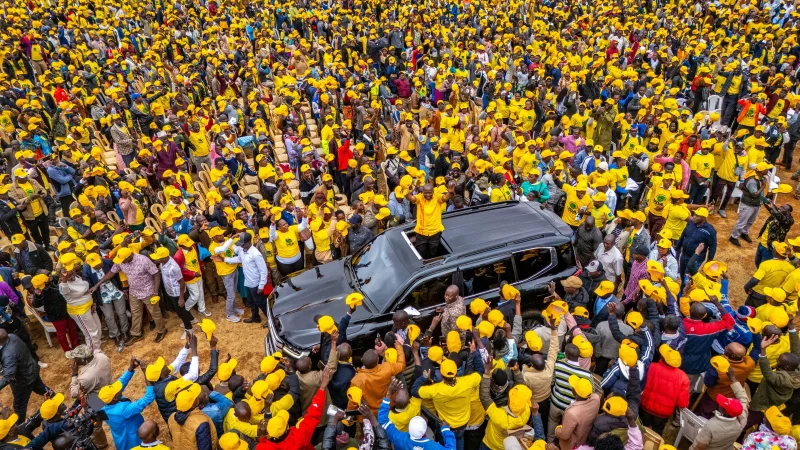
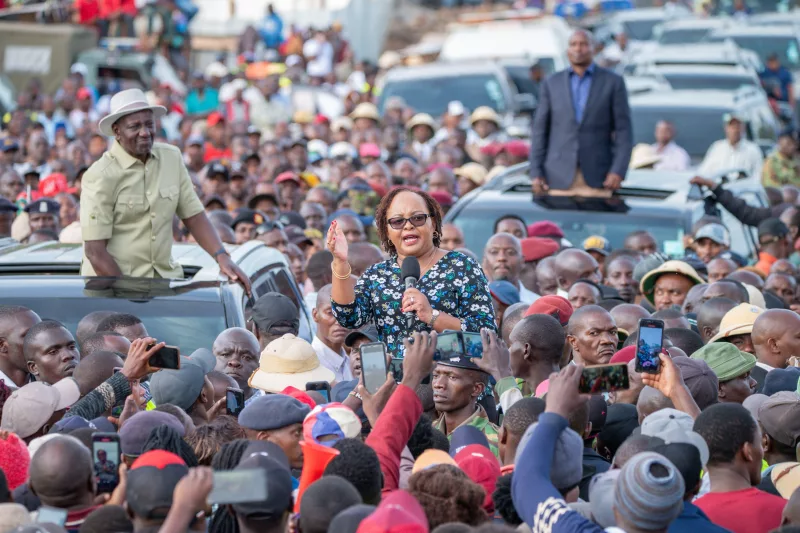
DCP Leader Rigathi Gachagua, now in the US, has often told his colleagues that "presidents are made in the field, not in the boardrooms".
Gachagua has openly characterised some of his colleagues as sluggish and failing to lock their political backyards behind the opposition.
"Getting elected as president is about political mobilisation. Many people may want to spend a lot of time in hotels and boardrooms discussing theories...there is no president you will make in a boardroom," Gachagua said days before he left for the United States.
The opposition has seven presidential candidates.
Apart from Gachagua and Kalonzo, there is Nairobi Senator Edwin Sifuna, Jubilee's Fred Matiang'i, DP's Justin Muturi, DAPK's Eugene Wamalwa and PLP's Martha Karua.
Despite carefully crafted messages of unity is a growing concern that the opposition is spending too much time in endless meetings.
This is while failing to establish a joint campaign machinery capable of taking on President William Ruto.
The leaders have met repeatedly in recent weeks, with each meeting producing fresh declarations of unity but little to do with resolving the ticket debacle.
On August 24, the principals signed a unity pact committing themselves to jointly select a presidential candidate.
They agreed to fully support and campaign for whoever is chosen to carry their common mandate in 2027.
While the agreement was supposed to provide a pathway out of the succession dilemma, the leaders remain locked in negotiations.
On August 19, the wider opposition held a meeting bringing together Linda Mwananchi where they jointly condemned electoral violence.
On August 3, Kalonzo led an Azimio meeting that resolved to reorganise the coalition’s structures and rebrand the outfit.
A day later, Gachagua visited Kalonzo at his Karen home accompanied by former Cabinet minister Eugene Wamalwa for further engagements.
The repeated meetings have not, however, produced a common campaign structure.
Gachagua has been among those warning against prolonged boardroom negotiations, insisting that the principals should hit the ground.
The former deputy president has largely concentrated his political activities in Mt Kenya while also reaching out to the Maa counties of Kajiado and Narok.
Kalonzo’s campaigns, meanwhile, remain largely concentrated in Ukambani, although he has ventured into Kajiado, Narok, Taita Taveta and Kilifi.
On Sunday, he is expected in Nyeri alongside DP Party Leader Justin Muturi.
It is only Nairobi Senator Edwin Sifuna’s Linda Mwananchi brigade that appears to have established a more national campaign footprint.
Kalonzo is yet to campaign in Luo Nyanza, North Eastern and Rift Valley.
Jubilee Deputy Party Leader Fred Matiangi's political machine has also been fizzling.
Most of his political activities have been in Mt Kenya and Kisii. He has however campaigned in Kuria and parts of South Rift.
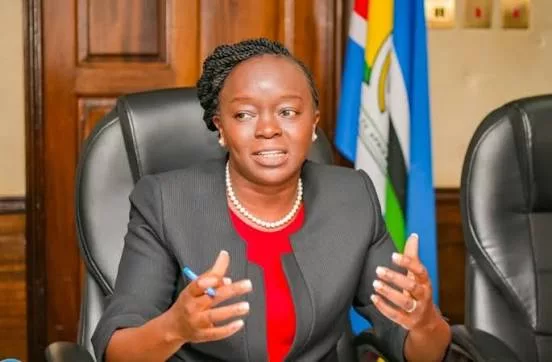
Karua has been the most inactive in the team.
She long abandoned the few joined campaigns with the rest of the opposition luminaries.
The united opposition also lacks a joint think-tank that can develop a common policy agenda and provide alternative ideas.
This has given Ruto room to repeatedly attack his opponents as lacking a substantive agenda for Kenyans.
Former Trade minister Mukhisa Kituyi, who was appointed spokesman of the opposition, recently admitted that attempts to create a joint secretariat had failed.
“It has been very challenging. Our attempt to create a common secretariat aborted. I am a head of a secretariat that doesn't exist. Each party has their own secretariat,” Kituyi said in a televised interview.
The admission lifted the lid on the difficulties facing an alliance whose leaders have publicly committed themselves to defeating Ruto.
Kituyi said the absence of a common structure had also affected the opposition’s ability to communicate a common position.
“There has been little joint communication from the opposition team, each party speaking its own positions,” he said.
He added, “It is not very pleasant...let the opposition become as one and then we will have a functional communication function.”
The organisational question, however, is not the most contentious in comparison to the presidential ticket.
This is in the face of none of the major figures showing willingness to surrender the top seat.
Gachagua has positioned himself as the man with the numbers, arguing that they make him a king rather than a kingmaker.
Mt Kenya West, including Nakuru, has approximately 4.8 million voters, giving Gachagua a substantial bargaining position in the opposition negotiations.
Kalonzo, on the other hand, is viewed as the senior-most politician in the race, his experience said to be making him a natural choice for the ticket.
At 72, his supporters argue that 2027 could represent his strongest and perhaps last opportunity to make another run for State House.
The Wiper leader also brings a sizeable Ukambani voting bloc and a long history in opposition politics.
“It would just be tidy if he is the flagbearer, and then we can see within our strengths, who can be his deputy,” Kitui Central MP Makali Mulu said.
Mulu said Kalonzo could even be persuaded to serve as a transitional president for one term.
“We have actually mulled the idea of having some serve one term for the sake of the team staying together, otherwise we won’t handle the Ruto side,” he said.
Sifuna’s emergence has added another layer to the succession calculations.
His supporters say his appeal among younger voters makes him a strong candidate for an opposition seeking to tap into the Generation Z vote.
The group accounts for a significant share of the 5.6 million new voters expected ahead of the 2027 election.
Sifuna also has a following in Western Kenya, giving him a potential national coalition beyond his Nairobi base.
This has triggered calls from some quarters that the opposition give him the mantle and have Kalonzo as his running mate.
But such a move would require Kalonzo to once again explain to his political base why he should sacrifice his presidential ambition.
Gachagua faces a similar dilemma as stepping aside would mean asking his supporters to transfer their loyalty to another candidate.
Political Risk Analyst Dismas Mokua said the opposition could consider an elimination process to reduce the number of contenders.
“Gachagua’s eligibility, for instance, is uncertain. Kalonzo is likely to argue that he has sacrificed enough, hence may not succumb to Sifuna pressure,” Mokua said.
He said Kalonzo could argue he supported Martha Karua in 2022 and that he has previously conceded for the late Raila Odinga.
The competing ambitions have raised the question of who will blink first, with the team understood to be divided over the method of selecting its candidate.
Some favour scientific opinion polls as others are pushing for a boardroom consensus. Another camp wants delegates to make the decision.
People’s Liberation Party leader Martha Karua said Kenyans will be involved in choosing the candidate, although she didn’t say exactly how.
Political analyst Martin Andati said the challenge was understandable given the strength of the field.
“The challenge arises from the fact that whoever is picked and gets the support of the rest of the team is almost certain of being the next president,” Andati said.
But the danger of failing to agree is that the opposition could split its vote among several candidates and hand Ruto another term.
“The moment the opposition presents five, six or seven serious presidential candidates against one incumbent, the mathematics will become brutally simple. Ruto wins,” political analyst Sospeter Stephen said.