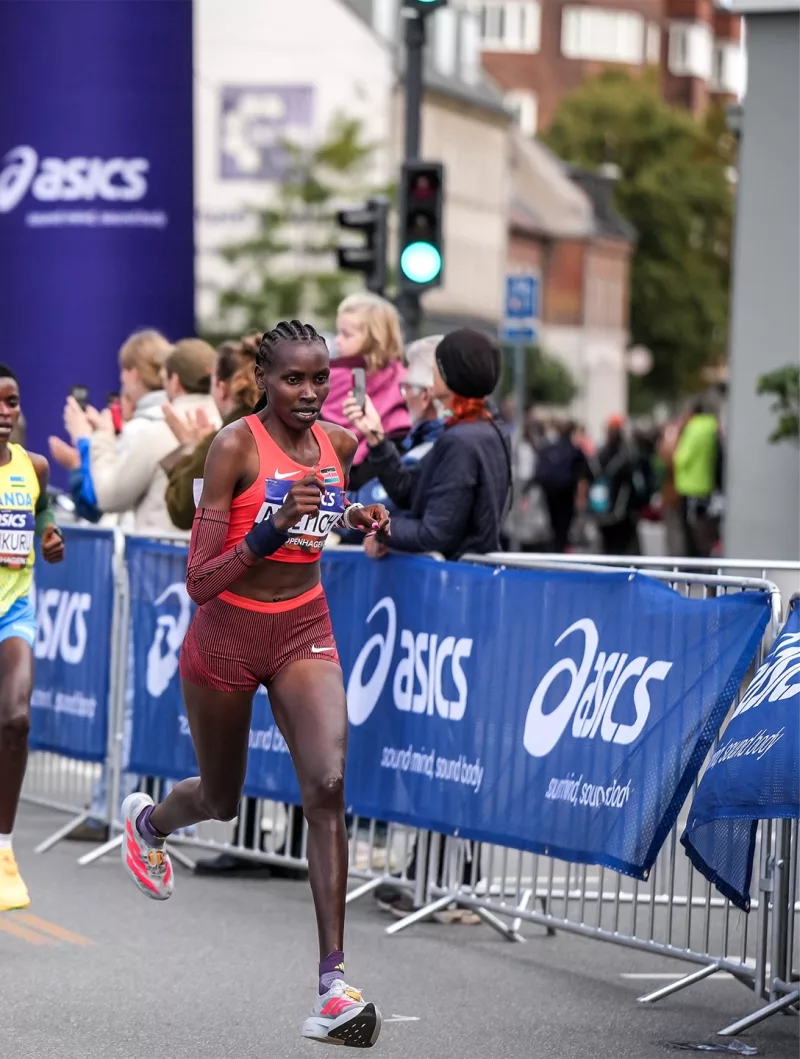
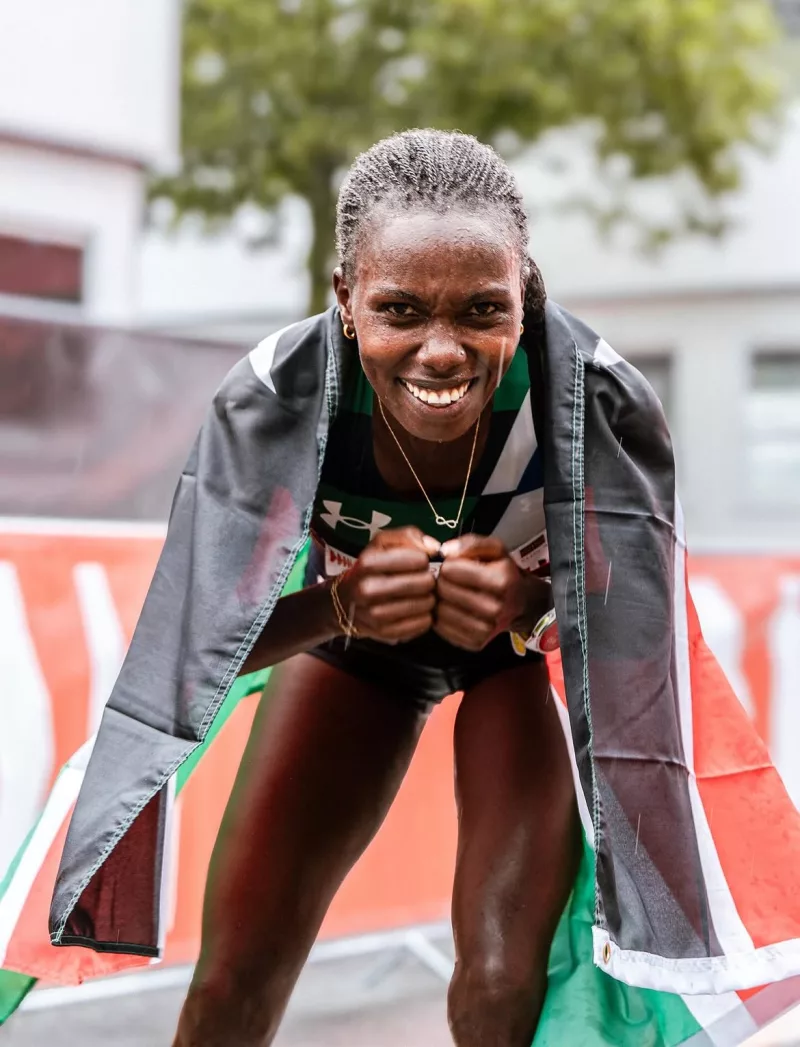
 Beatrice Chebet during a previous Diamond League meeting/ HANDOUT
 This weekend, athletics faithful will be treated to two days of breathtaking action as the Wanda Diamond League Final takes centre stage at the King Baudouin Stadium in Brussels.
The world's fastest sprinters, strongest throwers and greatest distance runners will all be chasing the ultimate prize, the Diamond Trophy.
But what exactly is the Diamond League, and how do athletes earn a place in the final?
The Wanda Diamond League is the world's premier one-day outdoor athletics series, bringing together elite athletes across 15 meetings staged in different cities around the globe.
Out of the 15 meetings, 14 make up the regular season, while the 15th meet (in Brussels this year) hosts the Grand Finale, where season champions are crowned.
The competition features 32 disciplines, split equally between men and women, covering sprints, hurdles, middle and long-distance races, jumps and throwing events. The events include 100m, 200m, 400m, 110m Hurdles (Men) / 100m Hurdles (Women) and 400m Hurdles for the sprints.
Middle and long-distance events feature 800m, 1500m (often features the Mile as an alternative distance variant), 3000m / 5000m (grouped as a single distance ranking) and 3000m Steeplechase.
In the fields, the jumps include High Jump, Pole Vault, Long Jump and Triple Jump. For the throws, there are Shot Put, Discus Throw and the Javelin Throw.
However, not every discipline appears at every meeting, with each stop hosting a selected programme of events. Unlike most athletics competitions, athletes cannot simply enter the Diamond League.
Participation is by invitation, with meeting organisers selecting competitors based on World Athletics rankings, outstanding performances, personal bests and global status such as reigning Olympic, world or previous Diamond League champions. Elite athlete managers also work with meet directors to secure invitations for their athletes.
Throughout the 14-meeting regular season, athletes collect points every time they compete in their discipline. Victory earns eight points, second place receives seven, third gets six, with the points decreasing to a point for eighth place.
These points do not decide the champion; they simply determine who qualifies for the final. Qualification varies by event. The top eight athletes qualify in the sprints through to the 800m, the top 10 advance in the 1,500m and longer distance events, while the top six qualify in field events.
Organisers may also award wildcards to reigning champions, world record holders or athletes whose seasons were disrupted by injury, alongside a host nation wildcard.
One of the Diamond League's standout features is equal prize money, with men and women receiving identical rewards. Every regular-season meeting offers a prize purse of Sh64.7 million ($500,000), while the Brussels final raises the stakes with a multi-million dollar payout.
In standard events, winners receive Sh1.3 million ($10,000) during the regular season and Sh3.9 million ($30,000) at the final. Diamond disciplines offer even richer rewards, with champions earning Sh2.6 million ($20,000) at regular meetings and Sh7.8 million ($60,000) for winning the final.
Most importantly, the winner of each discipline at the final is crowned the season champion and receives the iconic Diamond Trophy. Crafted by prestigious jewellers (historically designed in Switzerland), the trophy features a stylised diamond/crystal structure.
In addition to the physical trophy and cash prize, final winners in many cases earn a coveted biological wildcard entry to the subsequent World Athletics Championships.