
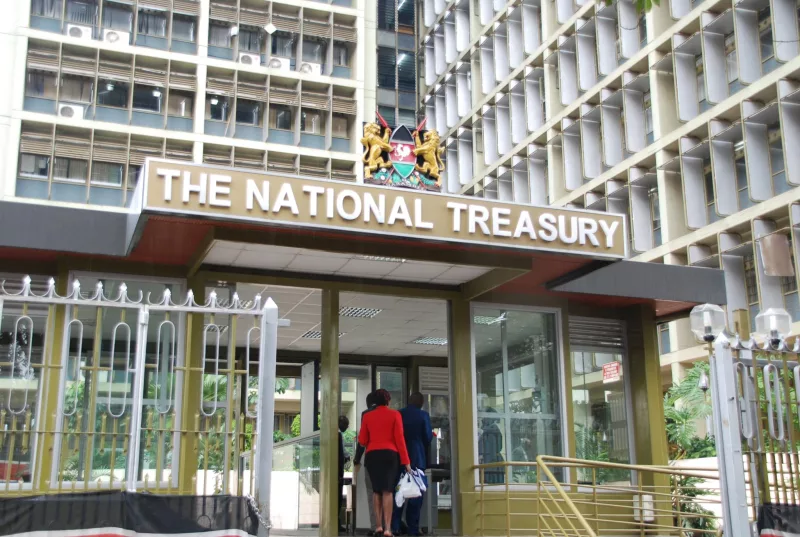
National Treasury’s State Department for Public Investment and Assets Management is facing a human resource crisis, operating with only 42 per cent technical staffing capacity.
The staffing shortage is captured in the State Department’s Medium-Term Expenditure Framework Sub-Sector Report for the FY 2027-28 – 2029-30 budget proposal.
The shortage has consequently affected the department’s ability to effectively manage public investments, state assets, public-private partnerships and procurement reforms at a time when the government is increasingly looking to private capital to finance development.
The crisis is blamed on attrition and a recruitment freeze.
According to the report, the shortage has adversely affected service delivery, succession planning and operational efficiency, hindering its ability to meet strategic objectives.
“The sub-sector continues to face significant staffing shortages across all levels relative to the authorised establishment.
“The current staffing capacity for technical cadres in the state department is 42 per cent, primarily due to attrition and a freeze on recruitment activities,” the report says.
The department is responsible for a wide range of functions requiring specialised technical expertise, including public investment and portfolio management, government asset management, pensions, PPPs, supply-chain management, public investment management and transaction advisory.
While the department had planned to recruit 491 officers during the 2025-26 financial year, none were recruited due to the freeze.
Its medium-term plan now targets the recruitment of the 491 officers in 2026-27, followed by 200 in 2027-28, 150 in 2028-29 and another 141 in 2029-30.
The report attributes the failure to undertake planned recruitment to administrative delays, including the approval of human-resource instruments.
In the case of the Privatization Authority, for example, planned recruitment could not take place because of delays in approving the required HR instruments.
The shortage comes at a time the department is expected to mobilise private capital and improve the efficiency of public investment.
The department says it is expected to help create a competitive and secure environment for private investors through PPPs as part of efforts to reduce pressure on the Exchequer. It also provides technical support to national and county governments in developing and implementing PPP projects.
The department itself acknowledges the consequences, saying the shortage has created operational inefficiencies and weakened its ability to meet its strategic objectives.
The capacity problem is reflecting in the department's performance targets.
While it had set a target of training 1,500 technical officers on public investment management in the 2025-26 financial year, only 900 were trained. The department says the training was provided in response to requests received.
Several other planned institutional reforms also fell short of their targets because of financial constraints.
The department had targeted operationalisation of 20 county Public
Investment Management Units but achieved none. It also targeted completion of three
sector-specific project appraisal manuals but completed none, although draft
tools had been prepared and piloted in the health, education, energy,
infrastructure and ICT sectors.
The Public Investment Management Information System, intended to strengthen the management and monitoring of government projects, was only 65 per cent complete against a target of 80 per cent. The report says the system was still undergoing enhancements and data cleaning following recommendations by the Auditor-General.
The department also cites inadequate budgetary allocations, insufficient working tools and equipment, lengthy legal processes and litigation, and fragmented management of public assets among the challenges affecting implementation.
The department is now seeking substantially more resources over the medium term as it estimates total requirements of Sh11.21 billion in 2027-28, Sh11.05 billion in 2028-29 and Sh11.93 billion in 2029-30.
The department is asking Treasury for increased allocations and strengthened institutional capacity to support PPPs, the e-procurement system, privatisation, public investment management and staff development.
It also wants the government to strengthen succession management, identify skills gaps and build technical expertise in key areas, including transaction advisory, financial modelling, business valuation, legal due diligence and public procurement regulation.
INSTANT ANALYSIS
Kenya’s public investment machinery is facing a serious capacity problem, with the State Department for Public Investments and Assets Management reporting technical staffing capacity of just 42 per cent. The department attributes the shortfall to staff attrition and a recruitment freeze, warning that it is affecting service delivery, succession planning and operational efficiency.