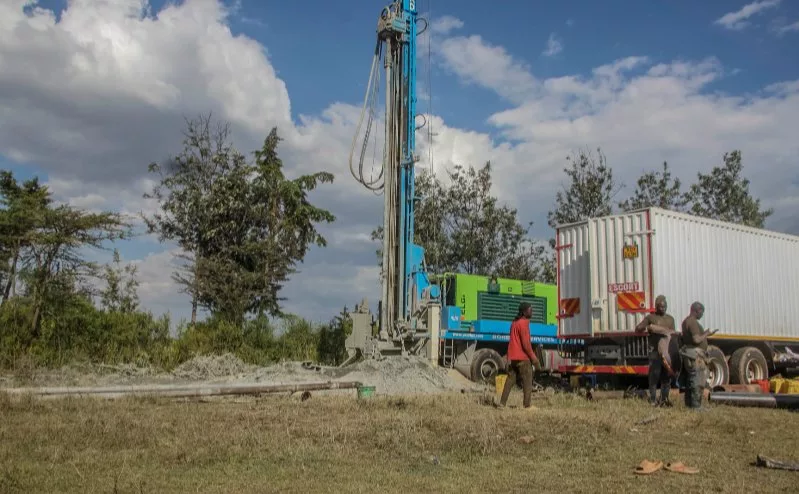
A new borehole in Muramati, Segera, Laikipia North, is set to provide a lifeline to more than 300 households after years of water scarcity that forced residents to walk long distances in search of the vital resource.
The project, being implemented by Habitat for Humanity Kenya in partnership with Habitat for Humanity Germany, is expected to provide clean and safe water for domestic use, livestock and small-scale irrigation, while also benefiting local schools.
For residents, the drilling has brought relief after years of relying on distant and unreliable water sources.
Mary Wangari, a Segera resident who has lived in Muramati for 48 years, said families had endured severe shortages, at times struggling to find enough water even for basic household needs.
“We have lived with a lot of water problems. There were times when we had no water at all, and people could not even bathe. We had to use ash on already used water so we could re-use it the following day. We are very grateful because this is a blessing for the people of Muramati,” Wangari said.
The borehole is expected to serve about 300 households, equivalent to roughly 1,500 people, with Habibat officials saying the project will also support schools through improved access to water, sanitation and hygiene services.
Habitat for Humanity Kenya National Director Dr. Eileen Mokaya said access to clean water and sanitation was essential to decent housing.
“Our homes are never complete unless they also have access to clean, safe water,” Mokaya said.
She said the organisation had already built eight houses in the community and was constructing seven more for needy families, alongside the water project intended to serve the wider community.
The project is being implemented under the Muramati Integrated Water supply, Sanitation and Hygiene (WASH) and Housing Project, which seeks to improve living conditions, health and dignity while strengthening access to climate-resilient sanitation and hygiene services.
Caroline Lackmaier, Project Coordinator at Habitat for Humanity Germany, said the drilling had reached water, paving the way for installation of an elevated storage tank and solar panels before residents begin receiving the supply.
“We are very pleased that the contractor has finally struck water. In the coming weeks, once we install the elevated tank and solar panels, these households will be able to access clean and safe drinking water,” Lackmaier said.
Habitat for Humanity Germany is funding the project through the Wolfgang Duerr Foundation, with the partnership also supporting seven homes in Muramati.
The organisation said water, sanitation and health remain central to its housing programmes because a home cannot be considered complete without access to safe water.
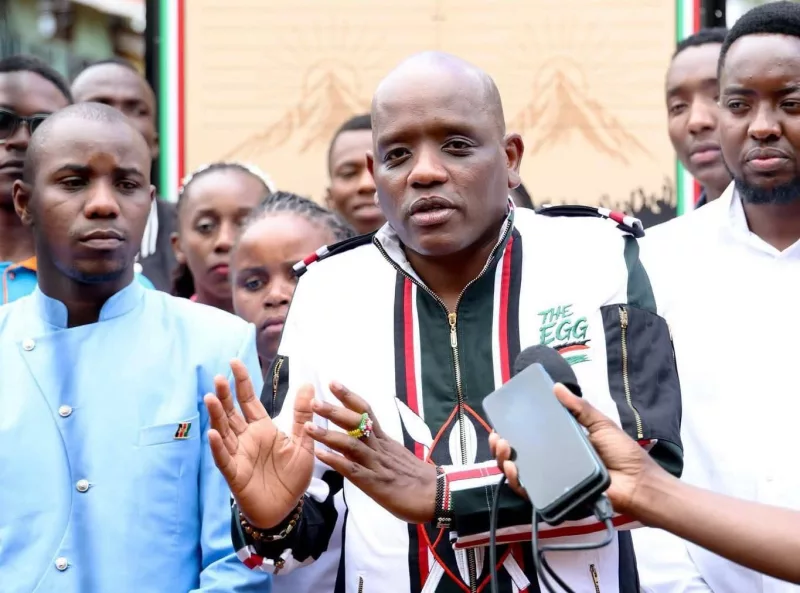
Kelvin Maina, chairperson of the community water committee, said residents would have a major role in protecting and maintaining the facility once it is handed over.
“Our responsibility is to make sure this project is maintained so that it continues benefiting the community. It will be of great benefit to about 1,500 people, or 300 households,” Maina said.
The project comes against a backdrop of persistent water challenges in Laikipia, particularly in the county’s arid and semi-arid areas.
County planning documents indicate that prolonged droughts have contributed to inadequate water supplies, prompting investment in boreholes, dams, water pans, pipelines and rainwater harvesting systems.
The County’s Integrated Development Plan 2023-2027 data shows that only 32.2 per cent of households had access to piped water, while 10.3 per cent relied on boreholes and 21 per cent drew water directly from streams and rivers.
The northern parts of the county have historically experienced particularly serious shortages during dry spells, with county authorities identifying water access as a major development priority.
Maina said the shortage had become a recurring political issue, with candidates making promises to address it during election campaigns but failing to deliver lasting solutions.
“Every elections year, they come and promise to do something about our perennial water shortages but do nothing when elected”.
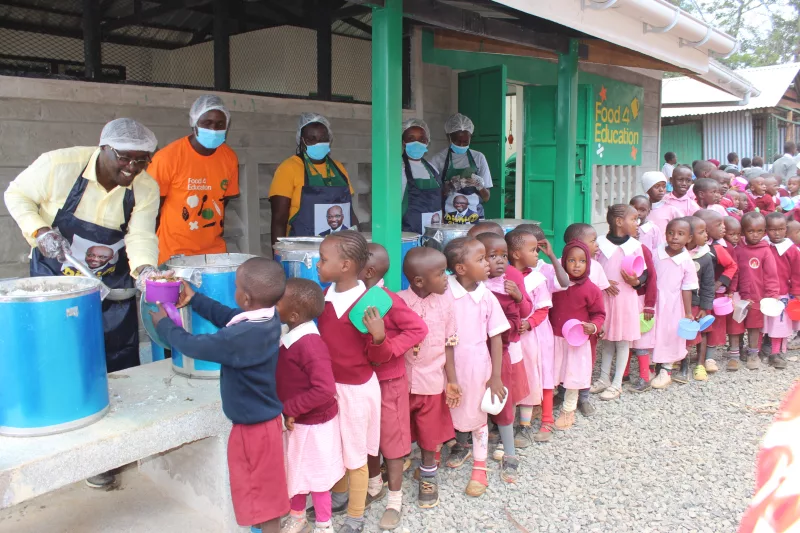
The water project is expected to reduce the burden of walking long distances to fetch water, freeing residents, particularly women and children, to spend more time on education, household activities and income-generating work.
Ends
Instant Analysis
The project, being implemented by Habitat for Humanity Kenya in partnership with Habitat for Humanity Germany, is expected to provide clean and safe water for domestic use, livestock and small-scale irrigation, while also benefiting local schools.
The County’s Integrated Development Plan 2023-2027 data shows that only 32.2 per cent of households had access to piped water, while 10.3 per cent relied on boreholes and 21 per cent drew water directly from streams and rivers.